
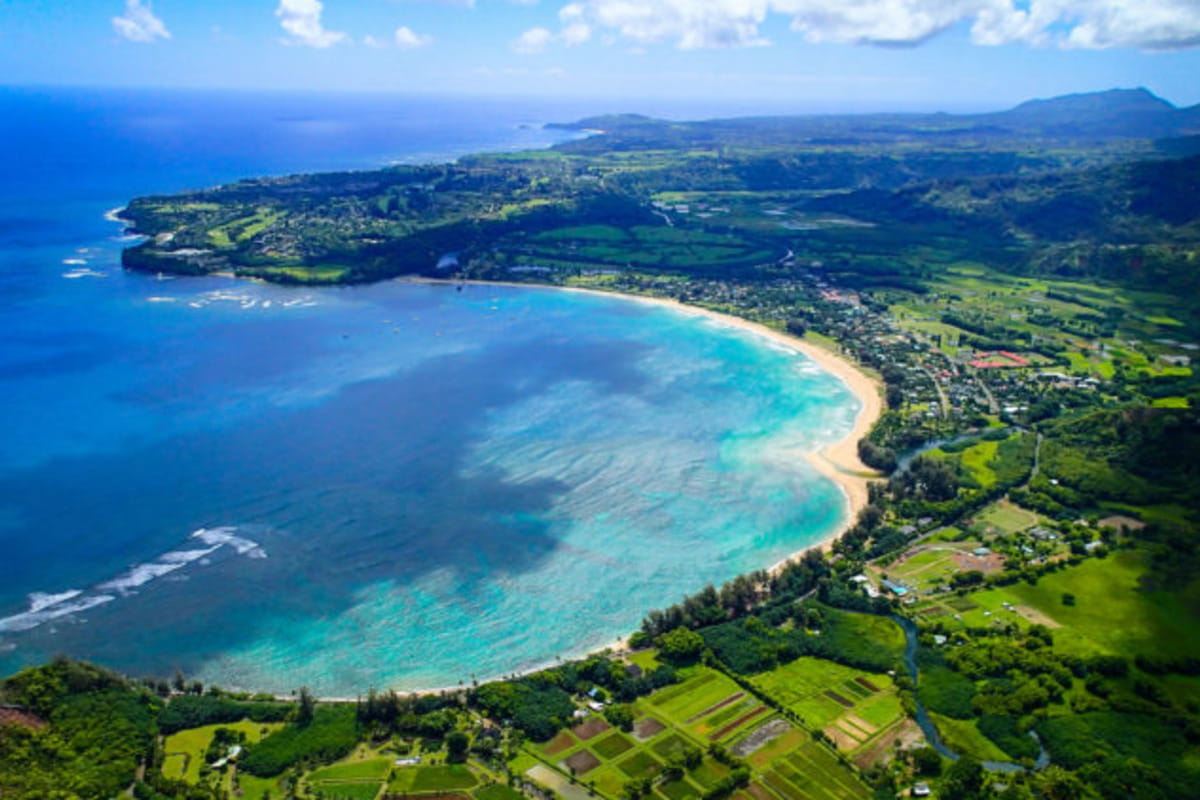
Bays have long played a crucial role in the development of human civilization, as they became natural harbors for ships and centers of trade between continents. These unique water bodies, where the sea or ocean extends into the land, create special ecosystems and microclimates that differ significantly from open waters. Incredible facts about bays reveal their enormous importance not only for navigation and economy, but also for preserving the planet’s biological diversity. From the largest bays in the world to the smallest coves, each has its own unique history and characteristics. In this collection, you may not have known about many fascinating features of these water formations that have been shaped over millions of years and continue to influence the lives of billions of people.
- The Bay of Bengal is the largest bay in the world by area, covering approximately 2.2 million square kilometers. It washes the shores of India, Bangladesh, Myanmar, and Sri Lanka, providing livelihoods for over 400 million people. One of the planet’s most productive ecosystems has formed in this bay, with enormous reserves of fish and seafood. The waters of the Bay of Bengal receive huge amounts of fresh water from the Ganges, Brahmaputra, and Irrawaddy rivers, creating unique conditions for marine life.
- The Gulf of Mexico contains approximately 660 quadrillion gallons of water and is the ninth largest water body in the world. It is famous for its enormous reserves of oil and natural gas, which form the basis of energy security for the United States and Mexico. Annually, cargo worth over 400 billion dollars passes through the ports of the Gulf of Mexico. The unique water circulation in the bay creates a powerful current called the Loop Current, which influences hurricane formation in the Atlantic.
- Hudson Bay in Canada is one of the few places on the planet where the phenomenon of isostatic rebound can be observed after glacial melting. The earth’s crust here rises at a rate of approximately 1 centimeter per year as it recovers from the weight of an ice sheet up to 3 kilometers thick. The bay freezes for 8-9 months a year, creating an ideal environment for polar bears, numbering around 1,200 individuals. The salinity of water in Hudson Bay is almost twice lower than oceanic due to the enormous influx of fresh water from rivers.
- The Persian Gulf is one of the warmest marine basins in the world with water temperatures in summer reaching up to 36 degrees Celsius. It contains about 48% of the world’s proven oil reserves and 38% of natural gas. The average depth of the Persian Gulf is only 50 meters, and the maximum does not exceed 90 meters, making it relatively shallow. Due to high temperatures and intense evaporation, water salinity here reaches 41 parts per thousand, which is significantly higher than the average oceanic level.
- The Bay of Fundy in Canada demonstrates the highest tides in the world, reaching heights of up to 16 meters, equivalent to a five-story building. During high tide, approximately 100 billion tons of water enter the bay, exceeding the combined flow of all freshwater rivers on the planet. The shape of the bay and the resonance effect create unique conditions when water oscillates with a period of about 13 hours. These powerful tides generate enormous energy potential that Canada plans to use for producing environmentally clean electricity.
- The Gulf of Bothnia between Sweden and Finland is an example of a bay that is gradually disappearing due to land uplift. The earth’s surface here rises at a rate of up to 9 millimeters per year, which is one of the highest rates in the world. According to scientists’ forecasts, in 2,000 years the Gulf of Bothnia may completely transform into a lake or even disappear. This is one of the few water basins where ice in winter can reach a thickness of over 1 meter.
- San Francisco Bay is the largest natural harbor on the western coast of America and the only significant outlet of California’s fresh waters to the ocean. Through the narrow Golden Gate strait, only 1.6 kilometers wide, more than 1.8 trillion liters of water pass daily. The bay is home to over 500 species of wild animals, including a colony of sea lions on Pier 39. Beneath the waters of the bay lie numerous sunken ships, numbering over 300, turning it into a true underwater museum of maritime history.
- The Gulf of Guinea off the west coast of Africa is one of the most dangerous areas for shipping due to piracy and severe weather conditions. It washes the shores of 13 African countries and is a key region for oil extraction on the continent. The bay’s waters are characterized by low salinity due to large outflow from the Niger, Volta, and Congo rivers. The Atlantic equatorial current divides at this bay, affecting the climate of the entire West African region.
- The Gulf of Carpentaria in Australia is one of the shallowest large bays in the world with an average depth of about 60 meters. It is famous for the mass migration of sharks and rays that come here for breeding. During the rainy season, a huge amount of fresh water enters the bay, creating a layer over the salty seawater. The bay’s coastline is inhabited by indigenous Australian tribes who have lived here for over 60,000 years.
- The Gulf of Alaska is known for its enormous salmon reserves and is one of the most important fishing areas in the world. Annually, over 500 million pounds of seafood worth approximately 2 billion dollars are harvested here. The depth of the bay reaches 5,659 meters in the Aleutian Trench, making it one of the deepest coastal waters. The cold waters of the bay support the largest whale populations in the North Pacific.
- The Gulf of Thailand between Thailand, Cambodia, and Vietnam is one of the most important regions of world fisheries with catches exceeding 2 million tons of fish annually. The average depth of the bay is only 45 meters, and the maximum does not exceed 85 meters. The bay’s waters are famous for their coral reefs, which support the existence of over 400 fish species. Due to intensive fishing and pollution, the bay’s ecosystem experiences significant anthropogenic pressure.
- The Bristol Channel between England and Wales has the second largest tidal range in the world after the Bay of Fundy, with an amplitude of up to 14 meters. The River Severn, flowing into the bay, creates a unique phenomenon called the Severn Bore, when a tidal wave moves up the river. The bay’s waters have a characteristic brown color due to the large amount of suspended sediment. Historically, the Bristol Channel was an important center of maritime trade for the British Empire.
- The Gulf of Saint Lawrence in Canada is one of the largest estuaries in the world, where fresh river water mixes with salty ocean water. It serves as home to 13 whale species, including rare North Atlantic right whales. The bay’s ice cover in winter reaches 90% of the area, creating a unique environment for harp seals. One of North America’s most important maritime routes passes through the bay, connecting the Great Lakes with the Atlantic.
- Tokyo Bay is one of the most economically important water bodies in the world, with ports handling over 400 million tons of cargo annually. Approximately 43 million people live on the bay’s coastline, making it the most densely populated coastal region on the planet. The average depth of the bay is 15 meters, and the water area covers about 1,000 square kilometers. Large-scale land reclamation projects have increased Tokyo’s area by tens of square kilometers at the expense of the bay.
- The Bay of Mont-Saint-Michel in France is known for its extreme tides and the unique island monastery of Mont-Saint-Michel. During high tide, the water level can change by 15 meters in just 6 hours, turning pedestrian routes into the seabed. The speed of the tidal wave here can reach the speed of a galloping horse. The bay serves as a stopover for over 100 species of migratory birds during their seasonal movements.
Fascinating facts about bays demonstrate the incredible diversity of these natural formations and their enormous impact on planetary processes. From climate formation to maintaining biodiversity, bays perform irreplaceable ecological functions that often go unnoticed. The economic significance of these water bodies is hard to overestimate, as they ensure the functioning of the world’s largest ports and support the lives of billions of people. Studying and preserving bays is a critically important task for future generations, as these unique ecosystems continue to experience significant anthropogenic pressure.


