
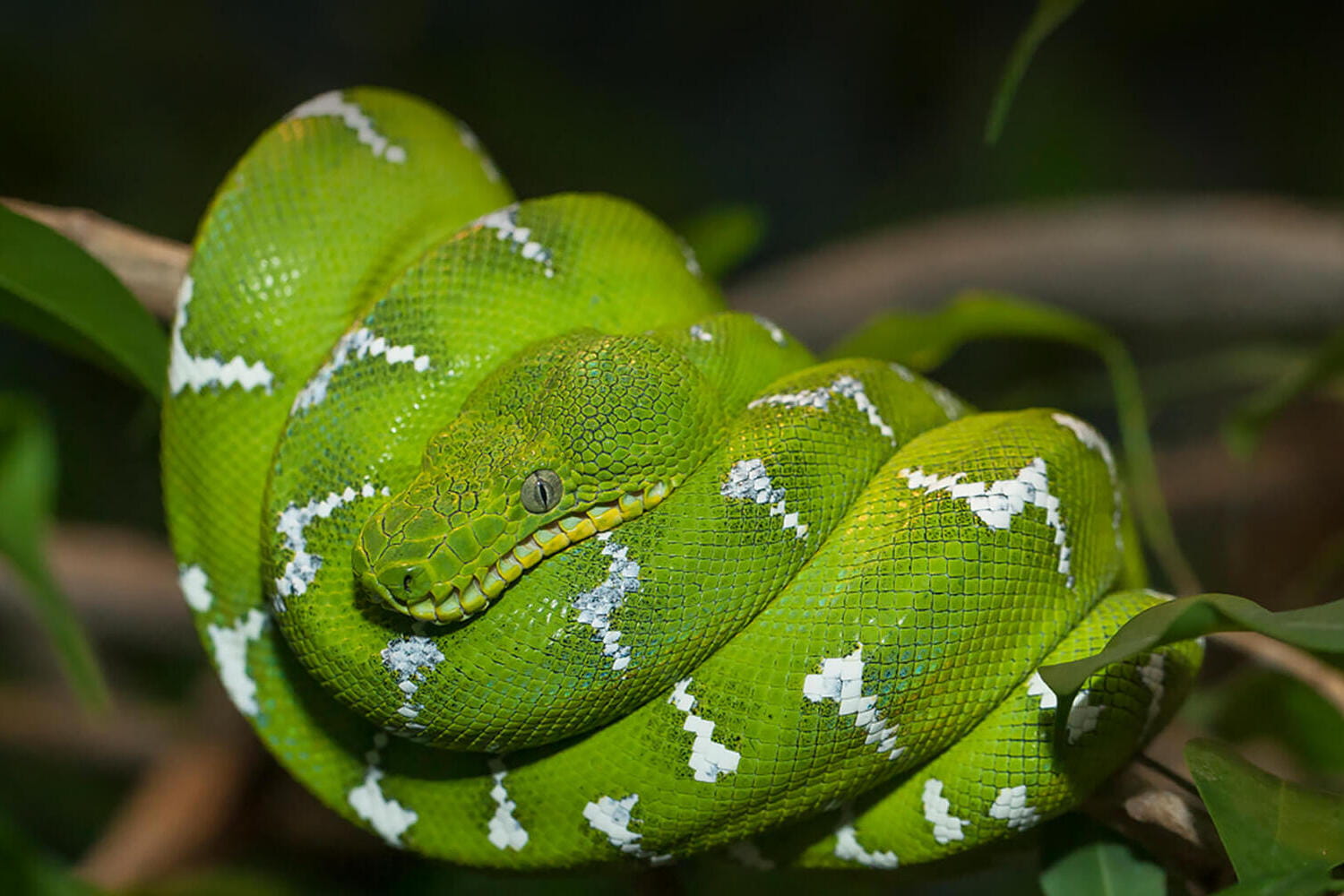
Boas, these majestic and mysterious snakes, have evoked both fascination and fear in people around the world for thousands of years. Their unique biology, remarkable adaptations, and important role in ecosystems make them a subject of close attention for scientists and naturalists. Amazing facts about boas reveal the secrets of their lifestyle, hunting strategies, and evolutionary history. Fascinating facts will help you understand why these reptiles remain among the most interesting representatives of fauna on our planet. Interesting facts compiled below will be useful for both nature lovers and those who want to learn more about these impressive animals.
- Boas belong to the family of non-venomous constrictor snakes that kill their prey by squeezing rather than using venom. This hunting method allows them to effectively neutralize animals significantly larger than their own head. The muscles of a boa can generate pressure sufficient to stop the heartbeat of prey within minutes. Such a hunting strategy evolved millions of years ago and remains extremely successful.
- Most boa species give birth to live young, which is a rare feature among snakes that typically lay eggs. The female carries offspring inside her body, providing embryos with nutrients until birth. This adaptation increases the survival rate of young in the harsh conditions of tropical forests and savannas. The number of newborns can reach several dozen depending on the species and size of the mother.
- Boas have special thermoreceptor pits along their jaws that allow them to sense the body heat of prey. These organs respond sensitively to the slightest temperature changes, helping the snake hunt in complete darkness. Such an ability is particularly useful for nocturnal hunters that rely not on vision but on thermal signals. Research shows that boas can detect warm-blooded animals from a distance of up to one meter.
- The anatomy of a boa’s jaws allows it to stretch its mouth enough to swallow prey significantly larger in diameter than its own body. The jaw bones are not fused together but connected by elastic ligaments, providing incredible flexibility. After capturing prey, the boa alternately moves the halves of its jaws, gradually pulling the prey into the esophagus. This process can last several hours for particularly large meals.
- Boas are capable of going without food for extended periods after a large meal, sometimes several weeks or even months. Their metabolism slows down, allowing them to conserve energy while digesting large prey. The digestive system secretes powerful enzymes that break down even bones and fur of animals. Such an adaptation is critically important for survival in conditions of irregular access to food.
- Many boa species have rudimentary hind limbs that appear as small spurs near the base of the tail. These structures are an evolutionary legacy of legs that were present in ancient snake ancestors. Males use these spurs during courtship to stimulate the female for mating. The presence of these structures confirms the theory about the origin of snakes from lizard-like reptiles.
- Boas are excellent swimmers and climbers, which allows them to hunt effectively both on land and in water or in trees. Their muscular body and scaly covering provide excellent grip on various surfaces. Some species spend a significant portion of their lives in the canopies of tropical trees, hunting birds and small mammals. Others prefer water bodies where they hunt fish, amphibians, and waterfowl.
- The lifespan of boas in captivity can reach twenty-five or even thirty years with proper care. In the wild, this period is usually shorter due to predators, diseases, and competition for resources. Proper nutrition, temperature regulation, and absence of stress contribute to the longevity of these reptiles in terrariums. Some boas have become true long-livers among exotic pets.
- The coloration and patterns on boa skin perform an important camouflage function in their natural habitat. Spotted or striped patterns help the snake blend with foliage, tree bark, or soil. This allows them to sneak up on prey unnoticed or avoid their own predators. Each species has a unique palette adapted to its specific region of residence.
- Boas use the Jacobson’s organ to analyze chemical signals in the environment by flicking their forked tongue. This sensory organ allows them to detect traces of prey, mating partners, or potential threats. The tongue collects microparticles from air and surfaces, transmitting information to specialized receptors in the mouth. Such a chemoreception system is extremely sensitive and effective.
- Boas play an important ecological role as apex predators, regulating the population of rodents and other animals in their ecosystems. Their presence helps maintain balance between species and prevents excessive reproduction of potential pests. The disappearance of boas from a particular territory can lead to cascading changes in food chains. Conservation of these snakes is an important aspect of biodiversity protection.
- Many cultures around the world have attributed symbolic meaning to boas, associated with strength, rebirth, and mystery. In ancient mythologies, they often appeared as guardians of treasures or messengers of gods. Modern art and literature also use the image of boas to create an atmosphere of danger or wisdom. These associations reflect the profound influence of snakes on human consciousness throughout history.
- Boas have two lungs, but the right one is significantly larger and more functional than the left, which is an adaptation to their elongated body. Such asymmetry allows saving space in the narrow torso, freeing room for other organs. During hunting or digestion, breathing may slow down to avoid interfering with other physiological processes. This feature demonstrates the amazing efficiency of evolutionary solutions in snake body structure.
- Some boa species demonstrate an impressive ability for camouflage, changing the shade of their skin according to the environment. Although they do not have the speed of color change like chameleons, their natural pigmentation is ideally suited to certain landscapes. This allows them to remain unnoticed by prey for extended periods. Such an adaptation is particularly useful for ambush hunters who rely on sudden attacks.
- Boas are sensitive to soil vibrations, which helps them detect the approach of prey or danger even without visual contact. Special receptors in the lower jaw transmit ground vibrations directly to the inner ear. This ability allows them to hunt effectively in conditions of limited visibility, for example, in dense grass or under foliage. Vibration perception complements other sensory organs, creating a comprehensive picture of the surrounding world.
- Populations of many boa species are under threat due to loss of natural habitat and illegal trade in exotic animals. Deforestation of tropical forests, urbanization, and agriculture reduce their living areas. International organizations work on conservation programs and regulation of export for these reptiles. A conscious attitude toward wildlife helps protect boas for future generations.
- Boas have smooth scales that not only protect their skin but also facilitate movement through dense vegetation. Scales are arranged in an overlapping pattern, providing both flexibility and strength simultaneously. During molting, a boa sheds its old skin layer entirely, renewing its external covering. This process occurs several times a year, especially in young individuals that grow rapidly.
- Scientific research on boas provides valuable information about reptile physiology, vertebrate evolution, and adaptations to various ecological niches. Studying their circulatory, respiratory, and digestive systems helps understand general principles of organism functioning. Laboratory experiments with boas contribute to the development of veterinary medicine and wildlife conservation. This knowledge has practical significance for medicine and biotechnology.
- Boas lead a predominantly solitary lifestyle, meeting with members of their species only during the breeding season. Such behavior reduces competition for food and territory, increasing the chances of survival for each individual. After mating, the female cares for offspring independently without needing help from a partner. The social structure of boas reflects an effective survival strategy in the wild.
- Some large boa species, such as the anaconda, can reach lengths of more than seven meters and weights exceeding one hundred kilograms. These giants are among the largest snakes on the planet and occupy the top of the food pyramid in their ecosystems. Their strength and size allow them to hunt large mammals, including deer and wild boars. Observing such animals in nature leaves an unforgettable impression on researchers and naturalists.
Fascinating facts about boas demonstrate how these amazing creatures have adapted to life in the most diverse corners of our planet. Amazing facts remind us of the importance of preserving natural ecosystems for maintaining biodiversity and ecological balance. Interesting facts inspire deeper exploration of the reptile world and awareness of our responsibility for wildlife conservation. This collection of knowledge serves as a solid foundation for those who seek to better understand boas and their role in the complex mosaic of life on Earth.


