
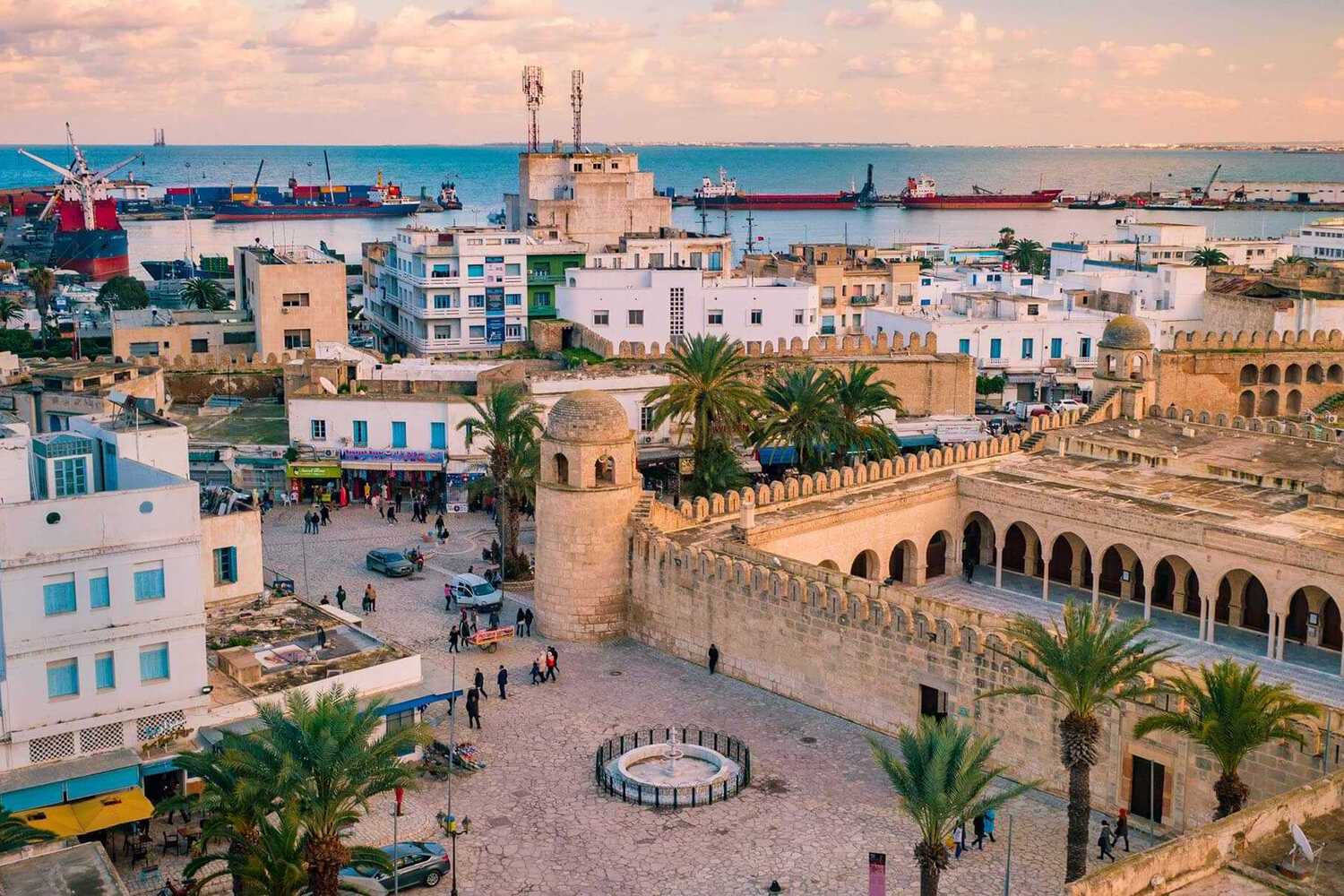
On the northern coast of Africa lies a country where thousands of years of history, culture, and natural wonders intertwine. Tunisia amazes with its diverse landscapes ranging from Mediterranean beaches to Sahara sands and its wealth of archaeological monuments. You might not know that it was precisely here that civilizations emerged which shaped the face of the entire region. We invite you to immerse yourself in a world of amazing facts that will reveal the true essence of this remarkable state to you. These fascinating facts will help you better understand the uniqueness of Tunisia and its place in world history.
- Tunisia is the smallest country in North Africa by area, yet its geographical location holds strategic significance for the entire region. The state is situated on the Mediterranean coast and borders Algeria and Libya. Such positioning has fostered the development of trade and cultural exchange over millennia. It was precisely through Tunisian ports that important maritime routes of the ancient world passed.
- The ancient city of Carthage was founded by Phoenicians in the ninth century before our era and became a powerful maritime state. This city-state controlled a significant portion of Mediterranean trade and rivaled Rome. After three Punic Wars, Carthage was destroyed, but its legacy remained in the culture of the region. Today the ruins of this legendary city are a popular tourist attraction near Tunis.
- Tunisia is home to Africa’s largest salt lake called Chott el-Djerid, whose area exceeds five thousand square kilometers. This unique natural formation almost completely dries up in summer, forming a vast salt desert. The lake surface often shimmers through mirages, creating impressive visual effects. Local residents believe that one can see fata morgana and other amazing phenomena here.
- The landscapes of Tunisia served as natural filming locations for the cult film epic Star Wars directed by George Lucas. The city of Matmata with its cave dwellings and surrounding desert dunes became the backdrop for the planet Tatooine. Many locations have survived to this day and attract fans of the saga from around the world. This fact has made Tunisia a popular destination for cinematic tourism.
- Tunisia became the cradle of the Arab Spring in two thousand ten when peaceful protests led to a change in political regime. These events inspired democratic movements in other countries of the region and drew the attention of the international community. The Jasmine Revolution, as it is called, demonstrated the Tunisian people’s aspiration for freedom. This historical moment left a deep mark on the modern political history of North Africa.
- The Medina of Tunis is included in the UNESCO World Heritage List thanks to its unique architecture and historical value. This ancient quarter is surrounded by fortress walls and contains hundreds of monuments of Islamic culture. The narrow streets of the medina are filled with craftsmen’s shops, cafes, and traditional houses. Walking through these places allows one to feel the atmosphere of a medieval Eastern city.
- The amphitheater in El-Jem is considered one of the best preserved Roman coliseums in the world and held more than thirty thousand spectators. This grandiose structure was built in the third century of our era for gladiator fights and other spectacles. Today tourists can descend into underground passages and climb to the upper tiers of the arena. The architectural perfection of this monument amazes the imagination even of modern engineers.
- Traditional Tunisian couscous is recognized as intangible cultural heritage of humanity and is prepared according to ancient recipes. This dish made of fine semolina, vegetables, and meat is a symbol of hospitality and family comfort. Preparing couscous often turns into a real ritual involving several generations of women. Each region of Tunisia has its own peculiarities of serving and spices for this universal dish.
- The landscape of Tunisia is extremely diverse and includes Mediterranean coastline, fertile plains, mountain ranges, and Sahara sands. The northern part of the country is covered with green forests and vineyards, while the south gradually transitions into desert. Such geographical richness allows growing various crops and developing several types of tourism simultaneously. Travelers can visit both a beach and a real desert with camels within a single day.
- The Tunisian dinar is the national currency of the country and has an interesting history connected with the economic development of the state. This currency is not freely convertible outside Tunisia, which is regulated by special financial rules. Exchange of foreign currency is carried out at official points with issuance of special receipts. Such a system helps control monetary circulation and support economic stability.
- Tunisia gained independence from France in nineteen fifty-six after a prolonged liberation movement. The first president of the new state became Habib Bourguiba, who conducted a series of important reforms in society. His modernization policy touched upon education, women’s rights, and economic development of the country. This historical stage initiated a new era in the life of the Tunisian people.
- Islam is the state religion of Tunisia, however the constitution guarantees freedom of worship for all citizens. The majority of the population adheres to the Sunni direction of Islam of the Maliki school of jurisprudence. Numerous mosques, madrasas, and Islamic cultural centers operate in the country. At the same time Tunisia is known for its moderate approach to religious matters in the region.
- Arabic is the official language in Tunisia, however French is widely used in business, education, and mass media. Many Tunisians fluently speak both languages, which facilitates international communication. The local dialectal form of Arabic has unique features and borrowings from Berber languages. Such linguistic diversity reflects the rich cultural heritage of the country.
- Tunisia ranks among the world’s leading producers of olive oil, which is exported to many countries. Olive groves occupy significant areas in the central and southern regions of the state. Local varieties of olives are distinguished by high taste qualities and beneficial properties. Traditions of olive cultivation date back to Phoenician and Roman times.
- The island of Djerba on the southern coast of Tunisia is home to one of the oldest Jewish communities in Africa. The El-Ghriba synagogue on the island annually attracts pilgrims from around the world. This community preserves its traditions and religious customs over many centuries. Djerba is also known for its beautiful beaches and unique architecture.
- The city of Kairouan is considered one of the holiest places in Islam and fourth in significance after Mecca, Medina, and Jerusalem. The Great Mosque of Uqba in Kairouan is a masterpiece of Islamic architecture and an important center of learning. This city played a key role in spreading Islam throughout North Africa. Pilgrimage to Kairouan is an important spiritual practice for many Muslims.
- Traditional maluf music combines Arabic, Andalusian, and Berber motifs and is performed on special instruments. This genre originated in medieval Andalusia and was brought to Tunisia by exiles. Maluf is often accompanied by poetry and tells about love, nature, and philosophical reflections. Modern performers continue to develop this tradition, combining it with new musical styles.
- The national symbol of Tunisia is the crescent and star, which are depicted on the flag and coat of arms of the state. These symbols have deep historical and religious significance for the Tunisian people. The red color of the flag embodies the courage and sacrifice of ancestors in the struggle for freedom. The white color symbolizes peace and purity of citizens’ intentions.
- In the southern regions of Tunisia unique cave dwellings of troglodytes carved into hill slopes have been preserved. These structures provide natural coolness in summer and warmth in winter thanks to soil properties. Some of such dwellings are still used by local residents for living. The architectural mastery of ancient builders amazes modern researchers and tourists.
- The Punic language spoken by inhabitants of ancient Carthage left a mark on the toponymy and culture of Tunisia. Although this language disappeared, some words and place names have survived to our days. Archaeological finds with Punic inscriptions help scholars study the history of the region. The heritage of this ancient civilization is an important part of Tunisia’s national identity.
- The Sahara Desert occupies about forty percent of Tunisia’s territory and offers unique experiences for travelers. Sand dunes, oases with date palms, and nomadic Bedouin tribes create an inimitable atmosphere. Excursions into the desert often include camel rides and overnight stays under the starry sky. This experience allows one to better understand the harsh beauty and mysteriousness of the Sahara.
The world of Tunisia continues to amaze researchers and travelers with its amazing facts and multifaceted culture. Each new discovery in this country adds fascinating facts to our understanding of North African history. You might not know how diverse Tunisia’s heritage is, but it is precisely this uniqueness that makes it a true pearl of the Mediterranean. Interesting facts about this remarkable country remain an important key to understanding the interconnection of cultures and civilizations.


