
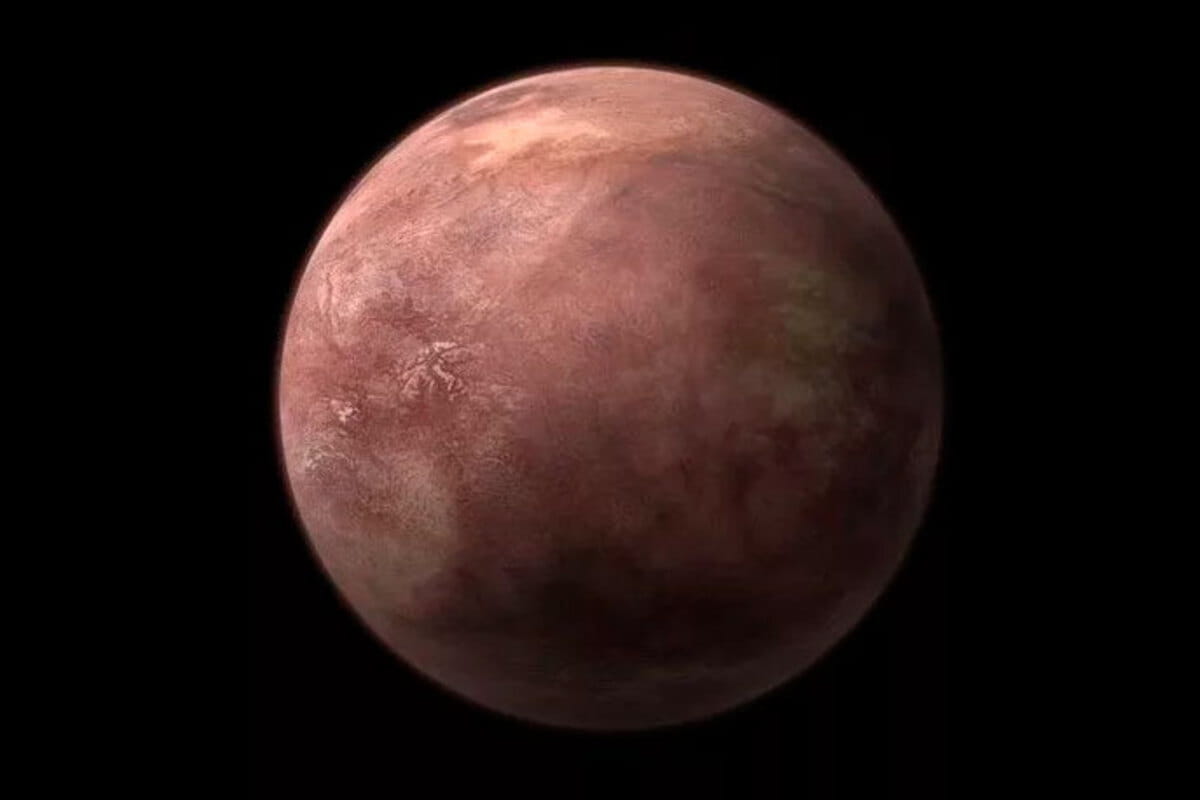
Far beyond the orbit of Neptune lies a mysterious world that remained unnoticed by the human eye for a long time. This icy dwarf object resides in the Kuiper Belt and preserves numerous secrets of the early Solar System. Researchers gather amazing facts about Makemake to understand how distant planetary bodies formed. If you are ready to peer into the cold depths of space, then these interesting facts will surely open new horizons of knowledge for you. You might not know how complex and astonishing this distant world is until you become more acquainted with its history.
- Astronomers discovered this body in the spring of two thousand five using a powerful telescope at the Palomar Observatory. Observations continued for several nights until the object’s motion became evident among the fixed stars. The initial designation was temporary and included the year and month of discovery. Only three years later did the international community officially approve the name in honor of the Polynesian god of creation.
- The diameter of this dwarf planet exceeds one thousand four hundred kilometers, making it the third largest in its class after Eris and Pluto. Scientists determined precise dimensions only after the body passed in front of a bright star against the backdrop of the night sky. During this event, they measured the duration of the occultation and calculated the true dimensions. Observation results confirmed that the object has an almost perfectly spherical shape with slight flattening at the poles.
- The surface of this world appears extraordinarily bright and reflects nearly eighty percent of sunlight. Such high reflectivity is explained by the presence of frozen hydrocarbon compounds and methane. Spectral studies reveal the presence of crystalline ice, which typically forms at higher temperatures. This indicates that processes capable of altering crystal lattice structures once occurred on the surface.
- Rotation around its own axis takes slightly more than twenty-two hours of Earth time. Such speed is quite noticeable for such a large body located at the edge of the Solar System. Scientists measured this period through prolonged photometric observations of brightness changes. The light curve revealed small fluctuations indicating an uneven distribution of dark and light areas.
- The orbital path around the star takes more than three hundred years by our calendar standards. The distance to the central luminary constantly changes due to noticeable trajectory eccentricity. At the closest point, the body approaches the Sun at thirty-eight astronomical units. In the most distant section of the path, the distance increases to fifty-three units, which significantly affects climatic conditions.
- The inclination of the rotation plane relative to the ecliptic amounts to almost thirty degrees. Such an angle is unusual for classical Kuiper Belt objects, which usually move closer to the main plane. Researchers suggest that a similar trajectory could have formed as a result of ancient gravitational interaction with other bodies. This inclination also complicates observations from Earth since the object often rises high above the stellar equator.
- Surface temperature rarely rises above minus two hundred forty degrees Celsius. Under such conditions, gases familiar to us instantly turn into solid crystals. Despite this, spectroscopic data detect the presence of volatile substances capable of sublimation. Scientists believe that a thin atmospheric layer may temporarily form only during maximum approach to the Sun.
- The chemical composition of upper layers includes a significant amount of ethane and solid methane. These compounds give the surface a characteristic reddish tint that is well visible in powerful telescopes. The red color arises from long-term exposure of cosmic radiation to carbon compounds. Studies confirm that similar processes occur over millions of years without significant structural changes.
- The mass of this object is estimated at approximately four times ten to the twenty-first power kilograms. Such a value constitutes only a small fraction of our planet’s mass. Substance density indicates a mixture of rocky materials and water ice in a seventy to thirty ratio. These data help understand the internal structure and formation history of this distant world.
- Initially, scientists did not detect any moons, so the body was considered a solitary wanderer in cosmic darkness. Only ten years after discovery did an orbital telescope register a tiny moon approximately one hundred seventy-five kilometers in diameter. This small object received the designation MK two and moves at a considerable distance from the main planet. The moon’s gravitational influence allowed refinement of the system’s mass and rotation period.
- Observations were conducted using infrared space instruments capable of detecting thermal radiation. Obtained data reconciled discrepancies between optical and radio astronomical measurements. Thermal models confirmed high reflectivity and low thermal conductivity of the surface. Observation results became the foundation for modern understanding of icy body thermodynamics.
- The name was chosen in honor of humanity’s creator in the mythology of Rapa Nui island. This choice considers traditions of Polynesian seafarers who navigated by the stars. The International Astronomical Union approved the name after lengthy consultations with cultural studies experts. Such a decision emphasizes the importance of preserving ethnic heritage in scientific nomenclature.
- The orbital period around the Sun corresponds to the age of several generations of civilization on our planet. During this time, the body passes through various climatic phases due to changing distance from the star. Long-term observations allow tracking of slow changes in surface brightness and color. These data help predict the behavior of icy coverings in the distant future.
- Researchers suggest the possibility of cryovolcanism, although direct evidence of this phenomenon is currently lacking. Eruptions of melted ice could explain the renewal of surface layers. Crater analysis shows relatively young ages for some areas compared to other belt objects. Similar processes might have occurred during early stages of the body’s existence when internal heat was significantly higher.
- Classification as a plutoid was officially approved after reviewing criteria for dividing small bodies. This category unites dwarf planets located beyond Neptune’s orbit. Studies of this object helped clarify boundaries between different types of trans-Neptunian bodies. Today it is considered a benchmark example for comparison with other icy worlds.
- Orbital dynamics indicate an absence of resonance with Neptune, unlike many neighboring objects. Such stability allows the body to avoid significant gravitational disturbances over millions of years. Computer modeling confirms that the trajectory will remain unchanged until the end of our stellar system’s existence. This feature makes it an ideal object for studying primordial conditions of planet formation.
Research into this icy world continues to expand our understanding of distant corners of space. Each new observation adds an important brick to the overall picture of our stellar system’s evolution. These fascinating facts inspire scientists to develop new analytical methods and plan future missions. You might not know how many discoveries still await us in the dark depths of interstellar space.


