
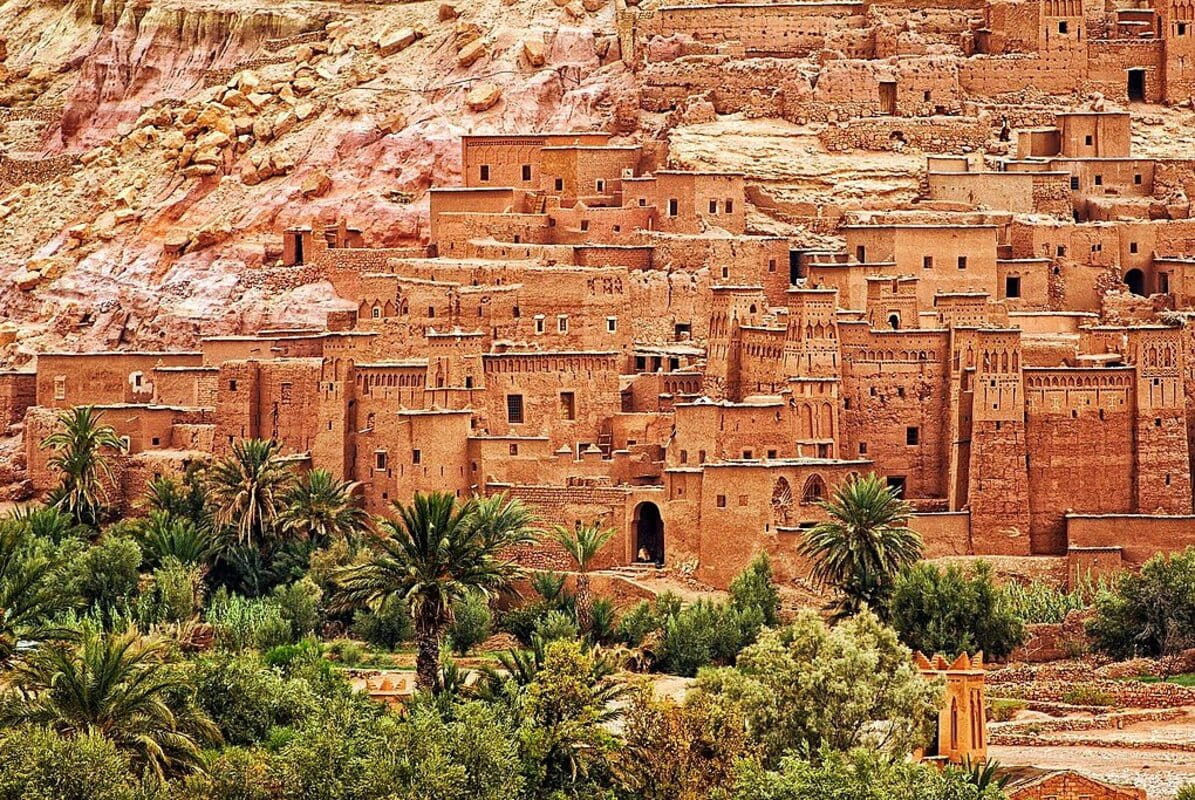
Marrakesh stands as a legendary city where the fragrances of spices intertwine with the melodies of street musicians and ancient walls of red clay preserve secrets from a thousand years of history. You may not have known that this city, founded back in the eleventh century, became the cradle of the Almoravid dynasty and remains one of the most vibrant examples of Arab-Berber culture anywhere on Earth. Fascinating facts about Marrakesh will reveal a place where every alleyway of the souk tells its own story and architectural masterpieces blend Islamic sophistication with African vitality. Interesting facts about this Moroccan gem help explain why Marrakesh has captivated travelers, poets, and seekers of inspiration from across the globe for countless centuries.
- Marrakesh was founded in 1062 by Sultan Yusuf ibn Tashfin as a military encampment for the Almoravid dynasty and rapidly evolved into a strategic hub for trans-Saharan caravan trade. The city was deliberately positioned at the crossroads of vital routes connecting the Sahara Desert with the Atlantic Ocean and Mediterranean Sea. Within just a few decades Marrakesh had transformed into the capital of a powerful empire stretching from Spain all the way to Senegal.
- The name Marrakesh derives from the Berber phrase Mur-Akush meaning Land of God or Country of God reflecting the city’s profound spiritual significance to indigenous populations. European travelers often pronounced the city’s name as Morocco leading to confusion that ultimately resulted in the entire nation being named after its most famous city. This linguistic phenomenon makes Marrakesh the only city in the world to have given its name to its own country.
- The medina of Marrakesh is encircled by massive ramparts stretching over ten kilometers in length originally constructed during the twelfth century under the Almohad dynasty. These walls reach heights of up to eight meters and were built using local red clay and lime which gives them their distinctive terracotta hue especially dramatic at sunset. Nineteen ornate gates punctuate these fortifications each with its own unique history and architectural character.
- Jemaa el-Fnaa square has been designated by UNESCO as a Masterpiece of the Oral and Intangible Heritage of Humanity and stands as the only location on Earth to receive such recognition while still actively functioning. This legendary plaza transforms each evening into a vast open-air theater featuring storytellers snake charmers musicians and acrobats captivating audiences until dawn. By day thousands of vendors sell everything from traditional spices and argan oil to contemporary handicrafts creating an ever-changing sensory experience.
- The Koutoubia Mosque built in the twelfth century remains the tallest structure in Marrakesh as local regulations strictly prohibit any building from exceeding the height of its minaret. This seventy-meter minaret served as the architectural prototype for Seville’s famous Giralda tower after Muslim rulers departed the Iberian Peninsula. The mosque’s name comes from the Arabic word koutoubia meaning place of booksellers as a major book market once flourished in its shadow.
- The Majorelle Garden created by French painter Jacques Majorelle during the 1920s was rescued from certain destruction through the dedicated efforts of fashion designer Yves Saint Laurent and his partner Pierre Bergé in 1980. These botanical gardens astonish visitors with their unique Majorelle blue a vivid cobalt shade the artist borrowed from traditional Berber ceramics. The garden complex houses the Berber Museum containing one of the world’s finest collections of indigenous North African artifacts and jewelry.
- Marrakesh boasts Africa’s longest continuous market with more than three thousand stalls winding through the labyrinthine alleys of the ancient medina. This commercial district has operated without interruption for over nine centuries with different quarters specializing in particular crafts such as the Kissaria district for goldsmiths and Souk Nejjarine for woodworking. Artisanal knowledge passes from generation to generation with families maintaining their specific trade specialties for centuries.
- The Bahia Palace constructed in the late nineteenth century encompasses over eight hundred rooms spread across eight hectares and astounds visitors with its architectural complexity and lavish decoration. Every chamber features intricate cedar wood carvings zellij tilework and Italian Carrara marble reflecting the international connections of Morocco during that era. Despite its enormous scale the palace was ingeniously designed to provide complete privacy for the grand vizier’s four wives and numerous concubines.
- Marrakesh earned its nickname the Red City from the distinctive hue of buildings constructed with local red clay which takes on an especially warm glow during sunset hours. This clay serves both aesthetic and practical purposes as its thermal properties naturally maintain cool interiors during scorching summers and retain warmth during chilly desert winters. Even contemporary structures within the historic medina must adhere to traditional color palettes to preserve the city’s unique visual identity.
- Marrakesh maintains a unique tradition of crafting traditional Moroccan lanterns from copper and colored glass each requiring several days of meticulous handwork by skilled artisans. Craftsmen employ perforation techniques to create complex geometric patterns that cast mesmerizing shadow designs across walls when illuminated from within. Each lantern is considered a singular work of art as even master craftsmen cannot precisely replicate identical patterns twice due to the organic nature of the handcrafting process.
- The Saadian Tombs built during the sixteenth century were lost to history for three centuries until French archaeologists accidentally rediscovered them in 1917 while conducting aerial surveys. This necropolis contains the resting places of sixty members of the Saadian dynasty including Sultan Ahmad al-Mansur who transformed Marrakesh into the capital of a vast empire. The Chamber of Twelve Columns dazzles visitors with two tons of gold leaf Italian Carrara marble and exquisitely carved cedar wood ceilings.
- Marrakesh houses the Ben Youssef Madrasa founded in the fourteenth century which once ranked among the largest Islamic colleges in North Africa accommodating up to nine thousand students from across the Muslim world. Scholars gathered here to study the Quran Islamic jurisprudence mathematics astronomy and philosophy under the patronage of Sultan Abu al-Hasan Ali ibn Othman. Today preserved as a museum its walls and ceilings display some of the most intricate stucco and cedar wood carvings ever created in the Islamic world.
- Traditional Moroccan hammams in Marrakesh continue operating using the same techniques developed over a millennium ago relying on natural hot water and steam systems without modern mechanical intervention. The hammam experience involves multiple stages beginning with steam bathing followed by vigorous exfoliation with a kessa glove and concluding with black soap massage and relaxation. For locals these bathhouses serve as essential social institutions where business deals are negotiated and community news is exchanged alongside personal cleansing.
- Marrakesh preserves a unique culinary tradition of preparing tagine in distinctive conical clay pots that create a self-basting environment by condensing steam and returning moisture to the ingredients during slow cooking. This ancient cooking method allows for extraordinary flavor combinations merging savory meats with sweet fruits and aromatic spices in ways impossible to achieve through other techniques. The most celebrated version features lamb slow-cooked with prunes and almonds often served during festive family gatherings and religious celebrations.
- The Agafay Desert located just four hours from Marrakesh offers the closest desert experience to the city and has become an increasingly popular excursion for visitors seeking contrast. Many travelers journey here by camel to spend nights beneath the brilliant Saharan stars while enjoying traditional Berber music and dance performances around crackling campfires. This excursion provides a profound sensory contrast between the vibrant intensity of the medina and the serene vastness of the desert landscape.
- Marrakesh maintains an ancient tradition of leather tanning using methods unchanged for centuries including natural dyeing processes in stone vats filled with substances like pigeon droppings which soften hides through enzymatic action. This time-honored technique imparts a distinctive aroma and supple texture to Moroccan leather unattainable through modern chemical processes. The Chouara Tannery quarter in the medina remains one of the world’s last fully functional traditional tanneries where families have practiced this craft for generations.
- The Marrakesh Popular Arts Festival held annually each spring gathers thousands of performers from across Morocco and North Africa celebrating diverse musical traditions. During the festival Jemaa el-Fnaa transforms into a massive open-air performance space featuring Gnawa spiritual music Berber folk songs and contemporary fusions of African rhythms. This celebration has become vital for preserving intangible cultural heritage particularly the oral traditions of indigenous Amazigh communities facing modernization pressures.
- Marrakesh hosts Africa’s largest golf destination featuring six championship courses designed by renowned architects including Robert Trent Jones Sr and Cabell B Robinson. These meticulously maintained fairways wind through palm groves and olive orchards creating a striking juxtaposition between modern sport and traditional Moroccan landscapes. The city regularly hosts professional tournaments attracting international players while maintaining environmental sensitivity through water conservation practices.
- Traditional Moroccan carpets woven in villages surrounding Marrakesh possess a distinctive characteristic where each pattern tells a story or conveys the weaver’s personal wishes and experiences. Berber women employ looms that have changed little over the past millennium creating textiles entirely by hand over periods ranging from several months to multiple years. Every color carries symbolic meaning with red representing protection blue symbolizing wisdom and green embodying fertility and prosperity in Amazigh cosmology.
- Marrakesh once housed an advanced astronomical observatory constructed in the sixteenth century by order of Sultan Ahmad al-Mansur for celestial observation and agricultural planning. This scientific facility was among the most sophisticated of its era enabling Moroccan scholars to make precise astronomical calculations for navigation seasonal forecasting and religious calendar determination. Today the Museum of Moroccan Arts preserves ancient astrolabes quadrants and manuscripts demonstrating the Islamic world’s significant contributions to medieval astronomy and mathematics.
Marrakesh endures as a city where past and present coexist in remarkable harmony creating an atmosphere simultaneously mystical and vibrantly alive. Incredible facts about this Moroccan treasure confirm that true beauty resides not merely in monumental architecture but in the daily rituals and living traditions of its inhabitants. Interesting facts about Marrakesh remind us of the vital importance of preserving cultural diversity amidst globalization’s homogenizing forces. Fascinating discoveries within this ancient city will continue inspiring travelers to seek depth authenticity and human connection along every sun-drenched alleyway and hidden courtyard.


