
Crocodiles stand as living witnesses to prehistoric times, with an evolutionary history stretching back more than two hundred million years, having survived even the mass extinction that wiped out the dinosaurs. You might not have known that these formidable predators possess remarkably complex social structures and intelligence often underestimated due to their seemingly primitive appearance. These fascinating facts will reveal crocodiles not as mindless monsters but as sophisticated hunters with unique adaptations that have allowed them to dominate aquatic ecosystems for millions of years. Today we will dive into the captivating reality of these ancient creatures where each fact opens a window into their extraordinary existence. Prepare to discover incredible details about some of the most efficient predators on our planet.
- Crocodiles belong to Earth’s most ancient lineages with ancestors appearing during the Triassic period over two hundred million years ago. They survived the Cretaceous mass extinction that eliminated dinosaurs thanks to their exceptional adaptability to environmental changes. Modern crocodiles retain many anatomical features of their prehistoric forebears making them genuine living fossils. This evolutionary stability demonstrates the perfection of their design as semi-aquatic predators refined across geological epochs.
- The crocodile heart features a unique four-chambered structure with an additional Panizza’s foramen that regulates blood flow during submersion. This mechanism allows crocodiles to bypass blood circulation through the lungs while submerged conserving oxygen for vital organs during extended dives. Thanks to this adaptation adult individuals can remain underwater for up to two hours while resting. Such physiological sophistication makes crocodiles unique among contemporary reptiles.
- Crocodiles possess the most powerful bite force in the animal kingdom exceeding three thousand pounds per square inch in the Nile crocodile species. Yet the muscles responsible for opening the jaws are remarkably weak so a simple rubber band can hold shut the jaws of an adult crocodile. This asymmetry in strength evolved from the necessity to maintain grip on prey rather than to open the mouth widely. This paradox makes crocodiles simultaneously extremely dangerous yet vulnerable in specific circumstances.
- The incubation temperature of crocodile eggs completely determines the sex of the offspring a rare phenomenon in the animal kingdom. Temperatures below thirty degrees Celsius produce predominantly females while temperatures above thirty-four degrees Celsius yield mostly males. Intermediate temperatures result in mixed-sex clutches with varying ratios. This temperature-dependent sex determination makes crocodiles particularly vulnerable to global warming which could disrupt natural sex ratios in wild populations.
- Crocodiles demonstrate remarkably complex parental behavior rarely seen among reptiles. Females construct specialized nests from vegetation and soil carefully regulating temperature for optimal egg development. During hatching mothers respond sensitively to hatchling vocalizations gently extracting eggs with their teeth and transporting newborns to water. Some species protect their offspring for up to two years an exceptionally long period for reptiles reflecting deep parental investment.
- Despite their reputation as sluggish creatures crocodiles can achieve impressive speeds up to twelve kilometers per hour over short distances on land. In water they utilize their powerful tails for explosive bursts reaching speeds exceeding thirty kilometers per hour during hunting maneuvers. This capacity for sudden acceleration makes them unpredictable predators even for experienced hunters. Crocodiles frequently employ this speed for ambush attacks on prey near water edges.
- Crocodiles possess a unique lacrimal system unrelated to emotions but serving to excrete excess salt from their bodies. Specialized glands near the eyes efficiently filter salt which proves especially crucial for saltwater crocodiles feeding in marine environments. This adaptation enables survival in conditions where other freshwater crocodiles could not exist. This physiological feature gave rise to the myth of crocodile tears symbolizing false sorrow.
- The crocodile brain demonstrates unexpectedly advanced development for a reptile with well-formed structures responsible for learning and memory. Research has shown crocodiles can use tools such as balancing sticks on their snouts during bird nesting season to camouflage themselves while hunting. They also display group coordination when hunting fish forming semicircles to corral prey effectively. This intelligence allows adaptation to environmental changes and survival amid human activity.
- The saltwater crocodile stands as the largest living reptile on Earth with mature males reaching lengths beyond seven meters and weights exceeding one thousand kilograms. This species can traverse hundreds of kilometers across open ocean utilizing currents for migration between islands. Saltwater crocodiles possess specialized salt-excreting glands enabling them to drink saline water and inhabit marine environments. Their range extends from Southeast Asia through northern Australia to Pacific islands.
- Crocodiles possess extraordinarily sensitive integumentary sense organs capable of detecting minute water vibrations from potential prey movement. These specialized receptors distributed around the jaws and across the body function as hydrodynamic antennas. Even in complete darkness crocodiles can precisely locate fish or other prey by detecting millimeter-scale waves on the water surface. This capability makes them effective nocturnal hunters regardless of visibility conditions.
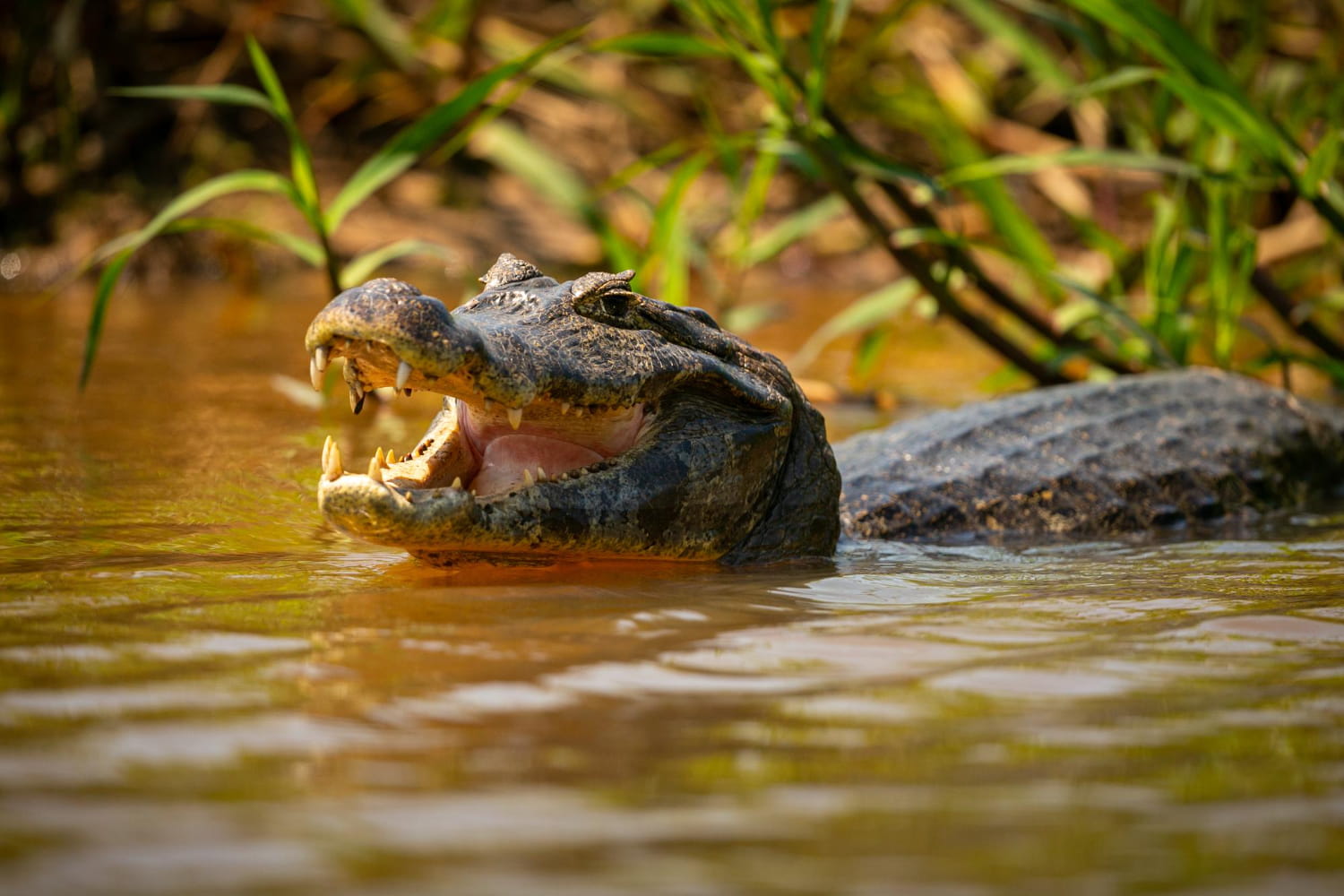
- Crocodiles employ a unique thermoregulation mechanism opening their mouths to cool their bodies in hot weather often mistakenly interpreted as aggressive behavior. This process known as gaping allows temperature regulation without expending energy on active cooling mechanisms. Additionally crocodiles frequently bask on riverbanks to elevate body temperature to optimal levels required for efficient digestion. Such behavior forms an essential component of their physiology as ectothermic animals.
- Crocodile teeth undergo continuous replacement throughout their lifetime with each tooth potentially being replaced up to fifty times. An adult crocodile may simultaneously possess up to eighty teeth in its jaws while over three thousand teeth develop across its lifespan. New teeth grow beneath old ones pushing them out when they become worn or damaged. This adaptation ensures crocodiles maintain formidable predatory capability throughout their extended lifespans.
- Crocodiles exhibit exceptional longevity with some captive individuals reaching ages beyond one hundred years. In natural habitats average lifespans range from forty to eighty years depending on species and environmental conditions. This longevity allows crocodiles to accumulate substantial hunting experience and danger avoidance strategies over decades. Extended lifespans also mean slow population dynamics complicating numerical recovery following significant declines.
- Crocodiles demonstrate complex social hierarchies where dominant males control prime territories along waterways with abundant prey resources. Younger and weaker individuals must occupy less desirable areas or live on the periphery of dominant crocodiles’ territories. During breeding seasons this hierarchy becomes especially pronounced with intense dominance displays between competing males. This social structure minimizes physical conflicts through visual and acoustic signals rather than direct aggression.
- Crocodiles employ a unique hunting technique known as the death roll where they seize prey and rapidly spin in water to tear it apart. This maneuver generates colossal centrifugal forces enabling crocodiles to overcome their physical limitations and dismember even large prey animals. For substantial mammals such as zebras or antelopes this spinning motion proves fatal within seconds. This hunting technique remains unique among contemporary predators reflecting specialized evolutionary development.
- Crocodiles possess remarkably effective immune systems with blood containing unique antimicrobial peptides capable of destroying even highly resistant bacteria. Research demonstrates crocodile plasma kills up to ninety-seven percent of harmful bacteria under laboratory conditions. This property enables rapid healing of serious wounds sustained during territorial combat or hunting without infection risk. Scientists study these peptides for developing novel antibiotics applicable to human medicine.
- Crocodiles play crucial roles in maintaining aquatic ecosystem health by creating water holes during drought periods through their bodily presence and movements. These temporary reservoirs become refuges for fish amphibians and other aquatic organisms that would otherwise perish during primary water source desiccation. Additionally crocodiles regulate populations of fish and other animals preventing overpopulation and ecosystem imbalance. As apex predators they sustain biological equilibrium within their habitats.
- Crocodiles possess extraordinarily acute olfactory senses enabling detection of blood or other substances in water at concentrations as low as one part per million. This capability proves especially valuable for locating injured prey at considerable distances in turbid water conditions. Crocodiles also utilize scent for communication with conspecifics through pheromones released during breeding seasons. Such sophisticated sensory equipment makes them effective hunters even without visual confirmation.
- Crocodiles display unexpected play behavior particularly among juveniles indicating high intelligence levels and social development. Young crocodiles frequently engage in object play with each other pulling items or simulating hunting behaviors that help develop survival skills. Some observations document adult crocodiles occasionally playing with objects such as balls or sticks tossed into water. This play behavior remains rare among reptiles suggesting complex cognitive processes underlying their behavior.
- Crocodiles possess a unique capacity for extended fasting surviving without food for up to a year thanks to efficient metabolism and exceptional energy conservation abilities. During fasting periods they reduce metabolic rates to minimum levels becoming nearly motionless while conserving every calorie. This adaptation enables survival during seasonal prey scarcity or prolonged drought conditions. Despite extended fasting crocodiles can instantly activate hunting responses when potential prey appears.
These incredible facts merely begin to unveil the complex world of crocodiles who are far more than primitive predators but rather sophisticated beings with extraordinary adaptability and intelligence. Their capacity to survive across millions of years testifies to the perfection of their evolutionary design and their vital role in maintaining ecosystem balances. Understanding the true nature of crocodiles helps humanity discover pathways for peaceful coexistence with these ancient inhabitants of our planet. The captivating story of crocodiles reminds us that even the most fearsome-looking creatures often possess remarkable complexity and essential importance within the natural world.


