
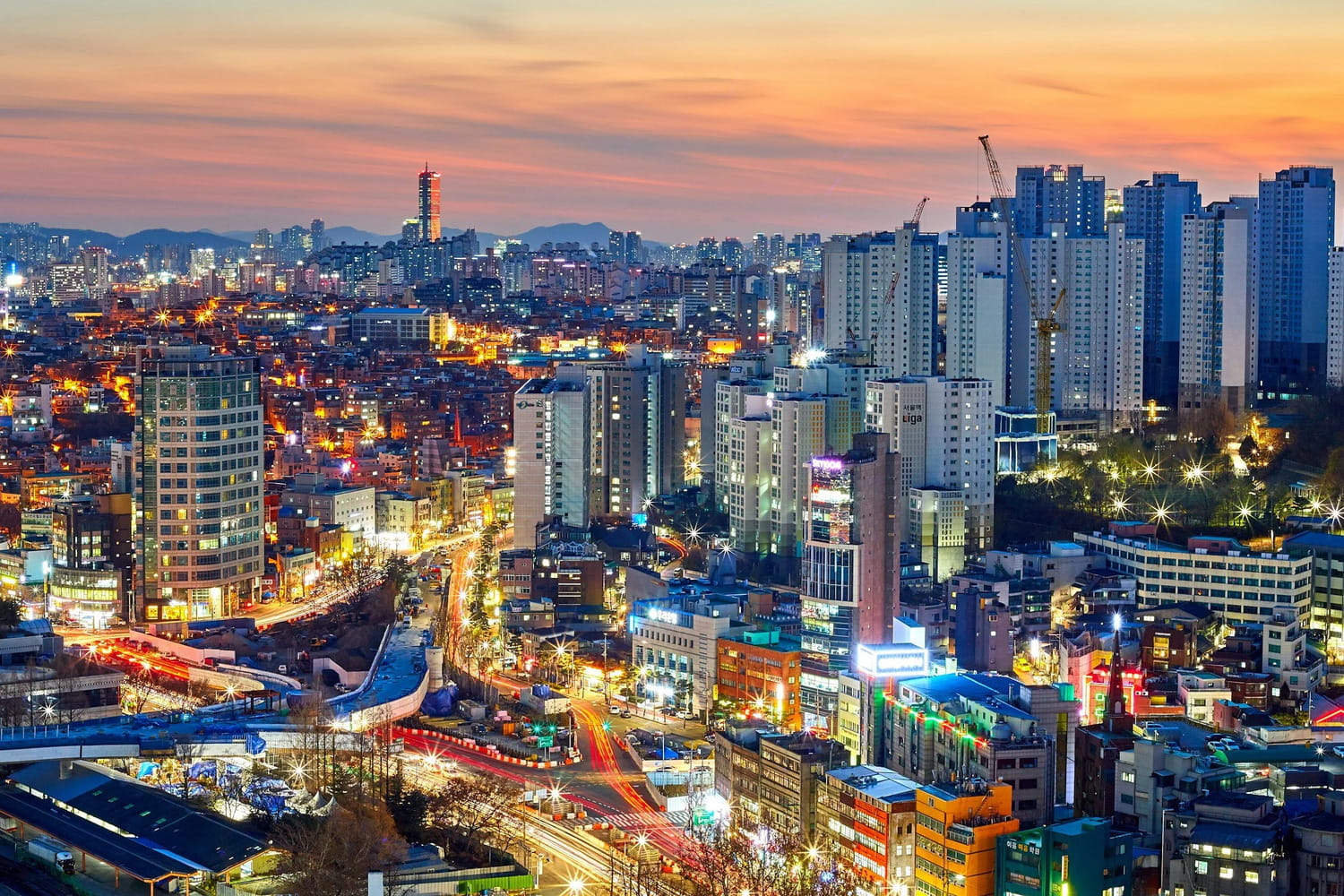
Seoul is a мегаполис where a thousand years of history harmoniously coexist with cutting-edge technology, creating a unique urban landscape with no real equivalent anywhere else in the world. You may not know that this city is one of the most densely populated on the planet, with more than ten million permanent residents living in an area smaller than many European capitals. These fascinating facts reveal Seoul not only as the center of the Korean Wave, but also as a city with deep Buddhist roots, innovative infrastructure, and an astonishing level of organization. Today we will travel through time and space to discover remarkable details about the capital of South Korea, a city that constantly impresses with its dynamism and cultural depth. Get ready to learn how Seoul became a true symbol of modernity without losing its connection to a rich historical past.
- Seoul is considered one of the oldest continuously inhabited cities in the world, with its history as a capital dating back to 1394, when King Taejo founded the Joseon dynasty and moved the capital to Hanyang. However, people lived in the area of modern Seoul more than two thousand years ago during the period of the Three Kingdoms. The city has preserved numerous historical landmarks, including five grand palaces of the Joseon dynasty, the most famous of which is Gyeongbokgung. This uninterrupted historical continuity makes Seoul a true treasure for historians and admirers of cultural heritage.
- Seoul ranks first in the world for internet speed and accessibility, with more than ninety percent of households connected to gigabit internet. The city is fully covered by free Wi-Fi in public spaces, including subways, buses, and parks. This digital infrastructure has become the foundation for innovative services ranging from cashless payments to smart transportation systems. Such a level of technological development has turned Seoul into a real laboratory of future urbanism.
- The Han River, which flows through the center of Seoul, was heavily polluted in the 1960s, but thanks to a large-scale cleanup program it has been transformed into a recreational area with parks, cycling paths, and beaches. Today its banks host popular leisure zones such as Banpo and Yongsan, where residents spend their free time. Every evening, the Banpo Bridge hosts a light and fountain show in which more than ten thousand LED lights create colorful displays. This example of ecological revival has become a model for many cities around the world.
- The Seoul subway is one of the most efficient and convenient systems in the world, covering not only the city itself but also surrounding regions through more than thirty lines. The system is known for exceptional punctuality, cleanliness, and intuitive navigation with English signage at all stations. Most platforms are equipped with safety doors and air-conditioning systems for passenger comfort. Every day, the subway carries more than seven million passengers, making it the backbone of the city’s transportation network.
- Seoul is home to one of the largest urban parks in the world, Namsan Park, which surrounds Mount Namsan in the heart of the city and offers residents an oasis of nature among skyscrapers. At the top of the mountain stands the famous Seoul Tower, providing panoramic views of the entire city. The park is a popular place for walks, picnics, and romantic meetings, especially in the evening when the tower is illuminated with colorful lights. This green space demonstrates the city’s ability to integrate nature into an urban environment.
- Seoul is a global capital of the cosmetics industry, hosting the headquarters of giants such as Amorepacific and LG Household & Health Care. The city is famous for its countless cosmetic stores, especially in districts like Myeongdong and Gangnam, where thousands of skincare products can be found. The Korean ten-step skincare philosophy has become a worldwide trend, influencing perceptions of beauty across the globe. This industry generates billions of dollars annually and represents a significant part of South Korea’s economy.
- Seoul has a unique safety system known as City Safety, where more than fifty thousand surveillance cameras are integrated with sensors and rapid response systems. This network allows authorities to react quickly to emergencies ranging from fires to medical incidents, often before emergency services arrive. The city is also known for its low crime rate, making it one of the safest мегаполises in the world for tourists. This approach to security is made possible through a combination of technology and social responsibility.
- The Itaewon district is a cultural melting pot of Seoul, where traditional Korean culture intersects with international influences due to the presence of a U.S. military base since the 1950s. Here one can find restaurants representing the cuisines of more than one hundred countries, along with international schools and cultural centers. Itaewon has become a symbol of Seoul’s cosmopolitan character and a place where locals and expatriates interact in everyday life. The district is especially lively in the evening thanks to its numerous bars and clubs.
- Seoul is home to the largest concentration of Christian churches in the world, including the Yoido Full Gospel Church, the largest Protestant congregation with more than eight hundred thousand members. Christianity spread in Korea during the nineteenth century and became one of the dominant religions alongside Buddhism. Many churches in Seoul feature modern architecture and use advanced technologies during services. This religious diversity reflects the city’s spiritual openness and its ability to integrate different belief systems.
- The Gyeongbokgung palace complex was destroyed during the Japanese invasions of the sixteenth century and was restored only in the twentieth century after Korea regained independence. Today it is the city’s main tourist attraction, where traditional guard-changing ceremonies are held daily. The palace grounds also include the National Museum, which houses thousands of artifacts from Korean history. Visiting the palace allows travelers to step back into the era of the Joseon dynasty and understand the foundations of Korean culture.
- Seoul is the center of the global phenomenon known as Hallyu, hosting the headquarters of major entertainment agencies such as SM Entertainment, YG Entertainment, and JYP Entertainment. These companies train talents through multi-stage systems that can last several years before an artist’s debut. K-pop concerts in Seoul often attract tens of thousands of fans from all over the world, creating a unique atmosphere of international cultural exchange. This industry not only promotes Korean culture globally but also brings significant economic benefits to the country.
- The city has an innovative waste management system that requires residents to sort garbage according to strict rules and use prepaid bags for disposal. This approach has significantly reduced landfill waste and increased recycling rates to more than sixty percent. In many districts, automated containers can be opened only with special resident cards. Such a system has made Seoul one of the cleanest cities in Asia despite its high population density.
- Seoul is one of the most densely populated cities in the world, with more than sixteen thousand people per square kilometer in central areas. Despite this, the city impresses with its organization, cleanliness, and efficiency of public transportation. High-rise residential complexes such as those in Songpa and Gangnam create vertical communities where all essential services are within walking distance. This urban model has become an example for many Asian cities seeking solutions to rapid population growth.
- The Dongdaemun district is the largest clothing trade center in Asia, with more than thirty markets and shopping complexes operating around the clock. Here one can find everything from wholesale clothing lots to exclusive designer collections at affordable prices. Many stores open after midnight to serve designers and merchants working in the fashion industry. This district has become a symbol of Seoul’s entrepreneurial spirit and its role as a fashion capital of East Asia.
- Seoul has a unique system of underground cities that combine shopping centers, restaurants, and transportation hubs into unified complexes beneath the surface. The largest of these is the Gangnam underground city, stretching for several kilometers and connecting dozens of subway stations. These spaces are especially popular in winter, when outdoor temperatures are low, offering residents a comfortable environment for shopping and entertainment. Such infrastructure demonstrates an innovative approach to using urban space under conditions of dense development.
- The city is home to the highest number of restaurants per capita in the world, where visitors can enjoy not only traditional Korean cuisine but also dishes from every corner of the globe. Korean food is known for its diversity, from kimchi and bibimbap to Korean barbecue with marinated meat. Many restaurants feature open kitchens where guests can watch the cooking process. This culinary diversity makes Seoul a true paradise for gourmets worldwide.
- Seoul has a well-developed cycling infrastructure covering more than two hundred kilometers and connecting different districts along the Han River. The city’s bike-sharing program, Ttareungyi, allows users to pick up a bicycle at one station and return it at another for a symbolic fee. The cycling network continues to expand as part of a strategy to reduce air pollution and promote a healthy lifestyle. This initiative reflects the city’s commitment to a more environmentally oriented future.
- Seoul is home to the tallest skyscraper in Asia, the Lotte World Tower, standing 555 meters high and housing a hotel, offices, shopping areas, and an observation deck on the 123rd floor. Completed in 2017, the building became a symbol of South Korea’s economic growth and Seoul’s ambition to be a global city. The tower’s architecture is inspired by traditional Korean motifs, particularly the shape of Joseon-era ceramic bowls. From the observation deck, visitors can enjoy panoramic views of the city and surrounding mountains.
- Seoul is considered one of the most educated cities in the world, with more than ninety percent of the population holding higher education degrees or currently studying at universities. The city hosts prestigious institutions such as Seoul National University, Korea University, and Yonsei University, all of which rank among the world’s top one hundred universities. A highly competitive education system sets rigorous academic standards and drives innovation and economic development. This education-focused culture is one of the key reasons behind South Korea’s technological leadership.
- The city has a distinctive street food tradition, with hundreds of stalls offering tasty and affordable dishes such as tteokbokki, odeng, and hotteok. Street food is not only a source of nourishment but also an important social ritual where people gather after work or school. Many vendors operate in the same location for decades, becoming an integral part of local communities. This tradition highlights the warmth and hospitality of Korean society even within a modern мегаполис.
- Seoul is home to the highest number of movie theaters per capita in the world, reflecting Koreans’ deep love for cinema and entertainment. The Korean film industry, often associated with the Hallyu wave, gained global recognition through films such as Parasite, which won the Academy Award in 2020. Many theaters in Seoul offer innovative viewing formats, including 4DX experiences with moving seats and special effects. This cinema culture represents an important element of South Korea’s soft power on the international stage.
These remarkable facts reveal only part of Seoul’s multifaceted character, a city that skillfully combines ancient traditions with bold innovation. They show how the capital has become a bridge between past and future, proving that progress does not require abandoning cultural identity. You may not have realized how deeply this city integrates technology into everyday life without losing the human dimension of its urban environment. Seoul remains a living example of how a city can grow dynamically while preserving its unique soul and cultural heritage for future generations.


