
Unitarianism as a form of state structure and a religious movement has a multifaceted history spanning centuries of political transformations and spiritual quests. Interesting facts about this phenomenon reveal unexpected connections between the political organization of states and the religious beliefs of millions of people around the world. From the royal palaces of Europe to the congregations of New England, from philosophical discussions about the nature of God to practical matters of state governance, unitarianism has left an indelible mark on the history of civilization. You may not have known that this term unites completely different yet interconnected concepts that have influenced the formation of the modern world. Fascinating facts about unitarianism demonstrate how ideas can transform and adapt to various cultural contexts.
- Unitarianism as a form of state structure presupposes a centralized system of power where the entire fullness of state sovereignty belongs to the central government, while administrative-territorial units have no political autonomy. Unlike federal states, unitary countries are characterized by a single constitution, a unified legal system, and centralized management of all state functions. This particular model is the most widespread in the world, as approximately 90% of all states on the planet have a unitary structure. This system ensures greater national unity and simplifies the decision-making process at the national level.
- Religious unitarianism emerged in the 16th century as a movement within Christianity that rejected the doctrine of the Trinity and affirmed the unity of God. The founders of this movement believed that Jesus Christ was an outstanding teacher and prophet but not a divine person equal to God the Father. Fausto Sozzini, an Italian theologian, became one of the most influential systematizers of unitarian views in his work “The Racovian Catechism” of 1605. These ideas spread first in Transylvania and Poland, where Unitarians obtained certain religious freedom despite persecution from the Catholic and Protestant churches.
- France is a classic example of a unitary state with deep historical roots of power centralization dating back to the times of absolute monarchy. The French Revolution of 1789 further strengthened the unitary structure by abolishing feudal privileges and creating a system of departments with equal status. Napoleon Bonaparte completed this process by introducing the institution of prefects who represented central authority locally and controlled all aspects of regional administration. To this day, France remains one of the most centralized unitary states in Europe, although recent decades have brought some decentralization of powers.
- The Edinburgh Declaration of 1813 became a turning point for British unitarianism when Unitarians publicly announced their religious convictions and demanded legal recognition. Until that moment, Unitarians in England were forced to hide their views due to the threat of persecution for blasphemy and heresy. Joseph Priestley, an outstanding scientist and Unitarian preacher, was forced to emigrate to America after an enraged mob burned his house and laboratory in Birmingham in 1791. Legislative recognition of Unitarians in Britain occurred only in 1813 with the adoption of the Unitarian Relief Act.
- Japan demonstrates a unique example of a unitary state with a high level of cultural and administrative unity that was formed over centuries of isolation and centralized feudal rule. The Meiji Restoration of 1868 definitively established Japan’s unitary structure by liquidating feudal principalities and creating a system of prefectures subordinate to the emperor. The Japanese model of unitarianism combines strong central power with effective local administration, which ensures rapid implementation of national policies. This system allowed Japan to carry out swift modernization and become one of the world’s leading economies.
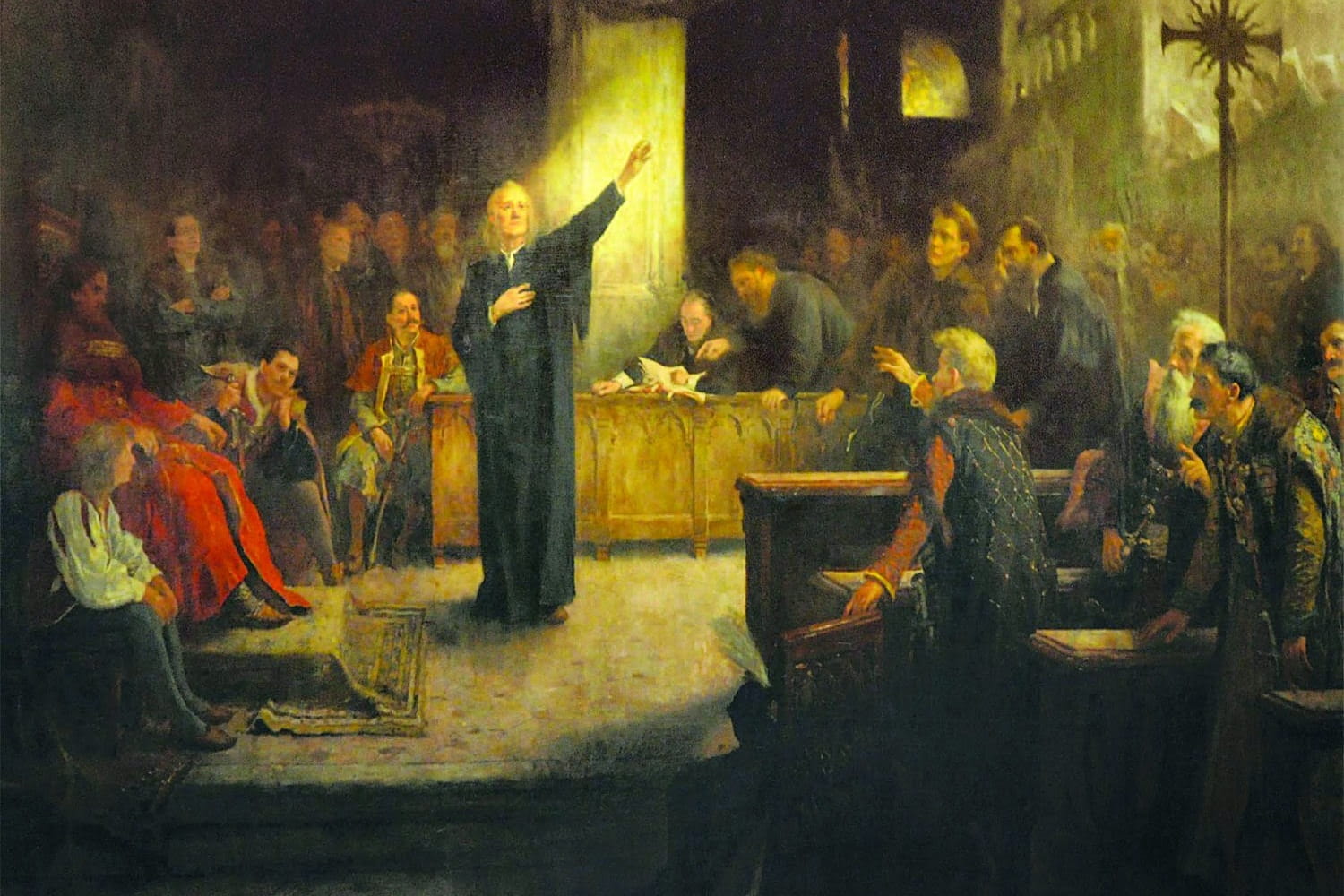
- The Transylvanian Edict of 1568 became the first legislative act in Europe that guaranteed freedom of religion, including Unitarianism. King John II Sigismund, who himself sympathized with unitarian views, proclaimed this revolutionary principle of religious tolerance for that time. Francis David, the court preacher, openly preached unitarian ideas and founded the first officially recognized Unitarian church in Kolozsvar (now Cluj-Napoca). Transylvania became a unique center of religious pluralism in an era when religious wars and persecution of dissenters prevailed in most of Europe.
- China represents the world’s most populous unitary state where centralized governance combines with enormous territory and cultural diversity. The Chinese model of unitarianism has an ancient tradition dating back to the times of the Qin dynasty, when Emperor Qin Shi Huang in the 3rd century BCE united China and created a centralized administrative system. The modern People’s Republic of China maintains a rigid unitary structure, although it formally recognizes the autonomy of some regions such as Tibet and Xinjiang. The governance system through the Communist Party ensures vertical integration of power from the center to the most remote provinces.
- American Unitarianism developed into a separate religious movement in the late 18th century, particularly in the intellectual circles of New England, where it attracted the attention of educated and progressive thinkers. Harvard University became a center of Unitarian theology when in 1805 the Unitarian Henry Ware was appointed professor of theology. Ralph Waldo Emerson, Henry David Thoreau, and other transcendentalists emerged from the Unitarian milieu, although they later developed their own philosophy. By 1825, most of Boston’s Congregationalist churches had converted to Unitarianism, which testified to its influence on American religious culture.
- Great Britain represents a complex case of a partially devolutionary unitary state where regions with delegated powers exist within the unitary framework. Scotland, Wales, and Northern Ireland received their own parliaments or assemblies in the late 1990s but retained subordination to the Westminster Parliament. This model is called “devolution” and involves transferring certain powers to regions without changing the unitary nature of the state. The British system demonstrates the flexibility of unitarianism and its ability to adapt to regional peculiarities without transitioning to federalism.
- The Polish Rakow period in the 17th century created an intellectual center of Unitarianism in the town of Rakow, where a famous academy and printing house operated. This Unitarian community, known as the Polish Brethren or Socinians, not only developed theological ideas but also conducted social experiments with equality and pacifism. The Rakow Academy produced hundreds of graduates who spread unitarian ideas throughout Europe, influencing the development of the Enlightenment. However, in 1638 the Catholic Church succeeded in closing the academy, and in 1658 all Unitarians were expelled from Poland.
- Sweden has maintained a unitary structure since medieval times when royal power gradually centralized the country’s governance. Gustav Vasa in the 16th century carried out reforms that strengthened central authority and created the foundation of the modern Swedish administrative system. Today Sweden is divided into 21 counties whose leaders are appointed by the central government, which ensures unity of state policy. The Swedish model demonstrates how unitarianism can combine with a high level of local self-government and civic participation.
- The Unitarian Universalist Association, formed in 1961 through the merger of American Unitarians and Universalists, became one of the most liberal religious organizations in the world. This church does not require its members to recognize specific dogmas and accepts people of various religious views, including atheists and agnostics. Unitarian Universalists actively support social justice, LGBT community rights, environmental movements, and interfaith dialogue. Today this association numbers about a thousand congregations primarily in the USA and Canada and continues to influence progressive religious movements.
- Italy as a unitary state was created as a result of the Risorgimento in the 19th century when various principalities and kingdoms united under the rule of the Savoy dynasty. The unification process was completed in 1861 with the proclamation of the Kingdom of Italy with centralized power based on the Piedmontese administrative model. Five Italian regions received special autonomous status after World War II due to ethnic and historical peculiarities, but this did not change the unitary character of the state. Italian unitarianism ensured the preservation of national unity despite significant cultural and economic differences between the south and north of the country.
- John Biddle is considered the “father of English Unitarianism” for his theological treatises of the 17th century in which he systematically rejected the doctrine of the Trinity. Despite repeated imprisonments and persecutions, Biddle continued to preach and publish his works, including the famous “Twelve Arguments Against the Divinity of the Holy Spirit.” His followers created the first Unitarian congregation in London, although official recognition would have to wait another century and a half. Biddle died in prison in 1662, becoming a martyr for his convictions and inspiring future generations of Unitarians.
- Spain developed a complex unitary system with “autonomous communities” that have significant powers in cultural and educational spheres but remain under the control of the central government. The Constitution of 1978 created 17 autonomous regions with varying degrees of self-government, responding to the historical demands of Catalonia, the Basque Country, and Galicia. However, the Spanish model clearly differs from federalism because the central government retains the right to control the activities of regions and even suspend their autonomy. This is exactly what happened in 2017 when Madrid suspended Catalan autonomy due to an attempt to declare independence.
Incredible facts about unitarianism reveal an amazing parallel between the political and religious spheres where the aspiration for unity manifests itself in completely different forms. From centralized states to faith in one God, the concept of unitarianism demonstrates the universality of the human striving for wholeness and consistency. Fascinating stories about Unitarian martyrs and successful unitary states show that ideas can be extremely resilient and adaptive regardless of the context of their application. This phenomenon continues to shape the modern world, influencing both the political structure of countries and the spiritual quests of millions of people.


