
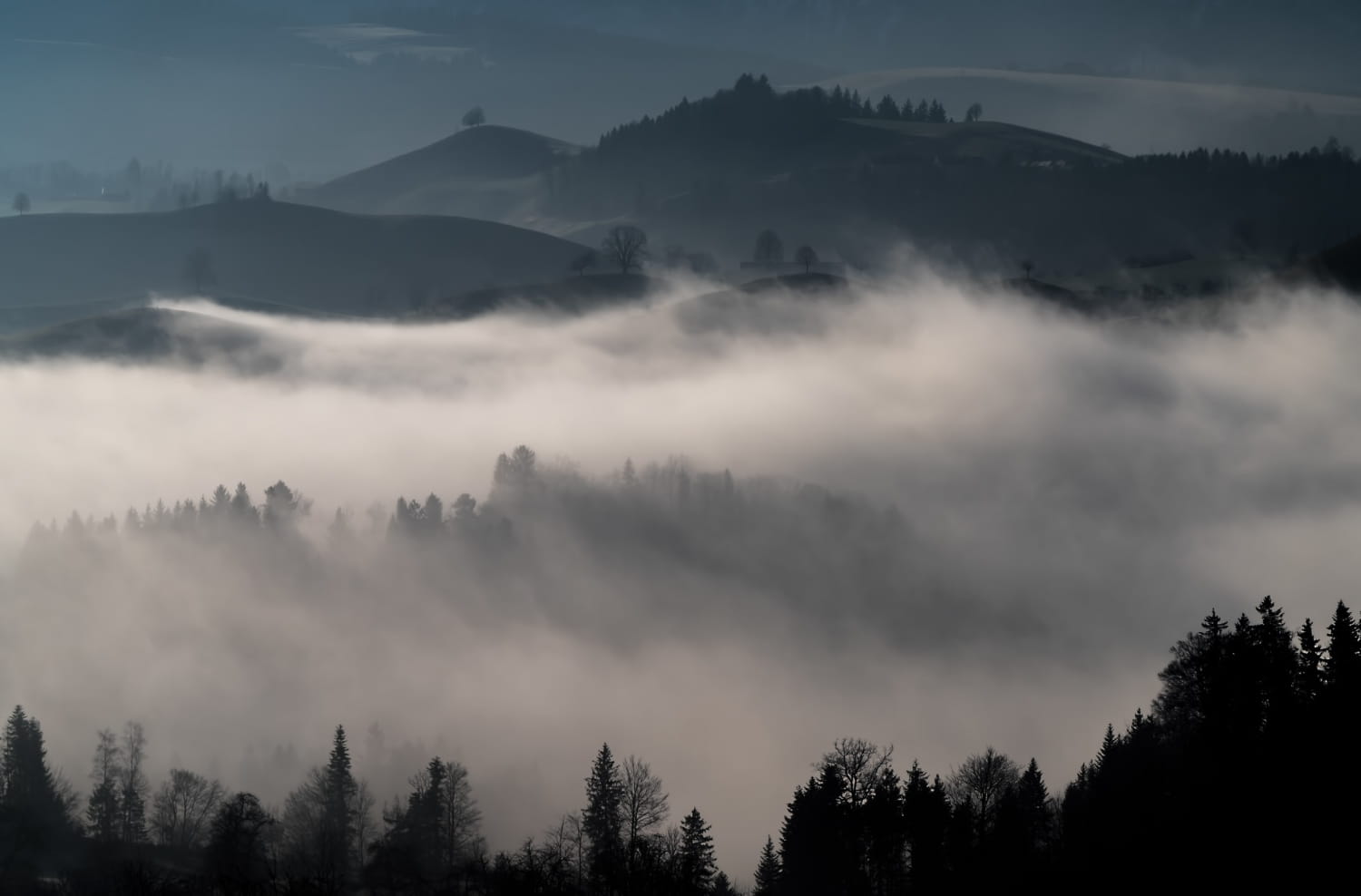
Fog stands as one of nature’s most mysterious and beautiful atmospheric phenomena, captivating humanity for centuries with its ethereal beauty and enigmatic presence. This natural occurrence can transform a familiar landscape into a dreamlike realm within moments, while simultaneously posing serious hazards to transportation and human safety. Many people perceive fog merely as a low-lying cloud near the ground without understanding the complex physical processes responsible for its formation. Today we invite you to discover incredible facts about fog that reveal the scientific wonder behind this common yet extraordinary phenomenon. You will encounter fascinating details about fog varieties, their ecological significance, and cultural impact that you might not have known before.
- Fog forms when air cools to its dew point and water vapor condenses into microscopic droplets or ice crystals near the Earth’s surface. This process requires condensation nuclei such as dust particles, salt crystals, or other aerosols suspended in the atmosphere. Without these microscopic particles fog formation would be significantly more difficult even under favorable temperature conditions. This explains why fog develops more readily over oceans due to sea salt in the air and in polluted cities where industrial particulates serve as abundant condensation nuclei.
- The densest fogs on Earth occur along the coast of Namibia in Africa where the cold Benguela Current meets warm desert air. These fogs become so thick that visibility sometimes drops to just a few meters while providing the primary moisture source for numerous desert plants and animals. Local beetles have evolved specialized behaviors to harvest water from fog by assuming particular postures on sand dunes that facilitate droplet condensation on their bodies. Such fogs may persist for several consecutive days creating a unique microclimate within an otherwise arid region.
- Radiation fog develops on clear nights when the Earth’s surface rapidly loses heat through infrared radiation. This fog type most frequently appears in valleys and low-lying areas where cold air drains and accumulates creating ideal conditions for condensation. It typically dissipates after sunrise when solar heating warms the ground and causes air to rise again. These fogs prove especially common during autumn and winter months when nights grow longer and colder.
- Advection fog occurs when warm moist air moves horizontally over a colder surface such as ocean water or snow cover. This mechanism frequently manifests along coastlines where warm maritime air masses encounter cold ocean currents near shore. Unlike radiation fog advection fog may persist for entire days particularly when wind conditions continuously supply moist air. These fogs often envelop bridges and towers in coastal cities producing dramatic visual effects.
- Fog can contain not only water droplets but also pollutants creating hazardous smog that threatens human health. In industrial cities particles of soot sulfur compounds and other contaminants serve as condensation nuclei forming toxic mixtures. The historic London smog of 1952 combined with dense fog caused over four thousand deaths within several days. Many nations now maintain strict environmental regulations specifically to prevent similar tragedies.
- Fog height may range from several centimeters to several hundred meters though international classification defines it as fog only when visibility drops below one kilometer. When visibility measures between one and ten kilometers the phenomenon is termed mist though the physical formation process remains identical. Aviation pilots utilize specialized instruments to determine vertical fog thickness before takeoff or landing. The highest fogs have been observed in mountainous regions where they can completely obscure mountain peaks.
- Fogs play a crucial role in ecosystem water balance especially in arid regions where they serve as the sole moisture source for vegetation. In Chile’s Atacama Desert plants have adapted to harvest water directly from fog using specialized hairs on their leaves. This process known as horizontal precipitation provides a substantial portion of annual moisture in areas with minimal rainfall. Scientists have even developed specialized mesh nets for fog water collection used for supplying water in drought-prone regions worldwide.
- Mountain fogs often form through the orographic effect when air masses are forced to rise over mountain ranges and cool accordingly. As air ascends it expands and cools leading to water vapor condensation and fog or cloud formation. These fogs may surround individual peaks creating the impression that mountains float within a white veil. Many mountain ecosystems depend on such fogs as their primary moisture source during dry seasons.
- Fog possesses the ability to absorb sound creating an unusual acoustic environment where noises become muffled and seem closer than they actually are. This phenomenon occurs because water droplets in fog scatter sound waves reducing their propagation distance. Mariners have long understood this property using specialized fog signals on vessels for navigation during conditions of limited visibility. In cities during dense fog one can notice the disappearance of typical background street noise.
- Ice fog forms at extremely low temperatures when water vapor transforms directly into tiny ice crystals rather than liquid droplets. Such fogs characterize polar regions and Siberia at temperatures below minus thirty degrees Celsius. Ice crystals suspended in air create a glowing effect around light sources forming colorful halos around streetlights and windows. This fog type proves especially dangerous for aviation as ice crystals may accumulate on aircraft surfaces.
- Fogs can influence local climate functioning as a natural thermostat for the Earth’s surface. During daytime dense fog reflects sunlight slowing surface warming while at night it acts as an insulator retaining heat near the ground. Consequently regions experiencing frequent fog exhibit significantly smaller diurnal temperature variations than open sunny areas. Vineyard operators in certain countries deliberately select plots with regular morning fogs for cultivating specific grape varieties.
- The longest documented fog occurred in Antarctica where it persisted for more than two weeks continuously due to the combination of low temperatures and moist oceanic air. In temperate latitudes the most extended fogs typically last several days especially during seasonal transitions between autumn and winter. In some mountain valleys fog may linger for multiple days due to absence of wind that would otherwise disperse it. Such prolonged fogs frequently cause flight cancellations and traffic disruptions.
- Fogs hold significant importance for agriculture as they protect plants from frost during spring months. A fog layer acts as a natural blanket retaining heat near the soil surface and preventing rapid nighttime cooling. Vineyards in California and other winegrowing regions often benefit from morning fogs that moderate climate conditions and promote grape ripening. However excessively dense fogs may encourage fungal plant diseases due to persistent moisture.
- In many cultures fog has traditionally symbolized mystery transition between worlds or the presence of supernatural beings. Celtic mythology regarded fog as a veil between the world of the living and the afterlife through which fairies and spirits occasionally passed. In Japanese culture fog symbolizes the transience and impermanence of all earthly things reflected beautifully in haiku poetry. Contemporary literature and cinema frequently employ fog as a symbol of uncertainty hidden danger or spiritual revelation.
- Fog can create optical illusions such as Fata Morgana where temperature inversions in the atmosphere produce distorted images of distant objects. Mariners historically observed this phenomenon seeing mirages of cities or ships within fog that did not exist in reality. Fata Morgana occurs through refraction of light rays passing through air layers of different temperatures and densities. Such illusions played important roles in maritime history sometimes leading to tragic navigational errors.
- Fog movement speed depends on wind conditions and may vary from complete stillness to several tens of kilometers per hour. Occasionally fog advances in waves completely enveloping an area within seconds creating the impression of a living entity. Mariners term this effect a fog bank when a dense wall of fog unexpectedly surrounds a vessel. In mountainous terrain fog often flows through valleys like a liquid circumventing obstacles and filling depressions.
- Fogs influence Earth’s energy balance by reflecting solar radiation and promoting surface cooling during daytime hours. Simultaneously they trap infrared radiation emitted from the ground at night slowing heat loss to space. This dual effect makes fogs an important component of the planet’s climate system though their overall impact remains insufficiently studied. Climatologists consider changes in fog frequency potential indicators of broader global climate transformations.
These fascinating facts demonstrate that fog represents a far more complex phenomenon than it might initially appear. It beautifully combines natural aesthetics scientific intrigue and practical significance for ecosystems and human activities. We hope these interesting insights have helped you view fog not merely as an obstruction to visibility but as an essential element of nature’s delicate balance. After all even the most ordinary natural phenomena contain profound depths worthy of discovery through respectful curiosity and wonder.


