
Belarus, a country located in the very heart of Europe, remains one of the least known and most mysterious states of the continent for many travelers and researchers. Interesting facts about this land reveal unexpected depth of history, wealth of natural resources, and unique cultural heritage that was formed at the crossroads of civilizations. From dense forests that survived from the Ice Age to architectural masterpieces of different eras, Belarus amazes with its authenticity and preservation of traditions. You may not have known many fascinating details about a country that experienced dramatic historical events and preserved its identity despite all trials. Incredible facts about Belarus demonstrate how this nation maintains a balance between preserving the past and moving into the future.
- Belovezhskaya Pushcha is one of the last and largest remnants of primeval forest that once covered the European Plain, and its age is estimated at over 8,000 years. This unique nature reserve is located on the border of Belarus and Poland and occupies an area of over 150 thousand hectares, of which about 87 thousand belong to the Belarusian side. Belovezhskaya Pushcha is home to the world’s largest population of wisents, European bison, which were saved from complete extinction precisely here in the 20th century. In 1992, UNESCO added Belovezhskaya Pushcha to the list of World Natural Heritage as an exceptional ecosystem with unique biodiversity.
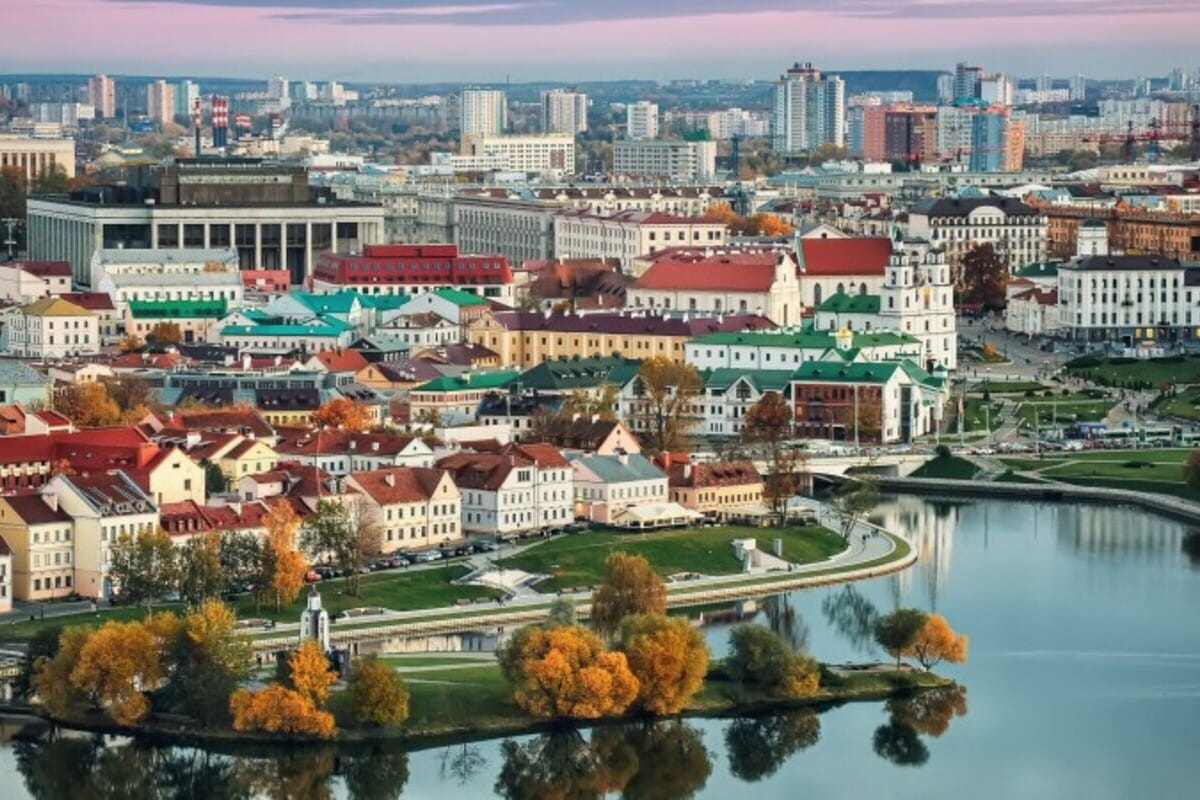
- Minsk was almost completely destroyed during World War II, losing about 80 percent of its buildings and most of the prewar population. After the war, the city was rebuilt according to a grandiose Stalinist plan with wide avenues, monumental buildings, and large squares in the style of Soviet neoclassicism. Today Minsk is known for its orderliness, cleanliness of streets, and preserved examples of Soviet architecture, which makes it unique among post-Soviet capitals. Independence Avenue in Minsk, 15 kilometers long, is one of the longest in Europe and represents a coherent architectural ensemble of the Stalinist era.
- Belarus is often called the “lungs of Europe” due to the fact that about 40 percent of its territory is covered with forests, which is one of the highest rates of forest cover on the continent. The country has a developed system of national parks and reserves that protect unique ecosystems, including the marshy landscapes of Polesie, which occupy about a third of the country’s territory. Belarusian forests are home to more than 70 species of mammals, including bears, wolves, lynxes, and moose, as well as numerous rare bird species. Narochansky National Park around Belarus’s largest lake Naroch is a popular place for ecotourism and recreation.
- The Belarusian language has a unique feature among Slavic languages due to its position at the crossroads of East Slavic and West Slavic influences. The language preserves archaic features of the Old Russian language that disappeared in Russian and Ukrainian, and also contains Polonisms due to prolonged Polish-Lithuanian influences. Today the Belarusian language has two official statuses alongside Russian, although in everyday life Russian predominates, especially in cities. The Belarusian Latin alphabet, or Lacinka, was historically used for writing in Belarusian until the Soviet period and is currently experiencing a certain revival among youth and cultural activists.
- Mir Castle and the Nesvizh Palace and Park Complex are outstanding examples of defensive and residential architecture of the 16th-18th centuries and are included in the UNESCO World Heritage List. Mir Castle, built in Gothic style with elements of Renaissance and Baroque, belonged to the powerful magnate family of Radziwills and reflects the wealth of Belarusian aristocracy. Nesvizh Palace served as the main residence of the Radziwills and impresses with its luxurious interior decoration, huge art collections, and landscape park with an area of over 100 hectares. Both complexes have been carefully restored in recent decades and today are the most popular tourist attractions in the country.
- Belarus has no access to the sea, but possesses an extensive network of rivers and canals, the total length of which exceeds 90 thousand kilometers. The Dnieper, one of Europe’s largest rivers, originates in Belarus near Smolensk and flows through the country on its way to the Black Sea. The Augustow Canal, built in the 19th century, connects the basins of the Baltic and Black Seas and is considered an outstanding engineering structure of its time. The system of Belarusian rivers and lakes creates unique conditions for water tourism, fishing, and wildlife observation.
- Potatoes are such an integral part of Belarusian cuisine that Belarusians are jokingly called “bulbashi” for their love of this vegetable. In Belarus there are more than 300 traditional potato dishes, including draniki (potato pancakes), babka, kolduny, and kminy. Potatoes became the foundation of Belarusian cuisine after their mass spread in the 18th-19th centuries and helped the population survive numerous years of famine. Modern Belarus is one of the largest potato producers in Europe, growing about 6 million tons annually.
- The Brest Fortress became a symbol of heroic defense during the Nazi invasion of the USSR in June 1941, when its defenders held the defense for over a month in complete isolation. The fortress garrison, despite the absence of water, food, and ammunition, repelled attacks by superior enemy forces and did not surrender even after the official announcement of the fortification’s fall. Today the Brest Fortress is a memorial complex and museum where traces of fierce battles are preserved, including inscriptions by defenders on casemate walls. The “Courage” monument and Eternal Flame in the center of the memorial remind of the feat of Soviet soldiers at the beginning of the war.
- Belarus is considered one of the safest countries in Europe with a low crime rate and high level of public order. The country has one of the lowest rates of intentional homicides in the world, which makes its streets safe to be on at any time of day or night. Minsk regularly appears in rankings of the cleanest and safest capitals of Europe thanks to the effective work of municipal services and police. Belarus is also known for the absence of large-scale corruption in everyday life, although the political system remains authoritarian.
- Belarusian lands were historically part of the Grand Duchy of Lithuania, one of the most powerful states of medieval Europe, stretching from the Baltic to the Black Sea. The Statute of the Grand Duchy of Lithuania of 1588, written in Old Belarusian, is considered one of the most progressive legal codes of its time in Europe. As part of the Polish-Lithuanian Commonwealth, Belarusian lands became an arena of religious and cultural competition between Catholicism, Orthodoxy, and the Union. After the partitions of the Polish-Lithuanian Commonwealth at the end of the 18th century, Belarusian territories became part of the Russian Empire for over a century.
- Belarus suffered from the Chernobyl disaster of 1986 more than any other country, receiving about 70 percent of radioactive fallout from the explosion. About 23 percent of the country’s territory was contaminated with radiation, and more than 135 thousand people were evacuated from the most affected areas. The Gomel and Mogilev regions in the southeast of the country experienced the most serious contamination, and some territories remain closed for habitation to this day. Belarus continues to fight the consequences of the disaster through programs of medical monitoring, land rehabilitation, and social support for victims.
- The Belarusian National Library in Minsk has a unique architectural form in the shape of a rhombicuboctahedron, a geometric figure with 26 faces, which makes it one of the most recognizable buildings in the country. The building, 72 meters high, was opened in 2006 and houses a collection of over 10 million copies of books, manuscripts, and other documents. At night, the library’s facade transforms into a giant media screen thanks to an LED lighting system that displays various images and animations. On the 23rd floor there is an observation deck from which a panoramic view of Minsk opens up.
- The Belarusian tractor or MTZ, whose production began in 1946, became one of the country’s most famous export goods and a symbol of Belarusian industry. The Minsk Tractor Works produces over 30 thousand tractors annually, which are exported to over 100 countries worldwide from Latin America to Asia. Belarusian tractors are known for their reliability, simplicity of maintenance, and affordable price, which makes them popular among farmers in developing countries. In Minsk there is even a museum of MTZ history, where all tractor models are presented from the first samples to modern high-tech machines.
- Marc Chagall, one of the most famous artists of the 20th century and a pioneer of modernism, was born in the Jewish shtetl of Liozno near Vitebsk in 1887. Vitebsk and its surroundings became a source of inspiration for numerous works by Chagall, including his characteristic depictions of levitating figures, shtetl life, and Jewish culture. In Vitebsk there is a Marc Chagall Museum located in the house where the artist’s family lived, and copies of his most famous works are presented. Despite the fact that Chagall spent most of his life in France, he always maintained an emotional connection with Belarus and often depicted his native land in his paintings.
- Belarus is the only European country that retains the death penalty in its criminal legislation and continues to carry out executions. The exact number of people executed annually remains a state secret, and families of the condemned are not informed about the date of execution and place of burial. This issue causes criticism from international human rights organizations and the European Union, which call for a moratorium on the death penalty. Belarusian authorities justify maintaining the highest form of punishment with popular support and the necessity of fighting the most serious crimes.
Fascinating facts about Belarus reveal a multifaceted country combining ancient history with Soviet legacy, natural wealth with industrial potential, traditional culture with challenges of modernity. From the primeval forests of Belovezhskaya Pushcha to the monumental architecture of Minsk, from the tragedy of Chernobyl to the cultural heritage of Chagall, this land continues to amaze with its contrasts and uniqueness. Incredible details about Belarusian reality remind us that even in the center of Europe there exist places that preserve their identity and develop according to their own scenario. The heritage of Belarus, its nature and culture deserve greater attention and recognition in the European and world context.


