
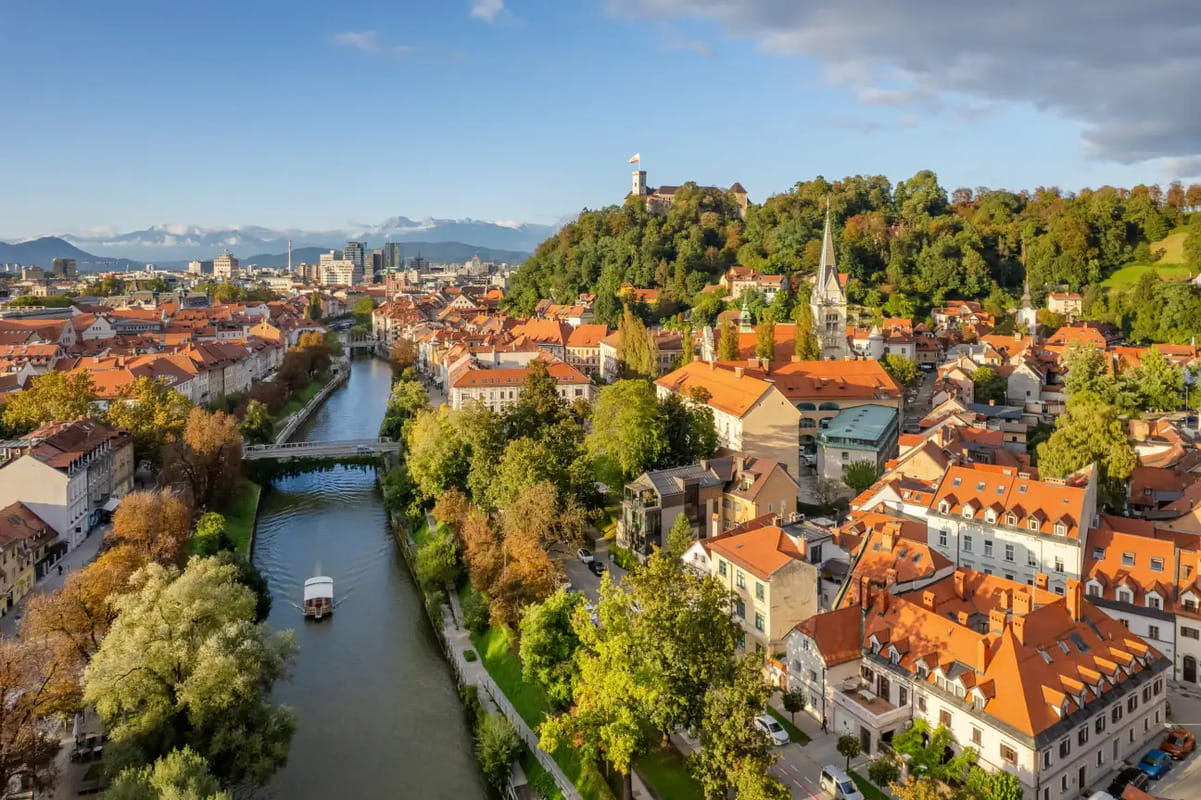
Slovenia is a tiny Alpine jewel where, within just two hours, one can travel from snow-covered mountain peaks to the warm Adriatic coast, while beneath the ground lie some of the most astonishing cave worlds imaginable. You may not know that this compact country with a population of fewer than two million people is one of the greenest nations in Europe, with more than sixty percent of its territory covered by forests. Fascinating facts about Slovenia reveal a land where every third resident speaks at least four languages fluently, and where the oldest wine in Europe was discovered. Interesting facts about this Slavic country help explain why Slovenia became the first nation in the world to be fully recognized as an environmentally sustainable tourist destination.
- Slovenia is one of the greenest countries in the world, with more than sixty percent of its territory covered by forests, making it the European leader in forest cover per capita. These forests are home to more than forty species of mammals, including brown bears, wolves, and lynxes, which live in the wild without human interference. Thanks to the unique combination of Alpine, Dinaric, and Pannonian landscapes, Slovenia has the highest level of biodiversity per unit area in Europe.
- Slovenia is home to the longest known underground river in the world, the Pivka, which stretches for more than thirty-six kilometers and flows through the Postojna cave system. This river was discovered only in the nineteenth century and has still not been fully explored due to the complex network of subterranean passages. Tourists can travel along part of the river in special boats, observing unique cave formations and rare blind fish known as proteus.
- In 2016, Slovenia became the first country in the world to be fully recognized as a green tourist destination by the World Tourism Organization. This recognition was achieved thanks to the Green Slovenia initiative, which promotes an environmentally responsible approach to all tourism services, from hotels to restaurants. Every tourist facility must undergo strict certification for compliance with environmental standards before it is allowed to welcome guests.
- The oldest wine in Europe, more than two thousand six hundred years old, was discovered in Slovenia during archaeological excavations in the city of Maribor. The wine was found inside an ancient clay vessel and is still preserved in the Old Vine House Museum in Maribor, although its taste can no longer be evaluated. This discovery confirms that viticulture on Slovenian territory existed as early as Roman times, when the Romans were the first to cultivate grapevines there.
- Slovenia is the only country in the world where a unique tradition of honey roads has been preserved, in which beekeepers transport beehives between apiaries on special horse-drawn wagons. This tradition has existed for more than two hundred years and is especially widespread in the Karst region, where some families have practiced this craft for five generations. Slovenian honey is considered one of the finest in the world due to the diversity of nectar-producing plants and traditional production methods.
- Slovenia is home to the shortest river in the world, the Rož River, which is only fifty-two meters long and flows from a cave into the sea in the town of Sežana. This river is so short that it can be crossed in just a few steps, yet it supports a complete ecosystem, including fish and aquatic insects. Local residents consider the Rož a symbol of their country and have even erected a monument in the shape of a bee at its source.
- Slovenia became the first post-communist country to join both the European Union and NATO simultaneously in 2004, demonstrating its successful transformation after the breakup of Yugoslavia. The country achieved this milestone just thirteen years after declaring independence in 1991, which is a record among the former Yugoslav republics. Today, Slovenia has the highest standard of living among all former Yugoslav states and ranks among the top twenty richest countries in the world by GDP per capita.
- Slovenia is home to a unique system of underground lakes in the Škocjan Caves, which were included on the UNESCO World Heritage List even before being fully explored. These caves contain the longest underground canyon in the world, with a depth exceeding two hundred meters and a width of up to one hundred meters. The most famous lake, Martel’s Chamber, covers an area of more than five thousand square meters and is considered one of the most beautiful underground bodies of water on the planet.
- Slovenia is a country where every third resident speaks at least four foreign languages, making it the European leader in multilingualism. This is linked to the country’s geographical position at the crossroads of Germanic, Slavic, and Romance cultural regions. The school curriculum includes the study of two foreign languages from the early grades, and many children begin learning a third language while still in kindergarten.
- Slovenia is home to the only museum in the world dedicated to the history of beekeeping, located in the town of Radovljica. The museum houses a collection of more than two thousand historic beehives, some of which are decorated with hand-carved scenes from folk tales. Slovenia is also considered the birthplace of modern beekeeping, as Anton Janša, who developed contemporary beekeeping methods in the eighteenth century, was born here.
- Slovenia has a unique geographical feature in that it encompasses four major European regions: the Alps, the Dinaric Mountains, the Pannonian Plain, and the Mediterranean coast. This allows travelers to move from snowy Alpine peaks to warm Adriatic beaches within a single hour of travel. Such landscape diversity creates exceptional conditions for a wide range of outdoor activities, from alpine skiing to surfing.
- Slovenia has preserved a tradition of aging cheeses in caves that has existed for more than three hundred years, particularly in the Litija region. These cave-aged cheeses develop a distinctive flavor due to the specific humidity, temperature, and microflora of the caves where they mature. The most famous cave cheese, Teran cheese, takes its name from the local Teran wine with which it is treated during the aging process.
- Slovenia is one of the smallest countries in Europe, yet it has the highest number of Olympic medals per capita among all European nations. This achievement is especially impressive considering that the country has only about two million inhabitants and does not possess large sports budgets. The most successful sports disciplines are alpine skiing, rowing, and artistic gymnastics, in which Slovenians regularly win top-level medals.
- The oldest known wine cellar in Europe, dating back to the second century AD, was discovered in Slovenia during excavations in the city of Nova Gorica. The cellar contained remnants of grape wine and special vessels used for storage, indicating a highly developed wine culture during the Roman Empire. Today, Slovenia produces more than forty types of wine that are exported to over seventy countries worldwide.
- Slovenia has preserved a unique tradition of handmade glass production that dates back more than four hundred years, particularly in the Idrija region. Craftsmen use the same techniques as in the sixteenth century, including glassblowing through special pipes and manual engraving. The most famous products of Slovenian glassmakers are crystal vases and candlesticks that are exported to European royal families.
- Slovenia is home to the only museum in the world dedicated to the history of cycling tourism, located in the city of Kranj. The museum holds a collection of more than one thousand historic bicycles, including the first bicycle manufactured in Slovenia in 1890. The country has more than nineteen thousand kilometers of cycling paths, making it one of the best destinations for cycling tourism in Europe.
- Slovenia is one of the cleanest countries in the world in terms of drinking water quality, as more than ninety percent of its water supply comes from natural sources without chemical treatment. Many cities have public drinking water fountains that anyone can use free of charge. This tradition dates back to the Austro-Hungarian period, when every town was required to provide its residents with clean drinking water.
- Slovenia has a unique tradition of celebrating Earth Day on April twenty-second, when all schools and government institutions close for one day to participate in environmental activities. This tradition began in 1970 and became the first initiative of its kind in Europe. Today, more than eighty percent of Slovenia’s population takes part in these events, which is a record for Europe.
- Slovenia has preserved a unique system for protecting traditional apple varieties, thanks to which more than seven hundred varieties have been saved. The oldest Slovenian apple variety dates back to the sixteenth century and is still cultivated on experimental plots. These traditional varieties are distinguished by high resistance to diseases and a unique flavor that cannot be found in modern commercial varieties.
- Slovenia is home to the largest underground hydrotechnical complex in the world, including tunnels, reservoirs, and power plants built during the Yugoslav era. This complex supplies more than forty percent of the country’s electricity and stands as an example of twentieth-century engineering genius. The most famous structure is the underground hydroelectric power plant on the Sava River, which has been operating continuously for more than fifty years.
Slovenia remains a vivid example of how a small country can achieve outstanding results through thoughtful environmental policy and deep respect for its own cultural heritage. Remarkable facts about this Alpine state demonstrate that true development is measured not only by economic indicators but also by quality of life, harmony with nature, and the preservation of unique traditions. Interesting facts about Slovenia remind us that even the most compact nations can become models of sustainable development and responsible stewardship of the environment. Fascinating discoveries about this Slavic land will continue to inspire other nations to seek a balanced path between technological progress and the preservation of natural beauty for future generations.


