
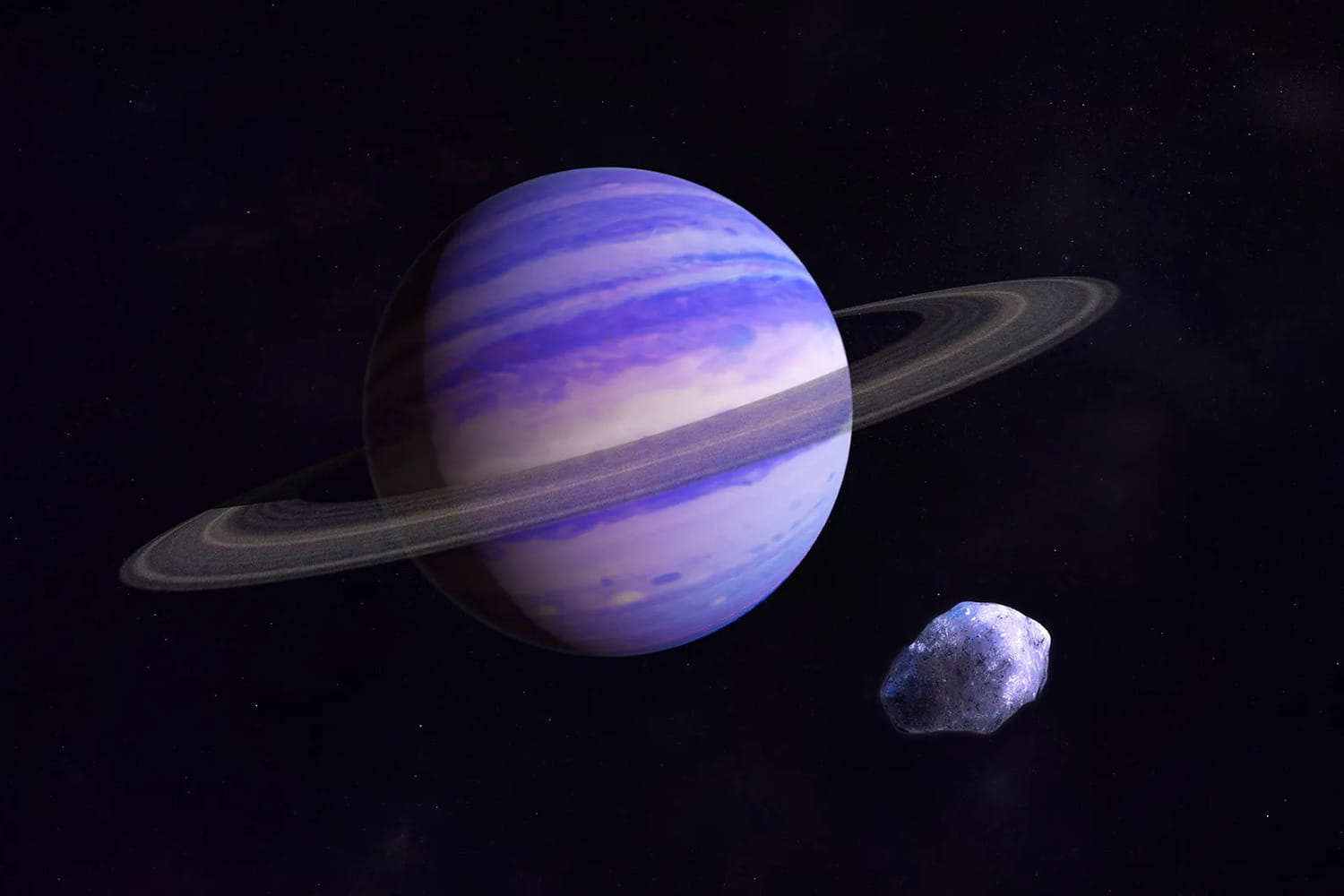
The Universe holds billions of worlds orbiting distant stars, waiting to be discovered by the human mind. You may not know that to date astronomers have confirmed the existence of more than five thousand exoplanets, while their actual number in our galaxy may reach hundreds of billions. These fascinating facts reveal not only scientific achievements but also profound philosophical questions that arise when we realize the diversity of cosmic worlds beyond the Solar System. Today we will embark on an exciting journey through the boundless expanses of space to become acquainted with astonishing regions of the Universe where conditions for life may be hidden or where forms of matter unlike anything on Earth may exist. Prepare to discover incredible details about worlds that until recently seemed to be nothing more than the imagination of science fiction writers.
- The first confirmed exoplanets were discovered in 1992 by Polish astronomer Aleksander Wolszczan in the system of the pulsar PSR B1257+12, causing a true sensation in the astronomical community. These planets formed from the remnants of a star that survived a supernova explosion and became a neutron star, which makes their existence especially remarkable. Only in 1995 was the first exoplanet found orbiting a Sun-like star, 51 Pegasi b, which belongs to the class of hot Jupiters. These discoveries marked the beginning of a new era in astronomy, turning the search for exoplanets into one of the most dynamically developing fields of modern science.
- The most common method for detecting exoplanets is the transit method, in which a planet passes in front of the disk of its star, causing a brief decrease in brightness. Using this method, the Kepler space telescope confirmed the existence of more than two thousand exoplanets between 2009 and 2018. The second most significant technique is the radial velocity method, which detects oscillations of a star caused by the gravitational influence of an orbiting planet. Modern studies often combine several methods to obtain the most complete possible picture of the characteristics of a discovered world.
- Hot Jupiters are gas giants that orbit extremely close to their stars, with orbital periods of less than ten Earth days. The temperatures of their atmospheres often exceed two thousand degrees Celsius, making them among the hottest known planets. On some of them, astronomers have recorded exotic atmospheric phenomena such as iron rain or winds reaching speeds of more than twenty thousand kilometers per hour. Many of these planets are tidally locked, meaning that one side constantly faces the star while the other remains in perpetual darkness.
- Super-Earths are rocky planets with masses ranging from one to ten times that of Earth, occupying an intermediate position between Earth and Neptune in terms of size and composition. Some of them possess dense atmospheres with extreme pressure, while others have completely lost their gaseous envelopes due to their proximity to their star. The planet Kepler-22b is located in the habitable zone of its star and has a radius 2.4 times larger than Earth’s. Scientists actively study super-Earths because they are likely the most common type of planet in the Milky Way.
- The nearest known exoplanet is Proxima Centauri b, which orbits the red dwarf Proxima Centauri located just 4.2 light-years from Earth. This planet lies within the habitable zone, but due to the high activity of its star it is exposed to powerful stellar flares that cast doubt on the possibility of life on its surface. The orbital period of Proxima Centauri b is only 11.2 Earth days because of its close proximity to the star. Future projects such as Starshot plan to send miniature probes to this system in the coming decades.
- Ocean planets are hypothetical worlds whose surfaces are completely covered by a global ocean hundreds of kilometers deep, which fundamentally distinguishes them from Earth. Kepler-22b is sometimes considered a possible candidate for an ocean planet, although this has not yet been confirmed by observations. On such worlds, the pressure at the bottom of the ocean may be so great that water exists in exotic ice phases even at high temperatures. The existence of such planets raises important questions about the potential for aquatic life in fully submerged environments.
- Rogue planets, also known as free-floating planets, are planetary-mass objects that are not gravitationally bound to any star and drift alone through interstellar space. Astronomers have detected several such objects through the effect of gravitational microlensing, in which their gravity temporarily amplifies the light of distant stars. Some theories suggest that there may be even more free-floating planets in the galaxy than planets orbiting stars. Theoretically, subsurface oceans heated by radioactive decay within their interiors could exist beneath their surfaces.
- The James Webb Space Telescope, launched in 2021, has revolutionized the study of exoplanet atmospheres by analyzing their chemical composition using high-precision spectroscopy. For the first time in history, scientists detected potential biosignatures in the atmosphere of the exoplanet K2-18b, including dimethyl sulfide, a compound produced on Earth exclusively by living organisms. The Webb telescope also recorded the presence of carbon dioxide in the atmosphere of the planet WD 1856+534 b, indicating complex atmospheric processes. These discoveries open a new chapter in the search for extraterrestrial life.
- The exoplanet Gliese 436 b is known for a unique phenomenon in which its atmosphere constantly evaporates into space, forming a comet-like tail millions of kilometers long. This planet is located very close to its star and has a surface temperature of about four hundred degrees Celsius, despite being composed primarily of water ice. Scientists believe that extreme pressure in its interior keeps water in a solid state even at such high temperatures. This phenomenon vividly demonstrates how diverse planetary systems can be compared to our Solar System.
- The planet Kepler-16b became the first confirmed exoplanet orbiting a binary star system, reminiscent of the famous planet Tatooine from the Star Wars universe. This planet orbits two stars, one similar to the Sun and the other a red dwarf. From the surface of Kepler-16b, it is possible to observe sunsets of two suns at the same time, creating unique lighting conditions. The discovery of such worlds proved that binary star systems are also capable of maintaining stable planetary orbits.
- The hottest known exoplanet is KELT-9b, with temperatures reaching 4600 degrees Celsius, hotter than the surface of some red dwarf stars. This planet is so close to its star that its atmosphere is constantly evaporating, and one day lasts only 1.5 Earth days. Scientists have detected gaseous iron and titanium in its atmosphere, states of matter impossible under terrestrial conditions. KELT-9b belongs to the class of ultra-hot Jupiters, representing an extreme stage of planetary evolution.
- The smallest confirmed exoplanet to date is Kepler-37b, whose radius is only about 20 percent larger than that of the Moon, making it the smallest rocky object discovered beyond the Solar System. This planet orbits a star located approximately 210 light-years from Earth. Its discovery was made possible thanks to the high measurement precision of the TESS space telescope, which specializes in the search for small planets. The detection of such compact objects opens the path toward finding Earth-like planets around distant stars.
- Some exoplanets have extremely elongated elliptical orbits, which cause dramatic temperature fluctuations during their motion around their star. The planet Gliese 433 b has an orbital period of only 13 days, but its trajectory is so stretched that at perihelion it approaches its star closer than Mercury does the Sun, while at aphelion it moves much farther away. Such extreme orbits often arise as a result of gravitational interactions in multi-planet systems. The study of these worlds provides unique opportunities to understand the dynamics of planetary system formation.
- The International Astronomical Union has organized several global campaigns to assign proper names to exoplanets and their stars in order to engage the public in astronomy. For example, the planet 51 Pegasi b received the name Dimidium, while its star was named Fergani. The planet Gliese 3470 b was named Saad, referencing traditional Arabic astronomy. These initiatives make astronomy more accessible to a broad audience and emphasize the cultural significance of discovering distant worlds.
- Exoplanets orbiting red dwarf stars make up the majority of discovered worlds, since these stars are the most common in the galaxy and their planets are easier to detect. However, red dwarfs often emit powerful flares capable of completely stripping the atmospheres of nearby planets, creating challenging conditions for life. The planet TRAPPIST-1e is considered one of the best candidates for life among worlds orbiting red dwarfs due to its location in the habitable zone. Scientists actively study the atmospheres of such planets to determine whether they can maintain life-friendly conditions despite stellar activity.
- Some exoplanets exhibit anomalous densities that indicate unusual internal compositions. The planet Kepler-107c has a density three times greater than Earth’s, suggesting a giant iron core that makes up more than half of its mass. In contrast, Kepler-51b has an extremely low density comparable to cotton, making it one of the lightest known planets. Studying such anomalies helps scientists gain deeper insight into the processes of planet formation under different conditions.
- Ukrainian astronomers make a significant contribution to exoplanet research by participating in international projects and developing data analysis methods. Specialists from Kyiv University and the Institute of Astronomy of the National Academy of Sciences of Ukraine are involved in the search for biosignatures in exoplanet spectra. Ukrainian scientists also create algorithms for processing large volumes of data obtained from space telescopes. This contribution highlights that the search for other worlds is a global effort uniting researchers from around the world.
- Future missions such as Nancharo and PLATO will focus on the search for Earth-like planets in habitable zones around Sun-like stars. The Nancharo project, scheduled for launch in 2027, will be capable of directly imaging exoplanets by separating their light from that of their host stars. The European PLATO mission will concentrate on detecting planets with solid surfaces in habitable zones. These missions may, for the first time, identify candidates for worlds where conditions suitable for advanced life exist.
- Scientists are also developing methods to search for technosignatures, indicators that may point to the existence of advanced extraterrestrial civilizations. Technosignatures include artificial structures such as Dyson spheres, anomalous radio signals, or unusual atmospheric chemical compositions. The Starshot project plans to send miniature probes to the Alpha Centauri system for direct observations of exoplanets. Although no technosignatures have yet been confirmed, the search continues within programs such as SETI.
- Some exoplanets likely possess rings or moons, although their detection remains an extremely difficult task for current technologies. The planet Kepler-1625b may have a moon the size of Neptune, which would make it the largest known exomoon. Rings around the exoplanet J1407b were detected using the transit method through a complex pattern of stellar eclipses. The discovery of exoplanet moons is especially important, as they may harbor conditions suitable for life even if the planet itself does not.
These remarkable facts only partially reveal the boundless world of exoplanets, which continues to transform our understanding of humanity’s place in the Universe. Fascinating discoveries in this field remind us that Earth is only one of many possible cradles of life in the cosmos. You may not realize how rapidly this science is developing, as astronomers discover new worlds almost every week that only yesterday existed solely in imagination. The search for exoplanets remains one of the most inspiring scientific pursuits of our time, confirming that curiosity and the drive for knowledge are inseparable traits of human nature when faced with the infinite mystery of space.


