
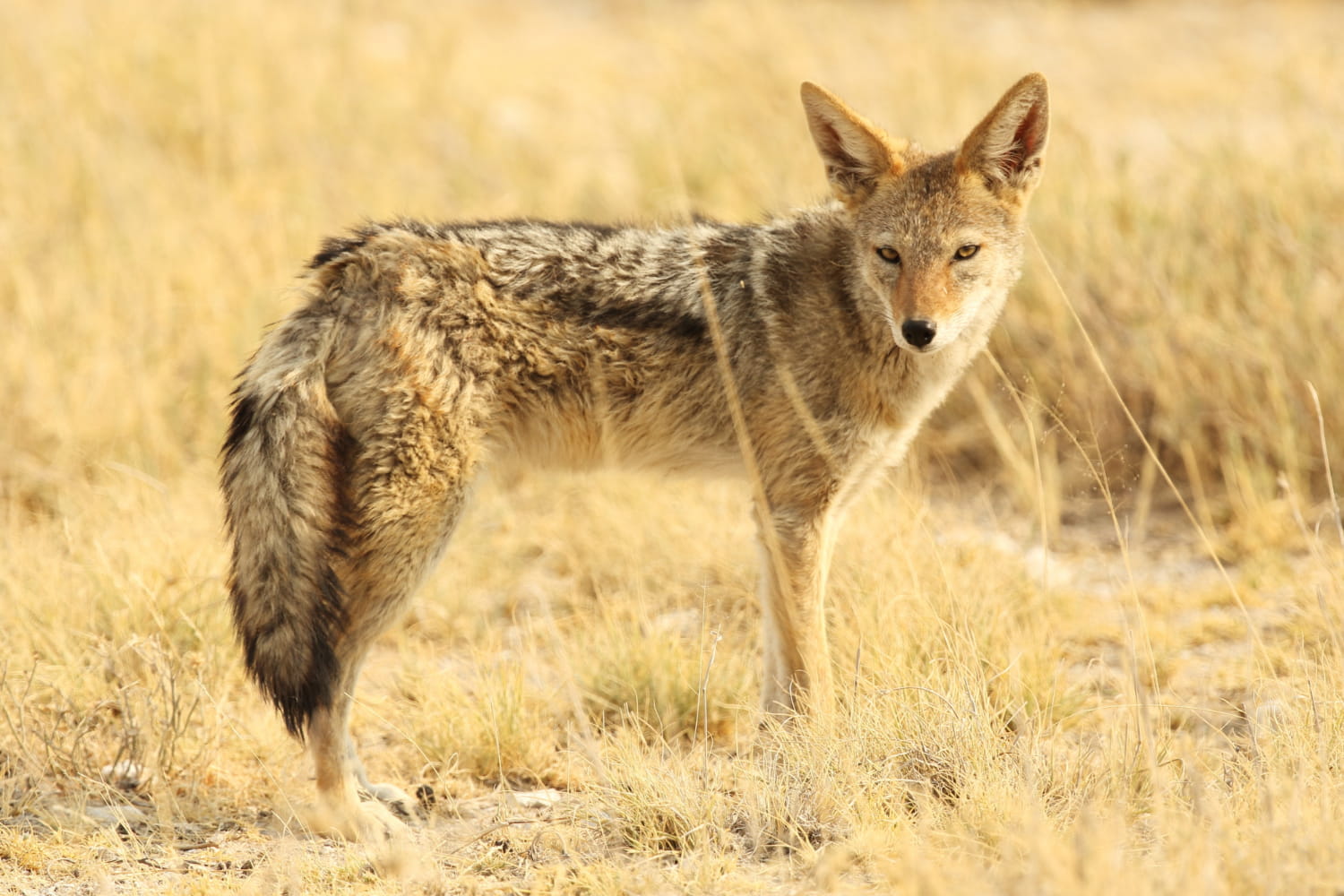
Coyotes have long transcended their roles as mere characters in western films and Native American legends, evolving into one of North America’s most remarkably adaptable predators. These clever animals have not only survived the rapid expansion of human settlements but have actively expanded their range across the continent. You might not have known that coyotes possess extraordinary cognitive flexibility and behavioral plasticity that enable them to thrive even within major metropolitan areas. Today we will explore incredible facts that will transform your perception of these animals, often mistakenly regarded as simple prairie wolves. Prepare to discover fascinating details about coyote life, behavior, and their unique survival abilities.
- Coyotes belong to the Canidae family and are close relatives of wolves, though they differ in their smaller size and greater adaptability to diverse environments. Their scientific name, Canis latrans, translates from Latin as barking dog. They evolved in North America over millions of years, adapting to shifting climates and landscapes. Modern coyotes represent the result of a complex evolutionary journey that included hybridization with wolves and domestic dogs.
- The coyote’s range has expanded dramatically over recent centuries due to their exceptional adaptability to human activity. Historically confined to the prairies and deserts of western North America, they now inhabit territories stretching from Alaska to Central America. Coyotes have successfully colonized urban landscapes including major cities such as New York, Chicago, and Los Angeles. This expansion became possible through their dietary flexibility and ability to avoid direct conflicts with humans.
- Adult coyotes typically weigh between 7 and 21 kilograms depending on geographic location and food availability. Northern individuals tend to be larger than southern ones due to climatic conditions and Bergmann’s rule. Total body length including the tail may reach one and a half meters though most adults maintain more compact dimensions. Their fur generally displays grayish-brown coloring with reddish or yellowish tones that provide effective camouflage across varied habitats.
- Coyotes possess an exceptionally acute sense of smell that allows them to detect prey from several kilometers away under favorable conditions. Their hearing is equally developed thanks to large forward-facing ears that optimize sound reception. Vision in coyotes is adapted for crepuscular and nocturnal activity though they maintain functional sight during daylight hours. These sensory systems work in concert to make coyotes efficient hunters in virtually any environment.
- Wild coyotes typically live 6 to 8 years though individuals in captivity have reached ages beyond 14 years. Lifespan in natural settings is limited by numerous factors including disease, competition with other predators, and human activities. Only a small percentage of pups survive to adulthood due to high mortality rates during their first months of life. The greatest threats to coyotes include vehicle collisions, poisoning, and targeted removal in regions where they are classified as pests.
- Coyotes are omnivorous animals whose diet can include more than 400 different species of animals and plants. Small mammals particularly rodents form the foundation of their nutrition though they also hunt rabbits, birds, and occasionally young deer. In urban environments coyotes frequently consume garbage, domestic animals, and food scraps making them important sanitizers of city ecosystems. Seasonal dietary shifts incorporate berries, fruits, and other plant materials depending on availability.
- Coyote social structure demonstrates remarkable flexibility depending on food availability and population density within a region. In resource-rich territories they often form stable pairs or small family groups consisting of adult parents and offspring from previous litters. During periods of food scarcity coyotes become more solitary and territorial in their behavior. This adaptability in social organization represents a key factor in their successful colonization of diverse habitats.
- The coyote breeding season occurs during January and February with gestation lasting approximately 63 days. Females give birth to litters of 4 to 7 pups in dens often appropriated from other animals or expanded through their own excavation efforts. Both parents participate in pup rearing with older siblings from previous litters sometimes assisting in care duties. Young coyotes remain with their parents until the next breeding season learning essential hunting techniques and social behaviors.
- Coyotes are known for their complex vocal communication system which includes more than 11 distinct sound types. Their characteristic long piercing howl frequently heard at night serves to maintain contact among group members across distances. They also produce short barks, yips, and high-pitched vocalizations during play or territorial defense. These acoustic signals enable coyotes to coordinate hunting activities and sustain social bonds throughout their territories.
- Coyotes can reach running speeds of up to 65 kilometers per hour during short bursts while pursuing prey. They also maintain moderate speeds around 15 kilometers per hour for extended periods during lengthy chases. Their exceptional endurance allows them to outlast swifter but less stamina-endowed prey species. Anatomical features including long legs and lightweight frames make coyotes ideally suited for efficient movement across open terrain.
- Coyotes demonstrate remarkable problem-solving abilities confirmed through numerous scientific studies. They can employ simple tools such as moving rocks to access concealed food sources. Urban coyotes have learned to cross streets during green traffic signals and avoid vehicles while navigating city environments. This cognitive flexibility establishes coyotes among the most intelligent members of the canine family.
- In certain regions of North America coyotes interbreed with gray wolves producing hybrids known as coywolves or eastern wolves. These hybrids typically exceed standard coyotes in size and compete more effectively in the forested environments of eastern North America. Genetic research reveals that contemporary eastern coyotes carry up to 25 percent wolf DNA in their genetic makeup. Such hybridization exemplifies evolutionary adaptation to changing environmental conditions.
- Coyotes play a vital ecological role in regulating rodent populations which benefits agricultural systems and broader ecosystem health. A single coyote may eliminate several hundred rodents annually preventing disease transmission and crop damage. Within urban settings they help control populations of squirrels, rabbits, and other small mammals. This ecological service is frequently overlooked when coyotes are perceived solely as potential threats.
- Despite their reputation as solitary hunters coyotes often pursue prey in pairs or small groups especially when targeting larger animals. This cooperative approach enables them to successfully hunt creatures significantly larger than themselves such as juvenile deer. During group hunts they employ sophisticated tactics including surrounding prey and alternating pursuit to exhaust their target. Such behavior reflects advanced social organization and communication capabilities.
- Coyotes exhibit strongly developed territorial behavior marking their domains with urine and scat at strategic locations. Territory size varies considerably from several square kilometers in urban settings to over 100 square kilometers in sparsely populated regions. Males typically maintain larger territories that overlap with those of multiple females. Boundary violations frequently trigger aggressive confrontations between competing individuals.
- In Native American mythology the coyote frequently appears as a cunning trickster or cultural hero who brings fire or other gifts to humanity. Different tribes maintain unique coyote legends reflecting the animal’s significance within natural and social contexts. Contemporary popular culture often depicts coyotes as the perpetual pursuer of roadrunners in Warner Bros animated shorts. Though stereotypical this representation has made the coyote one of the most recognizable symbols of the American West.
- Coyotes demonstrate exceptional spatial learning abilities memorizing the locations of food and water sources across extensive territories. They retain mental maps of routes between different feeding areas and efficiently plan their movements accordingly. Urban coyotes learn garbage collection schedules and patterns of pet walking by residents. This cognitive capacity represents a crucial factor in their successful adaptation to human-dominated landscapes.
- Diseases including rabies and canine distemper pose serious threats to coyote populations particularly in regions with high animal density. Nevertheless coyotes rarely transmit rabies to humans compared with other wildlife species due to their naturally cautious behavior. Vaccination programs using distributed bait have helped control rabies spread in certain regions. Such initiatives form important components of modern wildlife population management strategies.
- Coyotes maintain remarkably flexible diets enabling survival during periods of severe food scarcity. During famine conditions they may consume insects, earthworms, or plant matter normally excluded from their regular nutrition. This dietary adaptability constitutes one of the primary reasons for their successful colonization of diverse habitats. Even within cities coyotes discover methods to secure adequate nourishment utilizing human waste and unconventional food sources.
- Young coyotes reach sexual maturity at 9 to 10 months yet often delay breeding until their second or third year of life. This postponement relates to the challenge of securing unoccupied territory and finding suitable mates amid intense competition. Many juveniles spend their first year alongside parents assisting with care of subsequent litters. This behavior enhances pup survival rates while transmitting essential skills to the next generation.
These captivating facts merely begin to reveal the complex world of coyotes who are far more than simple predators but rather extraordinarily adaptable creatures successfully coexisting with human civilization. Their learning capacity flexible social organization and intellectual resourcefulness establish them among North America’s most intriguing wildlife species. Understanding the true nature of coyotes helps people find balance between protecting their interests and preserving these remarkable animals in natural ecosystems. The extraordinary success story of coyotes reminds us of the vital importance of adaptability and resilience in our ever changing world.


