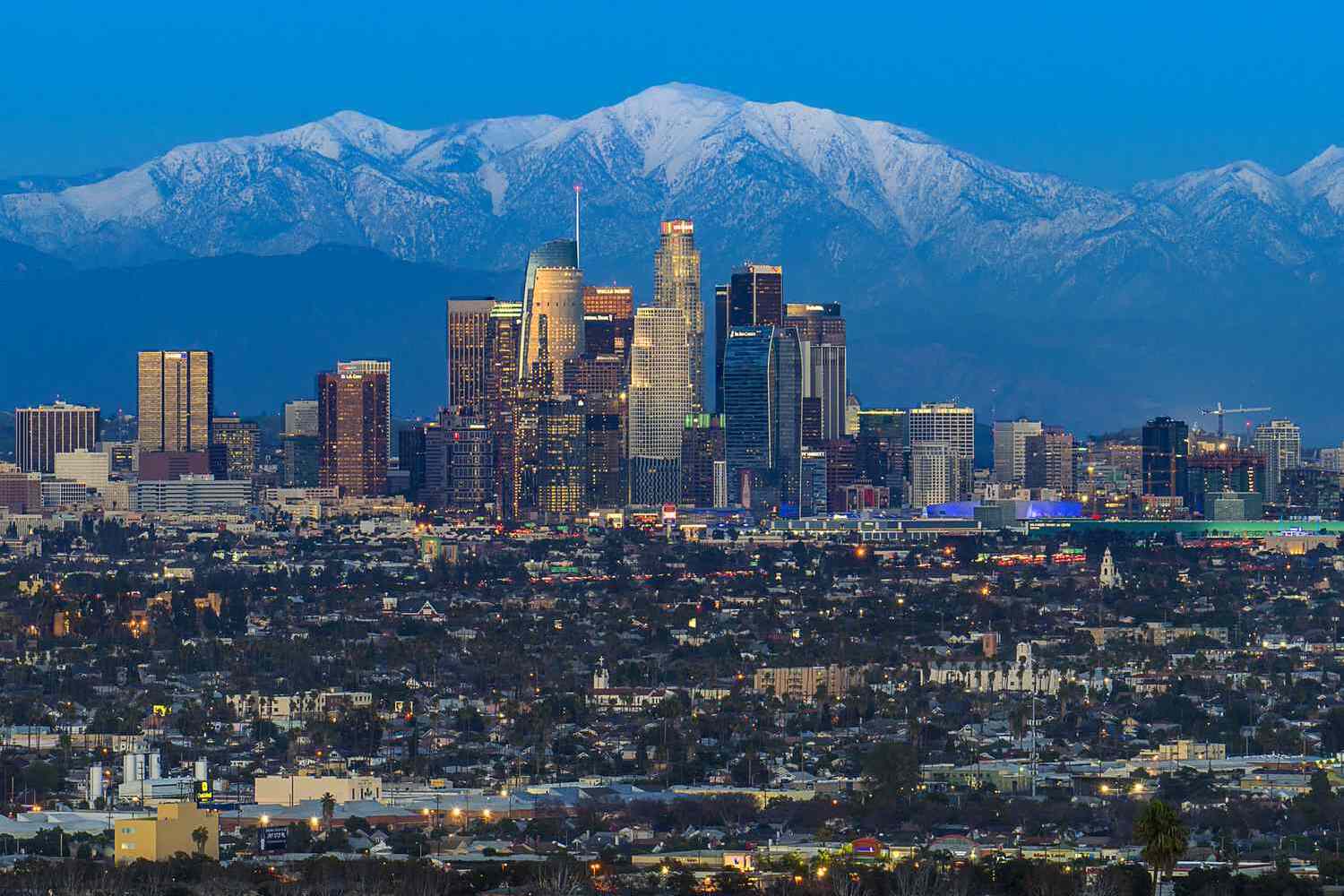
There are places that surpass any expectations, and California is precisely such a place. This American state is so diverse that it feels like an entirely separate world, offering everything from snow-capped peaks and scorching deserts to technological capitals and Hollywood glamour. Fascinating facts about California are scattered across every sphere of its life, from unique nature and economics to culture and history. The state is so large and influential that if it were an independent country, it would rank among the wealthiest nations on Earth. Interesting facts that you might not have known about one of the most famous and influential states on the planet have been gathered together in this collection.
- California is the most populous state in the USA with a population exceeding 39 million people. By way of comparison, this is more than the population of such countries as Canada or Australia. Every eighth American is a resident of this very state, which makes it the demographic heart of the country.
- If California were a separate nation, its economy would occupy fifth place in the world in terms of GDP. The gross domestic product of the state exceeds 3.5 trillion dollars, which is greater than that of such countries as the United Kingdom, India or France. No other administrative unit in the world can boast comparable economic power.
- California is the birthplace of Silicon Valley, the largest technological hub on the planet. It was here that such companies as Apple, Google, Meta, Intel and Netflix were born and grew into global giants. Today the region generates more than one third of all venture capital investments in the United States.
- The state is the leading agricultural producer in the USA and supplies around one third of all vegetables and two thirds of all fruits and nuts consumed across the country. The San Joaquin Valley is considered one of the most fertile agricultural zones in the entire world. California is the only state in the country where artichokes, olives, dates and figs are grown on an industrial scale.
- California is the only state in the USA to have hosted the Olympic Games three times. Los Angeles hosted the Summer Olympics in 1932 and 1984 and is also preparing to host them again in 2028. The Winter Games of 1960 were held at Squaw Valley near San Francisco.
- The sequoias growing in California are the largest trees on the planet in terms of timber volume. The biggest of them, a tree named General Sherman in Sequoia National Park, has a timber volume of approximately 1,487 cubic metres and is regarded as the largest living organism on Earth by mass. The age of some sequoias exceeds 3,000 years.
- The coastal redwood, which also grows in California, is the tallest tree in the world. The tallest known specimen, a tree called Hyperion in Redwood National Park, reaches a height of 115.9 metres. By way of comparison, this is roughly equal to the height of a 38-storey skyscraper.
- Death Valley in California is the hottest and driest place in North America. Temperatures here reached a record 56.7 degrees Celsius, recorded in 1913, which is one of the highest temperature readings ever measured on the planet. Despite the extreme conditions, the valley attracts hundreds of thousands of tourists every year.
- Lake Tahoe, situated on the border between California and Nevada, is the largest alpine lake in North America. The depth of this body of water reaches 501 metres, and the clarity of the water is so remarkable that on a clear day the bottom is visible at depths of up to 21 metres. The lake contains enough water to cover the entire territory of California with a layer approximately 40 centimetres deep.
- California is the only state in the USA where all four principal climate types occur naturally, namely Mediterranean, desert, mountain and temperate oceanic. Within a few hours of driving it is possible to travel from snowy mountains to a tropical beach or from humid forests to an arid desert. Such climatic diversity accounts for the extraordinary biological richness of the state.
- The Gold Rush of 1848 to 1855 fundamentally transformed California and the whole of America. The discovery of gold at Sutter’s Mill triggered the most massive migration of people in American history, with more than 300,000 settlers arriving in the state from all over the world. It was precisely this wave of people that turned California from a sparsely populated territory into one of the most dynamic regions in the country.
- Hollywood, located in Los Angeles, is the world capital of the film industry and produces approximately 700 feature films every year. The American film industry brings tens of billions of dollars annually to the California economy. The Hollywood Walk of Fame features more than 2,700 stars dedicated to outstanding figures of the entertainment industry.
- California is the leader of the USA in wine production and belongs to the four largest winemaking regions in the world alongside France, Spain and Italy. The Napa Valley and the Sonoma region are renowned for their premium varieties of cabernet sauvignon and pinot noir. Every year Californian wineries produce approximately 85% of all American wine.
- The state possesses the longest coastline among all states in the continental United States, stretching approximately 1,350 kilometres. The Pacific coastline of California is home to more than 1,000 species of marine animals. Some of the most beautiful beaches in North America are located here, including Malibu, Santa Barbara and Coronado.
- The Golden Gate Bridge in San Francisco is one of the most celebrated engineering structures in the world. The construction of this suspension bridge lasted four years, from 1933 to 1937, and at the time it was the longest suspension bridge in the world. The length of the central span measures 1,280 metres, while the total length of the bridge including its approaches is approximately 2.7 kilometres.
- California is home to the greatest number of national parks among all states in the USA, with nine parks in total. Among them is Yosemite National Park, which attracts around 4 million visitors every year with its waterfalls and granite cliffs. Each of the state’s parks represents a unique natural treasury with a distinctive landscape and ecosystem.
- Los Angeles is the city with the highest number of automobiles per capita among major cities in the world. The city has more than 1,000 kilometres of motorways, yet traffic congestion remains one of the principal problems of the metropolis. It comes as no surprise that it was in California that the culture of road trips and drive-in cinemas was born.
- California is the leader of the USA in implementing environmental standards and was among the first states in the country to begin a large-scale transition to electric vehicles. The state has set itself the goal of completely phasing out the sale of new cars with internal combustion engines by 2035. Tesla, the world’s largest manufacturer of electric vehicles, was also founded in California.
- The University of California is one of the finest university systems in the world, bringing together ten campuses. Berkeley and UCLA consistently appear in rankings of the best universities on the planet and every year produce thousands of leading specialists across various fields. Graduates of this system have received more Nobel Prizes than the majority of entire countries.
- California is the birthplace of the Internet as we know it today. The first ARPANET network, from which the modern Internet grew, was launched in 1969 at the University of California in Los Angeles. It was precisely Californian companies and scientists who made a decisive contribution to the development of the World Wide Web, electronic mail and social networks.
- The state is home to the largest port in North America, the Port of Los Angeles together with the Port of Long Beach. Approximately 40% of all maritime cargo entering the USA passes through these two neighbouring ports. Their combined economic significance is estimated at hundreds of billions of dollars annually.
- California is the largest producer of almonds in the world and supplies approximately 80% of the global harvest of this product. The majority of almond orchards are concentrated in the Central Valley, where the climate and soil create ideal conditions for their cultivation. This crop became so important to the state that it once triggered a genuine pollination crisis owing to a shortage of bees.
- Yosemite Valley, situated within the national park of the same name, is one of the most photographed places on the planet. Yosemite Falls is the highest waterfall in North America and plunges from a height of 739 metres in three cascades. The geological formations of the valley, in particular the rock face of El Capitan at 900 metres, are the most popular climbing destinations in the world.
- California experiences more than 10,000 earthquakes per year, the majority of which are too weak to be felt. The great San Andreas Fault stretches 1,300 kilometres through the entire state and is one of the most active seismic faults on Earth. The catastrophic earthquake of 1906 destroyed much of San Francisco and claimed the lives of approximately 3,000 people.
- The state is home to more than 300 species of birds that nest on its territory, along with hundreds of additional species that stop here during migration. The California condor is one of the rarest birds in the world and came close to extinction in the twentieth century, with only 27 individuals remaining in the wild in 1987. Thanks to a captive breeding programme, the population of this species has recovered to more than 500 birds today.
- Los Angeles is the city with the most diverse population in the world, where representatives of more than 140 nationalities reside and more than 220 languages are spoken. Asian, Latin American, African and European cultures have intertwined here to create a unique cultural blend. It is precisely this diversity that has made the city one of the most interesting gastronomic destinations on the planet.
- California is the leader of the USA in the number of people who surf and is regarded as the birthplace of modern surfing culture. The beaches of Malibu, Santa Cruz and Huntington Beach are considered iconic destinations for surfers from all over the world. Surfing originated in Hawaii, yet it was the Californian youth of the 1950s and 1960s who transformed it into a mass subculture and a way of life.
California is a place where the boundaries between the possible and the impossible are constantly being reimagined. The incredible facts from this collection demonstrate that the state is not merely a geographical unit but a genuine phenomenon, natural, economic and cultural all at once. The captivating facts about this region remind us that California remains a place where ideas are born that go on to change the entire world. To visit it even once in a lifetime is to understand why so many people dream of calling it their home.


