
The wild world of cats captivates with its diversity and adaptability, as these predatory mammals inhabit practically all continents of our planet. Many people observe their domestic pets, yet you might not know about the incredible abilities of their wild relatives living in natural conditions. This article gathers fascinating facts that reveal the secrets of behavior, physiology, and evolution of wild cats. Each point in our review contains interesting facts that ordinary documentaries often overlook. Let us together explore this engaging world through the lens of lesser-known stories and scientific discoveries.
- Lions are the only representatives of the cat family that live in complex social groups called prides. These communities usually consist of several related females, their cubs, and one or several male protectors. Such organization allows them to hunt large prey more effectively and defend their territory from competitors. The social structure of lions represents a unique phenomenon among large predators of the world.
- Tigers possess outstanding swimming abilities and often enter water to cool down or pursue prey. Unlike many other cats, they are not afraid of water and can cover significant distances by swimming. Their powerful muscles and streamlined bodies make them excellent swimmers in rivers and lakes. This feature helps them survive in the humid tropical forests of Asia.
- Cheetahs are considered the fastest land animals on the planet, reaching speeds of up to one hundred ten kilometers per hour. However, their sprint lasts only a few hundred meters due to rapid overheating of their bodies. Unique non-retractable claws provide them with additional grip on the ground during running. This specialization makes them ideal hunters on open savannas.
- Leopards demonstrate outstanding climbing skills, often dragging prey up trees to protect it from other predators. Their powerful front paws and sharp claws allow them to easily overcome vertical surfaces. Such behavior also helps them keep food fresh for several days. Flexibility and strength make leopards universal hunters across various ecosystems.
- Jaguars have the strongest bite among all large cats relative to their body size. This strength allows them to pierce turtle shells and caiman skulls during hunting. Their jaws are specially developed for breaking through the hard armor of their prey. Such adaptation makes them apex predators of South American tropical forests.
- Snow leopards have massive paws that act as natural snowshoes on mountain slopes. Their thick fur protects them from extreme frosts in the highlands of Central Asia. Their long tails help maintain balance on steep cliffs and serve as blankets during sleep. These adaptations allow them to survive in one of the harshest environments on the planet.
- Pumas have the largest geographic range among all wild cats in the Americas, from Canada to Tierra del Fuego. They are capable of adapting to various climatic conditions, from deserts to mountain forests. Their ability to cover long distances helps them find new territories and prey. This versatility makes them one of the most successful predators of the New World.
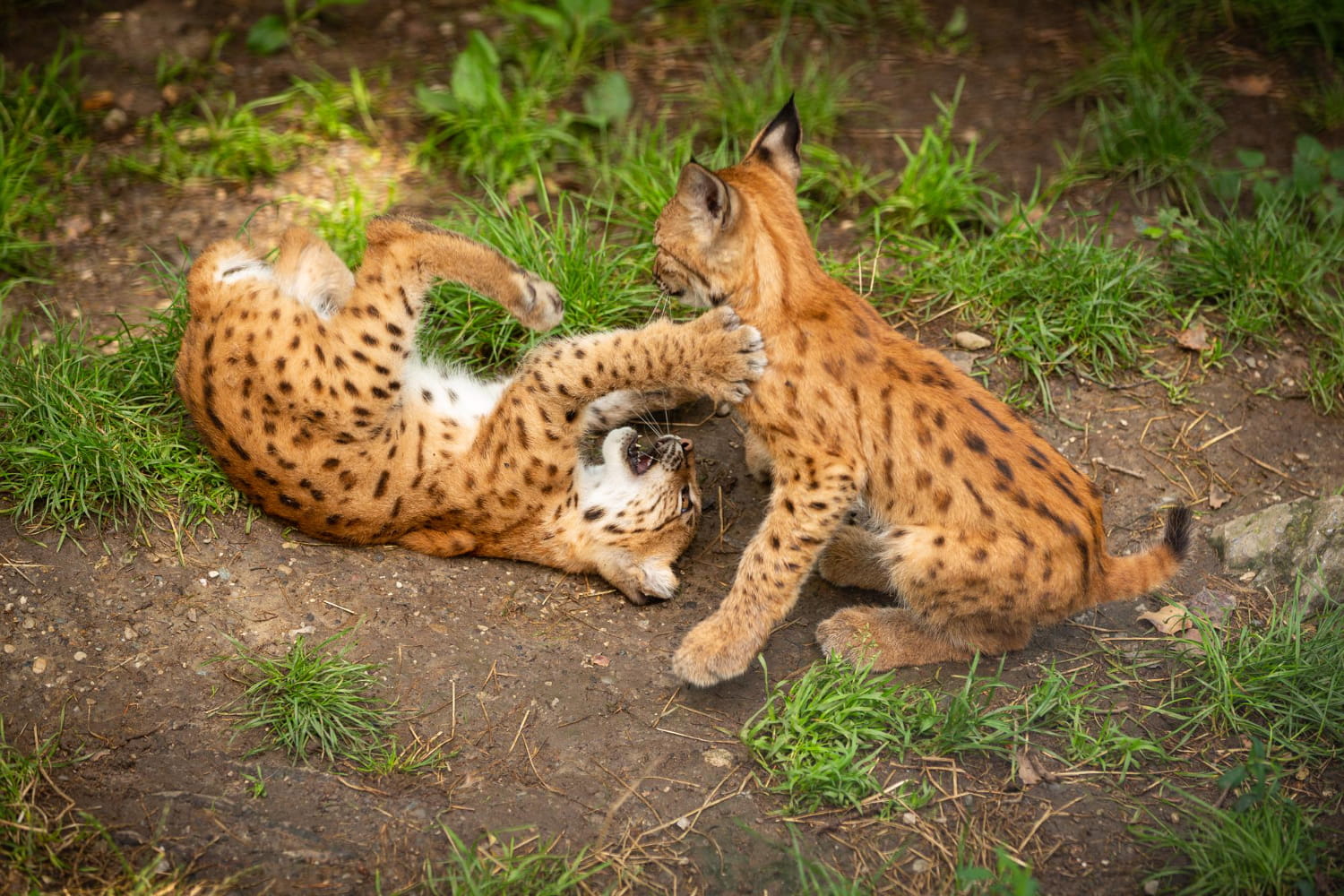
- Lynxes have characteristic tufts on their ears that likely improve their hearing and assist in communication. Their short tails and wide paws are ideally adapted for moving through snow. These predators specialize in hunting hares, which form the basis of their diet. Their adaptations make them effective hunters of northern forests.
- Servals possess the largest ears relative to head size among all representatives of the cat family. These large ear shells allow them to hear the slightest movements of rodents in tall grass. Their long legs help them jump high to catch birds in flight. This combination makes them outstanding hunters of African savannas.
- Caracals can jump up to three meters in height to catch birds directly in the air. Their black ear tufts serve for communication with other individuals of the species. These agile predators hunt primarily at dusk and during the night. Their dexterity makes them successful hunters in arid regions of Africa and Asia.
- Fishing cats have partially webbed paws that facilitate swimming and catching fish. They are not afraid of water and often hunt in shallow water bodies for small fish and frogs. Their fur has water-repellent properties for quick drying. These unique adaptations make them specialists in aquatic hunting among cats.
- The black-footed cat is the smallest representative of wild cats in Africa, weighing only one to two kilograms. Despite its tiny size, it has an extremely high hunting success rate among all predators. Its nocturnal lifestyle helps it avoid larger competitors in the savanna. This small cat demonstrates that size does not always determine success in nature.
- Pallas’s cat has the densest fur among all cat species for protection from the cold of Central Asian steppes. Its rounded body shape and short legs help retain heat in harsh climates. Large eyes positioned at the front provide binocular vision for precise hunting. These adaptations make it ideally suited for life in highlands.
- Clouded leopards have the longest canine teeth relative to skull size among all modern cats. Their unique fur pattern resembles clouds, which helps them camouflage in forest shadows. They can descend trees headfirst thanks to flexible leg joints. These features make them master hunters of Southeast Asian tropical forests.
- Wild cats became ancestors of domestic pets approximately nine thousand years ago in the Middle East. This domestication process began with mutually beneficial coexistence near human settlements. Genetic research confirms the close connection between domestic and wild populations. This history demonstrates the ancient friendship between humans and cats.
- Most wild cats lead nocturnal or crepuscular lifestyles to avoid heat and competitors. Their eyes have a special reflective layer that improves vision in darkness several times over. This adaptation allows them to hunt effectively when their prey is most active. Nocturnal activity is a key survival strategy for many cat species.
- Tigers have unique stripe patterns that differ in each individual, like human fingerprints. Researchers use these patterns to identify and monitor populations in the wild. No two tigers have identical placement and shape of stripes on their bodies. This individuality helps scientists better study the behavior of these large predators.
- Leopards demonstrate outstanding ability to adapt to various environments, from tropical rainforests to arid deserts. Their versatility in prey selection allows them to survive where other predators cannot. This flexibility makes them one of the most widespread large cats in the world. Their ability to adapt is an example of evolutionary success.
- Cheetahs have partially non-retractable claws that provide better grip on the ground during fast running. This feature distinguishes them from other cats whose claws fully retract to preserve sharpness. Such adaptation sacrifices tree-climbing ability in favor of speed on land. This demonstrates an evolutionary compromise between different hunting strategies.
- The mane of male lions serves as natural neck protection during fights with competitors over territory or females. Darker mane color often correlates with higher testosterone levels and better health. Females prefer males with fuller and darker manes when choosing a mate. This trait is an example of sexual selection in action among large predators.
- Snow leopards cannot roar, unlike lions, tigers, leopards, and jaguars. Instead, they produce sounds similar to purring, hissing, and growling. This feature is related to the structure of their laryngeal apparatus and hyoid bone. Despite this, they remain powerful highland predators.
- Jaguars are so strong that they can crush the shell of a large river turtle with a single bite. Their hunting technique often involves piercing the skull of prey for instant incapacitation. This bite strength allows them to hunt the most heavily armored prey in their ecosystems. Such specialization makes them unique among large cats.
- Some wild cats can purr but cannot roar, while others are the opposite. This difference is related to anatomical features of their vocal apparatus. Purring is usually used for communication between mother and cubs. Roaring serves to mark territory and intimidate competitors over long distances.
- The whiskers of wild cats serve as sensitive sensory organs for navigation in darkness and spatial assessment. They help determine whether an animal can squeeze through a narrow opening without getting stuck. These vibrissae also react to the slightest changes in air currents from prey movement. Such sensitivity makes them indispensable tools for nocturnal hunting.
- The Iberian lynx was once on the brink of extinction, but conservation programs helped restore its population. This species is endemic to the Iberian Peninsula and specializes in hunting rabbits. The success of conservation measures demonstrates that human efforts can save rare species. The story of the Iberian lynx inspires further work on biodiversity preservation.
- Asian golden cats demonstrate amazing color variability depending on region and individual characteristics. Their fur can range from golden-red to gray and even black. This diversity helps them camouflage in different types of forest environments. Such color adaptability is an example of evolutionary flexibility of the species.
These fascinating facts only partially lift the veil of mysteries over the amazing world of wild cats inhabiting our planet. Every new discovery proves that these predators continue to astonish scientists with their unique adaptations and behaviors. We hope this collection inspires you to learn more about these majestic animals and the importance of their conservation. The amazing facts presented here once again confirm the uniqueness of cats in the world of wild nature.


