
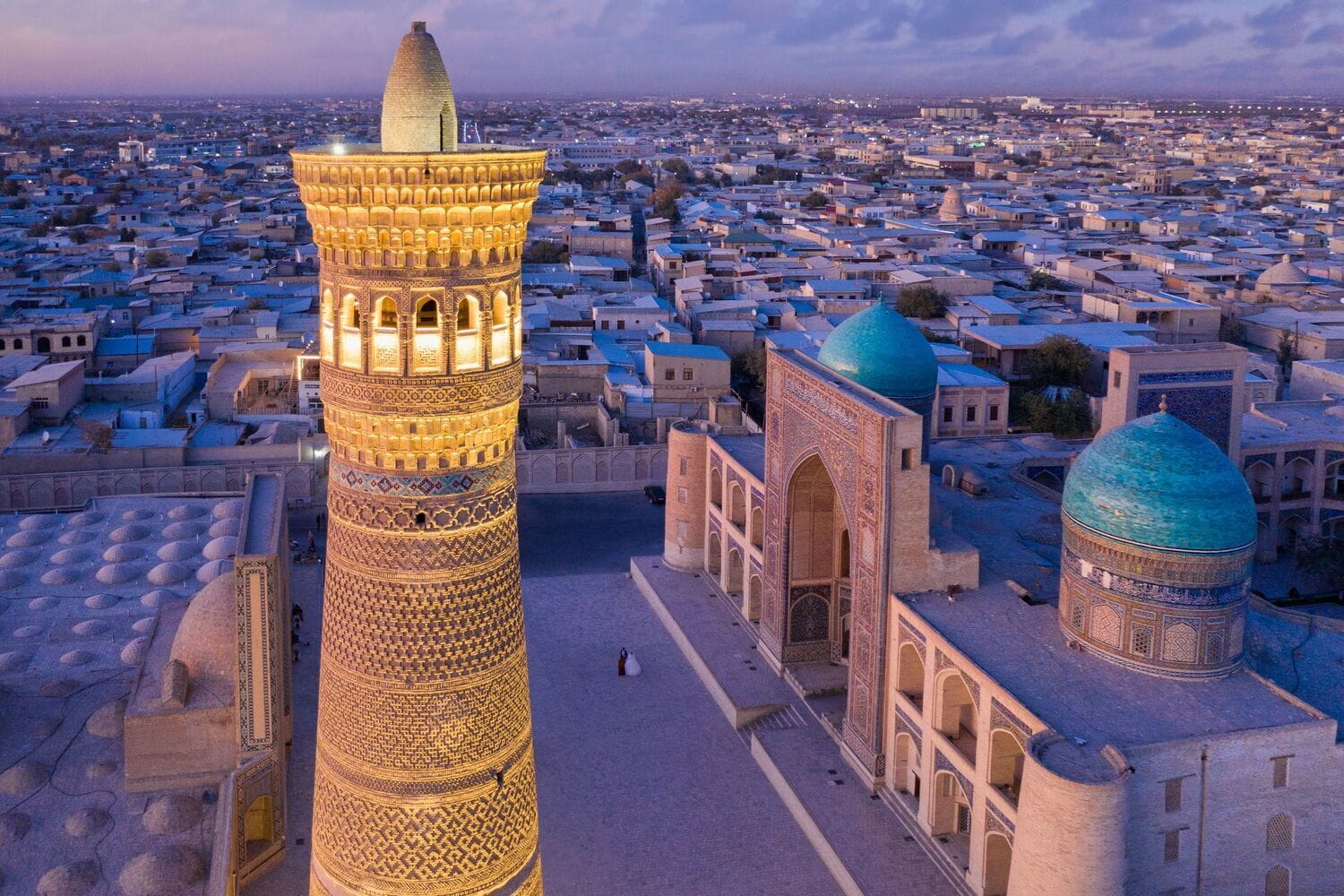
Uzbekistan is the heart of the Great Silk Road, where millennia of history, magnificent architectural monuments, and unique cultural traditions of Central Asia intertwine. Many have heard about the ancient cities of Samarkand and Bukhara, yet you might not know about the numerous wonders of nature, daily life, and modern development of this country. This article gathers fascinating facts that reveal the true face of the Uzbek land and its contribution to world heritage. Each point in our review contains amazing facts that ordinary travel guides often overlook. Let us together immerse ourselves in a world of surprising discoveries that demonstrate the uniqueness of this region.
- Uzbekistan is one of only two countries in the world that must cross at least two other nations to reach the world ocean. Such geographical positioning makes it a doubly landlocked country, surrounded by land twice over. This creates unique logistical challenges for international trade and transportation of goods. Only Liechtenstein in Europe shares a similar geopolitical situation among all countries on the planet.
- The city of Samarkand is considered one of the oldest continuously inhabited cities on Earth, with a history spanning more than two thousand seven hundred years. It was here that trade routes between China, India, Persia, and Europe intersected, forming a multifaceted culture. The architectural monuments of Registan Square astonish with their grandeur and the complexity of ornaments preserved through centuries. UNESCO recognized this city as a key center of Islamic civilization and included it in the World Heritage List.
- Uzbekistan hosts the second largest open-pit gold deposit in the world called Muruntau, which is visible even from space. This gigantic quarry operation extracts dozens of tons of precious metal annually, providing a significant portion of the country’s economy. The depth of the quarry reaches several hundred meters, while its length exceeds three kilometers. Gold mining here has been conducted using open-pit methods for more than half a century without signs of resource depletion.
- Traditional Uzbek flatbread called lepyoshka holds sacred significance for the local population and is never placed upside down or on the ground. A strict etiquette exists according to which breaking bread by hand is considered a mandatory ritual before any meal. In each region of the country, unique shapes and stamp ornaments are used to decorate the surface of flatbreads before baking in a tandoor oven. Losing or showing disrespect toward bread is perceived as an insult to ancestral traditions.
- The Kyzylkum Desert, occupying a significant portion of the country’s territory, is the fourth largest sandy desert in the world. The name translates as Red Sands, explained by the characteristic soil hue due to high iron content. Despite harsh conditions, rare animal species such as the saxaul falcon and desert monitor lizard inhabit this area. During winter months, temperatures can drop below zero, which is unusual for most deserts on the planet.
- Uzbek cuisine is renowned for the variety of plov dishes, each prepared according to a unique recipe depending on the region and occasion. The national plov festival gathers masters from across the country who compete in preparing the largest cauldron of the dish. The foundation of the meal always consists of rice, carrots, onions, and lamb, but proportions and spices can differ dramatically. This dish has been recognized as intangible cultural heritage of humanity and a symbol of the people’s hospitality.
- In the city of Khiva, the only fully enclosed fortress in Central Asia called Ichan-Kala has been preserved, functioning as an open-air museum. Inside the walls are located ancient madrasahs, minarets, and palaces where local families still reside. The city’s architecture has remained virtually unchanged since the flourishing period of the Khorezm state several centuries ago. Walking through Khiva’s narrow streets creates a complete sensation of traveling back in time to the medieval era.
- Uzbekistan is among the world’s largest producers of cotton, which is called white gold here due to its economic importance. Cotton fields occupy enormous areas in the Amu Darya river valley, supplying raw materials to the textile industries of many countries. Harvest collection traditionally becomes a nationwide event involving workers from various sectors of activity. In recent years, the country has been actively modernizing the industry by introducing new irrigation and harvesting technologies.
- In the capital Tashkent, one of the deepest metro stations in the world is located, reaching a depth of one hundred meters underground. Tashkent metro stations are decorated with luxurious mosaics, marble carvings, and national ornaments, making them resemble underground palaces. During construction, engineers encountered complex geological conditions that required unique technical solutions. The metro system is considered not only a transportation artery but also a genuine art museum.
- The Fergana Valley region is known for its unique cat breeds that have short tails from birth due to genetic mutation. These animals are considered national treasures, and their export abroad is strictly controlled by the state. Local residents believe that such cats bring good fortune and protect homes from evil spirits. Genetic research confirms that this breed is among the oldest of its kind.
- Uzbekistan hosts the Baikonur Cosmodrome, which is leased by Russia but geographically located in the Kazakh-Uzbek border region within the desert. Although the main infrastructure belongs to Kazakhstan, historically the launch of the first satellite and the first human into space is closely connected with the Central Asian region. This fact reminds us of the strategic significance of these lands during the space race of the past century. Modern Uzbekistan is also developing its own programs using satellite technologies for agricultural monitoring.
- The traditional art of miniature painting in Bukhara and Samarkand reached incredible heights when artists created detailed paintings the size of postage stamps. Masters used natural paints derived from minerals and plants that do not lose their brightness over centuries. Each drawing contains hidden symbols and scenes from ancient legends or religious texts. This art is passed from teacher to student and remains a living tradition to this day.
- Lake Aydar Kul is the second largest artificial reservoir in Uzbekistan, formed as a result of river water flooding in the desert. It has become a unique ecosystem where fish, birds, and even some reptile species live amidst the sands. The lake shores are popular among tourists who set up yurt camps here for stargazing. The water in the lake is slightly salty but suitable for fishing and recreation during hot summer months.
- The Uzbek language belongs to the Turkic group and uses the Latin alphabet, although the older generation still remembers Cyrillic and Arabic scripts. The language has many dialects that can differ significantly in pronunciation and vocabulary across different regions of the country. Many words have Persian and Arabic roots, reflecting centuries of cultural influence from neighboring civilizations. Learning the language opens access to rich literary heritage, including works of the great poet Alisher Navoi.
- The Navruz holiday, marking the arrival of spring and the new year according to the solar calendar, is celebrated in Uzbekistan with special grandeur and solemnity. People prepare a special dish called sumalak from sprouted wheat, the cooking process of which lasts a full day accompanied by songs and dances. During celebrations, national games, wrestling competitions called koresh, and folk craft fairs are held. This day symbolizes the renewal of nature, unity of the people, and hope for a happy future.
- The country has preserved unique methods of constructing earthquake-resistant buildings that were used even in medieval times for protection against seismic activity. Architects applied special mortars made from egg whites and camel wool to increase wall elasticity. Wooden roof structures were fastened without nails, allowing them to move during tremors without collapsing. These technologies enabled many historical monuments to withstand centuries in a seismically active region.
- Uzbekistan is a world leader in growing apricots and melons, which have unique flavors thanks to the valley’s climatic conditions. Local fruit varieties are so sweet that they are often dried without adding sugar, producing natural delicacies. Export of dried fruits and nuts represents an important source of income for the country’s agricultural sector. Annual festivals dedicated to harvesting these crops showcase record-sized specimens of fruits.
- In the mountainous regions of the country, one can still encounter golden eagles that local hunters use for hunting foxes and hares. This ancient tradition is passed from generation to generation and requires years of training for both the bird and the person. The hunter and his bird form an inseparable tandem that demonstrates harmony between humans and nature. Such performances often become highlights of tourist shows in mountain villages.
- The Chorsu Bazaar in Tashkent is one of the largest and oldest markets in Central Asia, where trade has not ceased for many centuries. Under enormous domes, one can find everything from fresh vegetables and spices to hand-woven carpets and national clothing. The market atmosphere conveys the true spirit of Eastern commerce with its bargaining, aromas, and diversity of voices. This place is not merely a point of sale but a living organism of urban life.
- Uzbekistan hosts some of the most beautiful tulip gardens since this region is considered the homeland of many species of these flowers. Wild tulips grow in the foothills during spring, covering slopes with colorful carpets visible from afar. European breeders brought bulbs from these lands several centuries ago, giving rise to worldwide admiration for tulips. Every year, thousands of tourists come here to witness this natural wonder with their own eyes.
These fascinating facts only partially lift the veil of mysteries over this country rich in history and culture. Every new discovery proves that Uzbekistan continues to amaze the world with its heritage, natural resources, and hospitality. We hope this collection inspires you to learn more about this region where past and present harmoniously blend together. The amazing facts presented here once again confirm the uniqueness of Uzbekistan on our world map.


