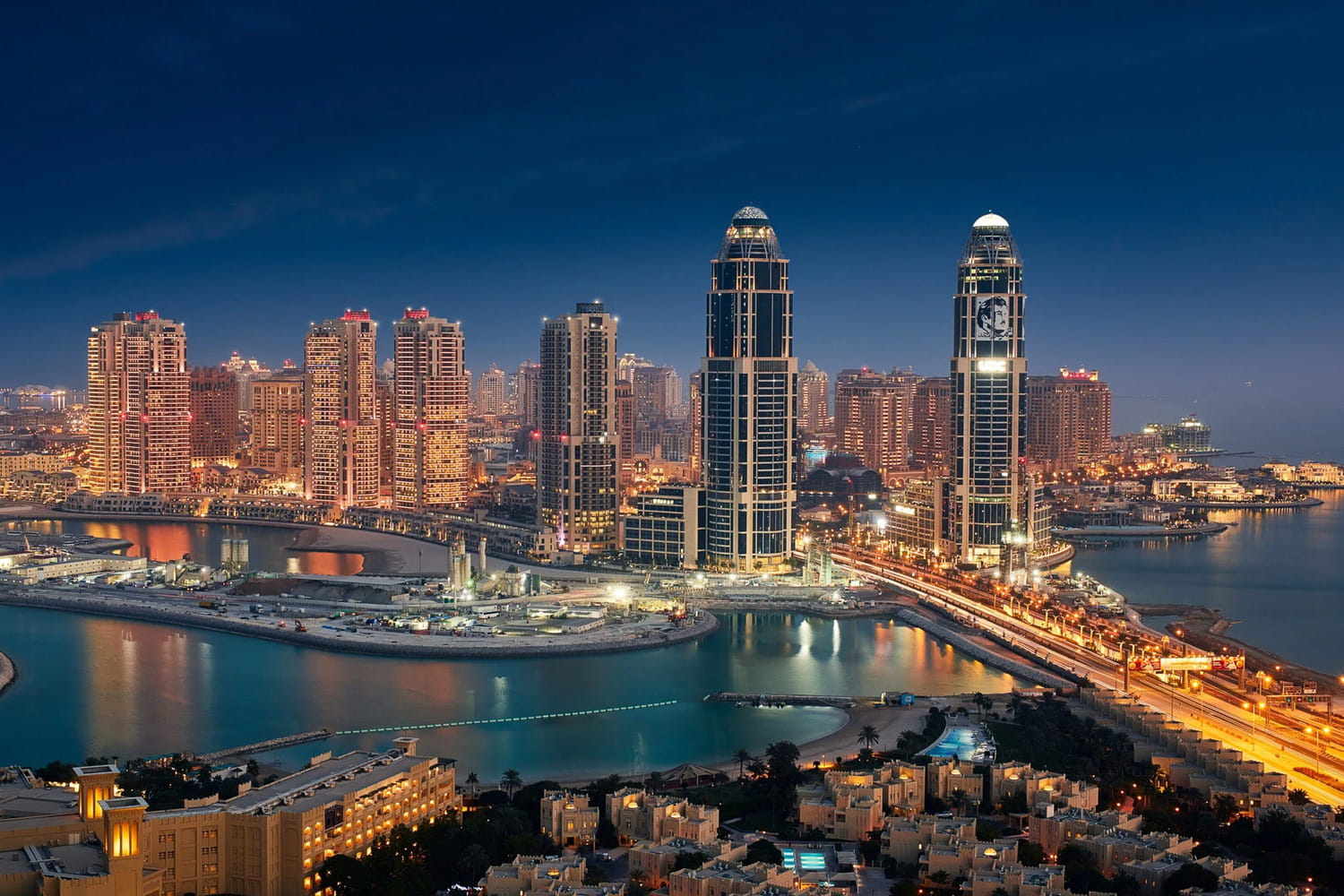
Imagine a country where modern skyscrapers stand side by side with ancient fortresses, and vast desert landscapes transform into oases of futuristic technology. Qatar is a true phenomenon of the modern era, a small state on the shores of the Persian Gulf that has transformed within just a few decades from a poor fishing sultanate into one of the richest countries on the planet. Among the remarkable facts about this country, you will find stories about some of the world’s largest reserves of liquefied natural gas, unique cultural traditions preserved despite globalization, and ambitious projects that are reshaping perceptions of what human engineering can achieve. These fascinating facts reveal Qatar from an unexpected perspective, showing much that you may not have known about this extraordinary nation.
- Qatar is the smallest country in the Middle East by land area, occupying only 11,571 square kilometers on a peninsula extending into the Persian Gulf, sharing maritime borders with all its neighbors except Bahrain. Despite its compact size, the country has one of the longest coastlines in the world relative to its area, totaling about 563 kilometers. Qatar’s geographic position makes it a strategically important region for maritime trade between Europe, Asia, and Africa.
- Qatar possesses the third-largest natural gas reserves in the world after Russia and Iran, and its North Field is the largest offshore gas field on the planet. This resource became the foundation of the country’s economic miracle, turning it into one of the wealthiest nations globally, with GDP per capita exceeding 60,000 US dollars. Qatar’s oil reserves, although smaller than its gas reserves, still amount to around 15 billion barrels, providing additional economic potential.
- The capital of Qatar, Doha, has transformed from a small fishing settlement into a modern metropolis over the past fifty years, driven by revenues from energy exports. In the city center rises the famous Doha Palm, an artificial island shaped like a palm leaf and built using technology similar to Dubai’s Palm Jebel Ali. Doha is also home to the Museum of Islamic Art designed by architect I. M. Pei, which is considered one of the finest museums of Islamic culture in the world.
- Qatar hosted the 2022 FIFA World Cup, becoming the first country in the Middle East and the second Asian nation after Japan and South Korea to organize the tournament. For the championship, eight stadiums with unique architecture were built or renovated, including the 80,000-seat Lusail Stadium where the final was held. Thanks to the country’s compact size, the distance between any two stadiums did not exceed 75 kilometers, allowing fans to avoid long travel times.
- Qatar’s population is approximately 2.8 million people, but only about 12 percent are citizens of the country, while the rest are foreign workers, mainly from South and Southeast Asia. This unique demographic situation makes Qatar the country with the highest proportion of immigrants in the world, creating a complex social structure. Qatari citizens enjoy extensive social benefits, including free education, free healthcare, and subsidized housing.
- The official language of Qatar is Arabic, but English is widely used in business, education, and everyday communication due to the international character of the population. The Qatari dialect of Arabic has distinctive features that set it apart from other Arabic dialects, particularly in pronunciation and vocabulary. Education City in Doha hosts campuses of leading American universities such as Georgetown University and Carnegie Mellon University.
- Qatar is an absolute monarchy led by an emir who holds executive, legislative, and part of the judicial authority, although a consultative body known as the Shura Council exists. The current emir, Sheikh Tamim bin Hamad Al Thani, became the youngest serving head of state in the world when he assumed power in 2013 at the age of 33. The Qatari Constitution adopted in 2003 guarantees freedom of religion, although Islam remains the state religion and Sharia is the main source of legislation.
- Qatar’s climate is classified as hot desert, with extremely low annual rainfall averaging only about 75 millimeters. Summer temperatures often exceed 45 degrees Celsius, while winter humidity can reach up to 90 percent due to the country’s proximity to the sea. To address the shortage of fresh water, Qatar relies on seawater desalination technology, which supplies more than 99 percent of the country’s drinking water needs.
- Qatar is home to the world’s largest producer of liquefied natural gas, the company QatarEnergy, previously known as Qatar Petroleum. The country exports more than 77 million tons of liquefied natural gas annually, making it a global leader in this industry. For transportation, Qatar operates one of the world’s largest fleets of LNG carriers designed specifically for gas transport.
- Qatar’s national airline, Qatar Airways, is recognized as one of the best airlines in the world, having received the title of World’s Best Airline from Skytrax more than ten times. The airline’s main hub, Hamad International Airport in Doha, is among the most modern airports globally and can handle up to 58 million passengers per year. The airport is renowned for its unique architecture inspired by a desert flower and its luxurious passenger facilities.
- Qatar actively invests in cultural infrastructure, creating a cultural district in Doha known as Katara. Among the most notable institutions are the National Museum of Qatar designed by Jean Nouvel in the shape of a desert rose, and the Qatar Foundation, which supports art, education, and research. The country is also home to Mathaf, a modern art space exhibiting works by contemporary artists from around the world.
- Qatar operates a distinctive system for managing migrant labor, including the kafala program, although significant reforms have been introduced in recent years to protect workers’ rights. In 2020, Qatar abolished the requirement for employer permission to change jobs, marking an important step toward improving labor conditions for foreign workers. The country also introduced a minimum wage applicable to all workers regardless of nationality.
- Qatar is a global leader in sports investment, owning the French football club Paris Saint-Germain and holding broadcasting rights for major sporting events through beIN Sports. The country has also created a professional football league known as the Qatar Stars League, which attracts well-known players from around the world. In addition to football, Qatar actively develops other sports, particularly equestrian sports, and is considered one of the world’s centers for breeding Arabian horses.
- Qatar’s natural environment is predominantly desert, but it also includes unique ecosystems such as salt lakes and mangrove forests in the northern part of the country. The national symbol of Qatar is the Arabian falcon, regarded as one of the rarest birds of prey in the world. The country has established several nature reserves to protect local flora and fauna, including Al Reem Reserve, home to gazelles, Arabian foxes, and other desert animals.
- Qatari cuisine is a blend of Arab traditions and influences from India, Iran, and East Africa, shaped by historical trade connections. Staple ingredients include rice, lamb, fish, and spices, especially saffron, cardamom, and cinnamon. The most famous dishes include machbous, a traditional rice dish with meat, machbous al-samak with fish, and the dessert luqaimat, consisting of fried dough balls drizzled with honey.
- Qatar is considered one of the safest countries in the world, with an extremely low crime rate due to an effective police system and strict laws. The death penalty exists for the most serious crimes, although in practice it is carried out very rarely. The country is also known for its tolerance toward foreigners, despite certain restrictions related to local customs and religious norms.
- Qatar invests heavily in education and science, establishing Education City with campuses of leading global universities. The country also funds scientific research through the Qatar Foundation and the National Research Program. Particular emphasis is placed on developing technologies related to water desalination, solar energy, and artificial intelligence.
- Qatar enforces a strict legal system based on Sharia law, although some concessions are made for foreigners. Alcohol consumption is permitted only in licensed hotel venues and private residences with appropriate permits. During the 2022 World Cup, some restrictions were temporarily relaxed for fans, which generated significant international attention.
- Qatar is a global leader in investments in international media, owning the Al Jazeera network founded in 1996, which has become one of the most influential news organizations in the Middle East. The country also controls the Qatar Investment Authority, a sovereign wealth fund managing assets worth over 450 billion US dollars. This fund holds stakes in numerous international companies, including Walmart, Barclays, and Porsche.
- Despite being a major exporter of fossil fuels, Qatar aims to become the first country in the Middle East to fully transition to renewable energy sources by 2030. The country is constructing one of the world’s largest solar power plants, Al Kharsaah, with a capacity of 800 megawatts, which will supply electricity to more than 200,000 homes. Qatar is also actively exploring the potential of hydrogen as an alternative energy source.
- Qatar was a member of the Organization of the Petroleum Exporting Countries, but in 2019 it withdrew from the organization to focus on expanding liquefied natural gas production. The country plays an important role in international diplomacy, often acting as a mediator in conflicts in the Middle East, including talks between the United States and the Taliban. Doha is also home to the headquarters of the US Central Command in the Middle East.
- Qatar actively develops tourism, creating numerous attractions for visitors, including artificial islands, resorts, and cultural centers. The country is also known for its luxury shopping malls, where many of the world’s most prestigious brands are represented. One of the unique tourist experiences offered in Qatar is the opportunity to ride camels across the desert or spend a night in a traditional Bedouin camp.
These remarkable facts only partially reveal the multifaceted nature of Qatar, a country that successfully combines ancient traditions with the most advanced technologies. From vast desert landscapes to futuristic cities, Qatar demonstrates how a small state can become a global player through strategic thinking and ambitious investment. Qatar reminds us that true power often lies not in the size of territory, but in the ability to transform limited natural resources into a foundation for sustainable development and cultural prosperity.


