
In the heart of the American Midwest lies a city where architectural masterpieces, rich cultural heritage, and the dynamic rhythm of a major metropolis intertwine. Chicago amazes with its diversity ranging from skyscrapers reaching for the sky to cozy parks along the shores of Lake Michigan. You might not know that it was precisely here that innovations were born which changed the face of modern architecture and cuisine. We invite you to immerse yourself in a world of amazing facts that will reveal the true essence of this legendary city to you. These fascinating facts will help you better understand the uniqueness of Chicago and its place in American history.
- Chicago is the third largest city in the United States after New York and Los Angeles, with a population exceeding two million seven hundred thousand people. The city is located on the southwestern shore of Lake Michigan, which makes it an important transportation and economic hub. Chicago is often called the Windy City, although this nickname has more political origins than meteorological ones. It was precisely here that a unique urban culture formed, combining immigrant traditions with the American way of life.
- The world’s first skyscraper was built precisely in Chicago in eighteen eighty-five, which launched a new era in architecture. The ten-story Home Insurance Building utilized an innovative steel frame that allowed builders to construct taller structures. This architectural breakthrough inspired urban planners around the world to create vertical cities. Today Chicago remains one of the global leaders in the field of high-rise construction.
- Famous Chicago deep-dish pizza was created at Pizzeria Uno restaurant in nineteen forty-three. This dish is distinguished by its thick crust, generous amounts of cheese, and sauce added on top. Preparing such a pizza takes up to forty-five minutes, which makes it a true culinary masterpiece. Tourists from around the world come to Chicago to taste this unique local delicacy.
- Chicago is home to one of the most renowned museums in the world, the Art Institute of Chicago, founded in eighteen seventy-nine. The museum houses more than three hundred thousand works of art, including masterpieces by impressionists and contemporary artists. Its collection of Claude Monet paintings is the second largest in the world after the Musée d’Orsay in Paris. Millions of art enthusiasts from different corners of the planet visit the museum annually.
- Chicago played a key role in the development of jazz and blues, becoming the center of a musical revolution in the twentieth century. Legendary musicians such as Muddy Waters and Nat King Cole began their careers precisely in the clubs of this city. The Chicago Jazz Festival attracts thousands of fans of this genre every year. The musical heritage of the city continues to inspire new generations of performers.
- In eighteen seventy-one, a great fire occurred in Chicago that destroyed a significant portion of the city and claimed the lives of hundreds of people. According to legend, the fire was started by Mrs. O’Leary’s cow, which knocked over a lantern in the barn, although this story has never been confirmed. The reconstruction of the city after the fire led to an architectural boom and the creation of modern Chicago. Today the memory of this tragedy is preserved in the city’s museums and historical landmarks.
- Chicago has a unique system of underground tunnels, known as the Chicago Underground, which was built for freight transportation. This network of tunnels stretching more than ninety kilometers allowed goods to be delivered without surface-level interference. Today part of the tunnels is used for communications and infrastructure needs. This engineering structure remains one of the least known wonders of the city.
- The military parade in Chicago, known as the Parade of Thanks, is one of the largest festive events in the Midwest. Every year thousands of participants and spectators gather on the city streets to celebrate important occasions. The parade includes military equipment, musical groups, and representatives of various communities. This tradition unites Chicago residents and demonstrates the spirit of community.
- Chicago is the birthplace of the world’s first nuclear reactor, which was launched in nineteen forty-two under the leadership of Enrico Fermi. This experiment, known as Chicago Pile-1, took place at the stadium of the University of Chicago. The discovery launched the era of nuclear energy and changed the course of scientific progress. Today a monument stands at the site of the experiment, reminding visitors of this historical achievement.
- The city has an extensive system of parks, known as the Chicago Necklace, which covers more than eight hundred hectares of green spaces. These parks are connected by scenic boulevards and offer residents places for recreation and sports. The most famous among them is Millennium Park with its renowned sculpture Cloud Gate, known as The Bean. Chicago’s parks represent a model of successful integration between urban planning and nature.
- Chicago is famous for its architecture, particularly the Willis Tower building, which was the tallest building in the world from nineteen seventy-three to nineteen ninety-six. The SkyDeck observation platform on the one hundred third floor offers impressive panoramic views of the city and the lake. Glass balconies extending beyond the building’s perimeter allow visitors to feel as though they are standing on the edge of a skyscraper. This architectural attraction draws millions of tourists annually.
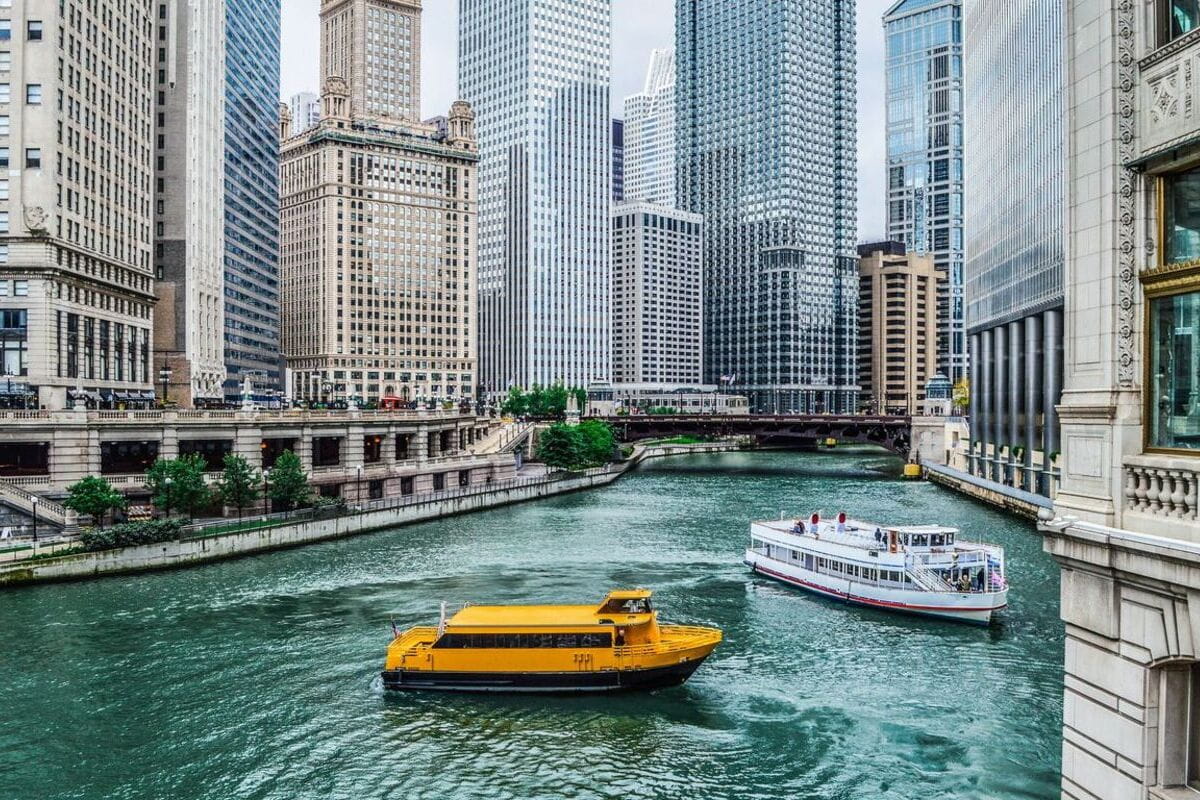
- The Chicago River is the only river in the world that flows in reverse direction thanks to an engineering project from the nineteen hundreds. This change was necessary to prevent contamination of Lake Michigan by the city’s wastewater. The engineering solution became one of the most outstanding achievements of civil engineering of its time. Today the river is a popular location for boat tours and architectural excursions.
- Chicago has a rich history of immigration that has shaped the diverse cultural mosaic of the city. Representatives of more than eighty ethnic groups live in various neighborhoods, preserving their traditions and languages. Neighborhoods such as Chinatown, Little Italy, and Greektown offer authentic cuisine and cultural events. This diversity makes Chicago one of the most interesting cities for cultural tourism.
- Chicago is home to one of the busiest airports in the world, O’Hare, which serves more than eighty million passengers annually. The airport is named after World War Two flying ace Butch O’Hare. Its strategic location makes it an important transit hub for international flights. O’Hare represents a symbol of Chicago’s global connectivity with the rest of the world.
- The city is known for its sports teams, including the Chicago Bulls, Chicago Bears, and Chicago Blackhawks, which have rich histories of victories. The legendary Michael Jordan brought fame to the Chicago Bulls in the nineteen nineties, making the team a global brand. Fans of the city are known for their passionate support and for creating a unique atmosphere in stadiums. Sports culture is an important part of Chicago’s identity.
- Chicago has a unique tradition of dyeing the river green annually in honor of Saint Patrick’s Day. This vibrant event attracts thousands of spectators who watch the transformation of the water. The dye that is used is environmentally safe and disappears within a few hours. This tradition symbolizes spring renewal and the city’s European cultural heritage.
- Chicago is home to the world’s first university campus entirely designed by the renowned architect Frank Lloyd Wright. The University of Chicago campus combines Gothic architecture with modern innovations in education. The university has produced more than ninety Nobel Prize laureates, which testifies to its academic excellence. This institution continues to be one of the leading scientific centers in the world.
- Chicago is a center of futures trading, where the Chicago Board of Trade and the Chicago Mercantile Exchange are located. These financial institutions determine global prices for commodities, including grain, energy resources, and metals. Trading on these exchanges influences the global economy and financial markets. Chicago remains an important player in the world financial system.
- The city has a rich literary tradition, being home to writers such as Ernest Hemingway and Theodore Dreiser. The Chicago literary school influenced the development of American prose in the twentieth century. The annual Chicago Literary Festival brings together authors and readers from around the world. This cultural heritage inspires new generations of writers and poets.
- Chicago is known for its festivals, including the Taste of Chicago, which is one of the largest culinary events in the world. The event offers visitors the opportunity to sample dishes from hundreds of the city’s restaurants and renowned chefs. The festival also includes live musical performances and entertainment for the whole family. This event showcases the culinary diversity and hospitality of Chicago.
Chicago continues to amaze researchers and travelers with its incredible facts and dynamic culture. Each new discovery in this city adds fascinating facts to our understanding of this metropolis’s uniqueness and its place in American history. You might not know how diverse Chicago’s heritage truly is, but it is precisely this uniqueness that makes it a genuine pearl of the Midwest. Interesting facts about this magnificent city remain an important key to understanding the interconnection between architecture, culture, and human ingenuity.


