
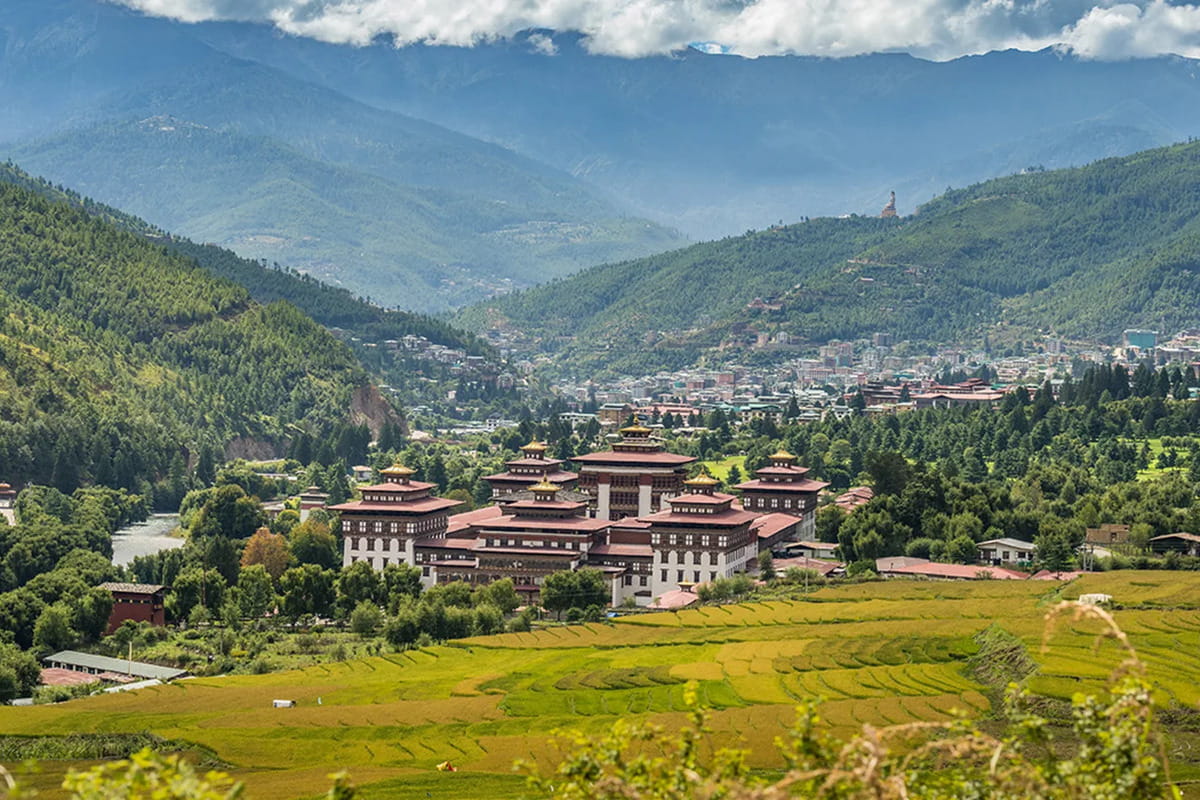
Bhutan is one of those countries that many people have heard of but know very little about. This small mountain kingdom, nestled in the Himalayas, has managed to preserve its unique culture, traditions, and distinctive approach to social development. Fascinating facts about Bhutan reveal that the country often chooses its own path rather than simply following global trends. Here, nature, spirituality, and everyday life are closely interconnected. You may not know that many of Bhutan’s characteristics have no equivalent anywhere else in the world.
- Bhutan is located in the Eastern Himalayas between India and China. Much of its territory consists of high mountains and deep valleys. Due to the rugged landscape, many settlements remained isolated from one another for long periods of time. This helped preserve local traditions and customs.
- The country’s official name is the Kingdom of Bhutan. It operates as a constitutional monarchy. The king enjoys great respect among the population. The monarchy plays an important role in the political and cultural life of the nation.
- Bhutan became famous around the world because of its concept of Gross National Happiness. Unlike many countries, national progress is not measured solely through economic indicators. Significant attention is given to citizens’ well-being, culture, and the environment. This approach has attracted considerable interest from international researchers.
- Most of Bhutan’s population practices Buddhism. Religion has a profound influence on daily life, architecture, and government policies. Monasteries, stupas, and prayer flags can be seen throughout the country. Many traditions have been preserved for hundreds of years.
- Bhutan is home to one of the most famous monasteries in the world. Taktsang Monastery, also known as Tiger’s Nest, was built on a steep cliff. It rises hundreds of meters above the valley below. The site is an important pilgrimage destination and a popular tourist attraction.
- Bhutan is one of the few countries in the world with a negative carbon balance. Its forests absorb more carbon dioxide than the country’s economy produces. This makes the nation an important example of environmental responsibility. The government places strong emphasis on protecting nature.
- Bhutan’s Constitution requires that a substantial portion of the country’s land remain covered by forests. A minimum level of forest coverage is legally protected. As a result, Bhutan remains one of the greenest countries on Earth. Forests cover the majority of its territory.
- There are no traffic lights in Bhutan’s capital city, Thimphu. Traffic is directed by police officers or managed through road signs. Residents have become accustomed to this unique system. It is one of the most unusual characteristics of the capital.
- For a long time, Bhutan remained highly isolated from the outside world. Television and internet services were introduced only at the end of the twentieth century. Authorities feared that rapid modernization could negatively affect traditional culture. As a result, changes were implemented gradually.
- Bhutan maintains a national dress code for many official occasions. Men wear a traditional garment called the gho, while women wear the kira. These outfits can be seen in schools, government offices, and during celebrations. They form an important part of the country’s cultural heritage.
- Bhutan has one of the smallest populations among Asian countries. Fewer than one million people live there. Most residents live in small towns and rural villages. Large metropolitan areas do not exist in the country.
- Some of the world’s highest unclimbed mountain peaks are located in Bhutan. Certain summits have never been reached by mountaineers. Authorities restrict climbing on the highest mountains because of religious beliefs. Local people regard these places as sacred.
- Bhutan is known for its rich biodiversity. Snow leopards, red pandas, Himalayan bears, and many rare bird species live within its borders. The diversity of ecosystems provides suitable habitats for a wide range of wildlife. This makes the country an important refuge for nature.
- One of the most popular dishes in Bhutan is ema datshi. Its main ingredients are chili peppers and cheese. Many foreign visitors find the dish extremely spicy. However, local residents consider it an essential part of their national cuisine.
- Bhutan actively develops hydropower. Mountain rivers provide significant potential for electricity generation. A portion of the electricity produced is exported to neighboring countries. This serves as an important source of national income.
- The country hosts colorful religious festivals known as tsechu. During these celebrations, people wear traditional clothing and watch masked dances. Such events attract thousands of participants and visitors. They hold great spiritual and cultural significance.
- Bhutanese architecture is characterized by a unified traditional style. Even modern buildings are often designed according to national architectural principles. This helps preserve the distinctive appearance of towns and villages. As a result, the country possesses a unique architectural identity.
- Education and healthcare have gradually become accessible to most of the population. The government actively invests in social programs. These efforts contribute to improving citizens’ quality of life. Particular attention is given to remote mountain communities.
- Tourism in Bhutan is managed through a unique system. Authorities seek to avoid mass tourism and excessive pressure on natural environments. For this reason, special regulations apply to international visitors. This approach helps preserve both natural and cultural heritage.
- Bhutan was the last country in the world to introduce television broadcasting. This occurred only in the late 1990s. Before that, the population had very limited access to television programming. This fact is often cited as an example of the country’s unusual path of development.
Amazing facts about Bhutan demonstrate that even a small country can have a significant influence on global discussions about social development and environmental protection. It successfully combines ancient traditions with gradual modernization while preserving its unique identity. Fascinating facts about this Himalayan kingdom show how diverse the modern world can be. You may not know that the pursuit of harmony between people, culture, and nature has become one of Bhutan’s most defining characteristics.


