
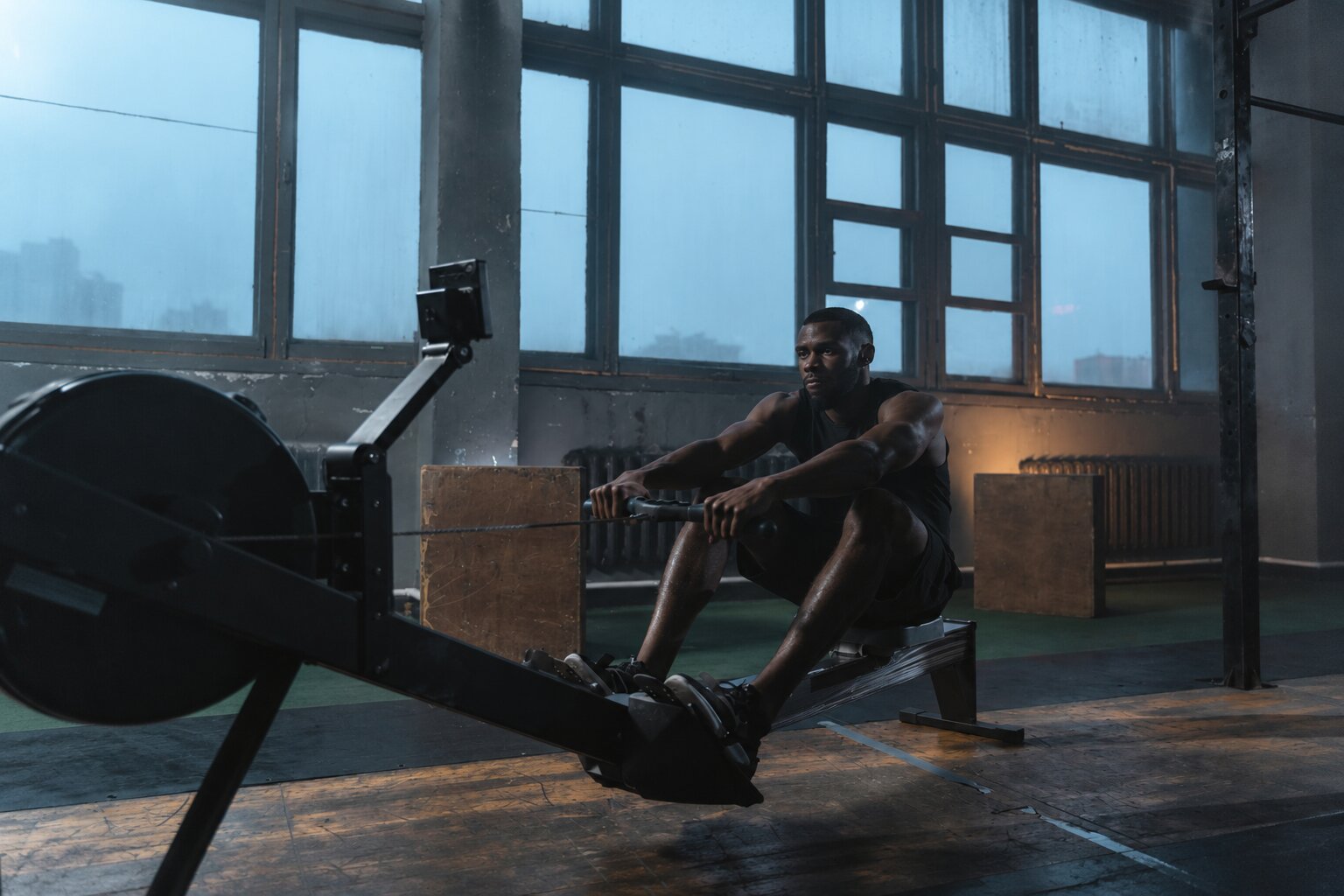
Before an intense cardio workout, it is important to gradually increase your heart rate and prepare your muscles for physical activity. If you are using a rowing machine, your warm-up should target your legs, back, and shoulder muscles. Depending on your fitness level, 5–10 minutes is usually enough. Switching abruptly to a high resistance level can cause fatigue and negatively affect your exercise technique. Read on to learn more.
Which Exercises Are Best for Warming Up Before Rowing?
Rowing engages the quadriceps, glutes, back, and arm muscles. Therefore, your warm-up should include movements that prepare the knee, hip, and shoulder joints. Start with exercises that do not require additional weights. The following movements can be performed before your workout:
- marching in place – 1–2 minutes to increase your heart rate;
- squats – 10–12 repetitions at a comfortable depth;
- shoulder circles – 10 rotations in each direction;
- torso bends – 8–10 repetitions without rounding your lower back;
- light rowing – 3–5 minutes at a low resistance level.
Perform each exercise smoothly, avoiding sudden or jerky movements. If you experience joint pain, reduce your range of motion or stop the exercise. Prolonged static stretching is not essential before intense physical activity. Dynamic exercises that resemble the movements of your upcoming workout are generally more useful.
At the COMFY online store, you can compare rowing machines based on their resistance types and adjustment options. Starting with a low resistance level is convenient for warming up and gradually increasing workout intensity. Perform your first rowing strokes at a moderate pace while maintaining proper back positioning. You can then move on to your target training resistance.
How Can You Tell When Your Body Is Ready for the Main Workout?
After warming up, your breathing becomes slightly faster, and your muscles begin to prepare for more demanding activity. However, you should not feel significantly fatigued before starting the main part of your workout. A practical indicator is your ability to speak in complete sentences while rowing at an easy pace. If you experience severe shortness of breath, it is too early to increase the intensity.
It is also important to check your joint mobility. Straightening your knees, bending your torso, and performing pulling movements with your arms should not cause pain. A heart rate monitor can help you track exercise intensity. Your heart rate should increase gradually, although individual values depend on your age, fitness level, and overall health.
Stop exercising if you experience dizziness, chest pain, or unusual weakness. If these symptoms recur, consult a healthcare professional. A proper warm-up helps you transition to intense exercise while maintaining better control over your movements. Visit comfy.ua to explore the specifications of different cardio training machines.


