
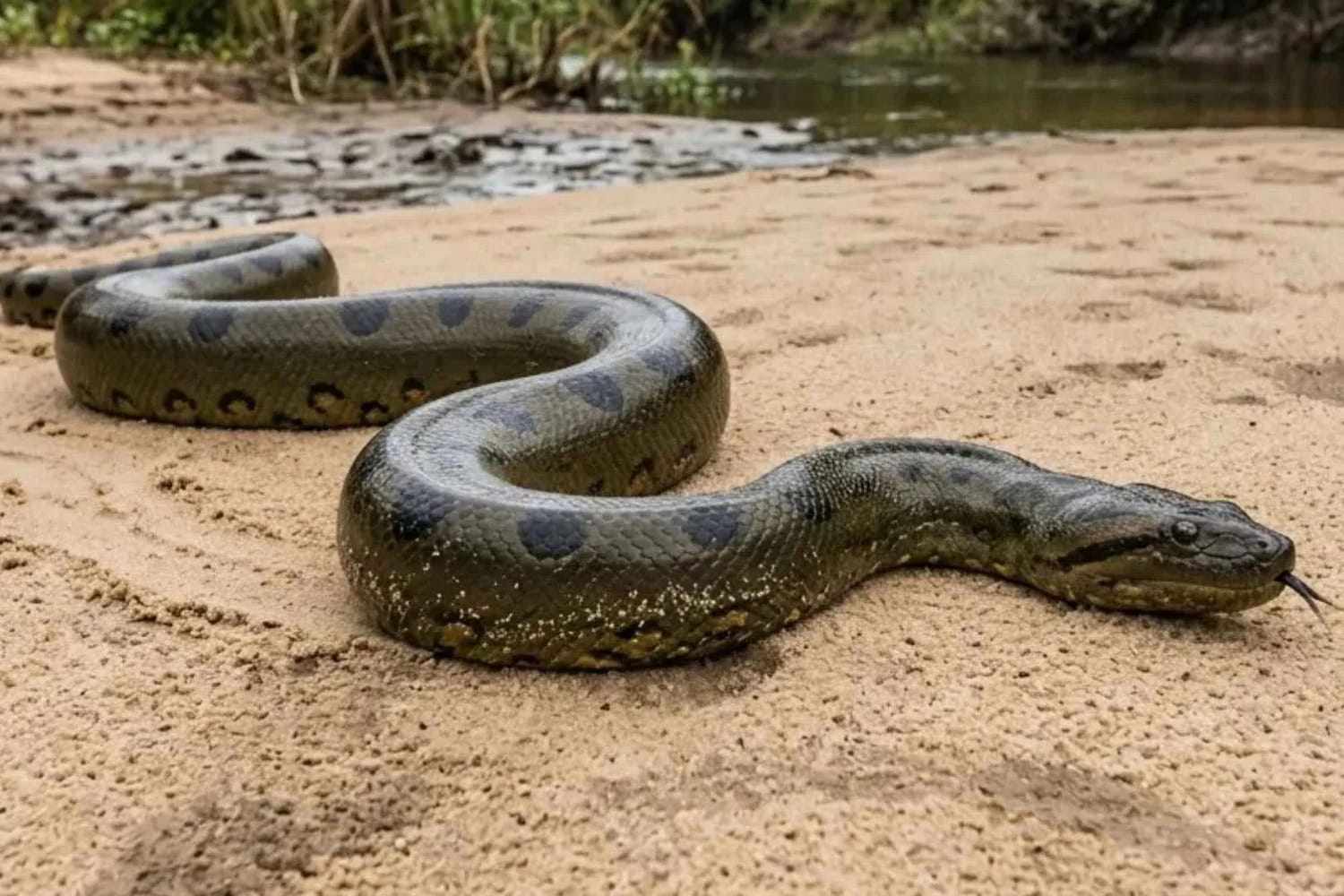
Anacondas are among the largest and most famous snakes on Earth. Their enormous size, powerful bodies, and semi-aquatic lifestyle have made them the subjects of countless legends, books, and films. Interesting facts about anacondas show that the real characteristics of these reptiles are just as impressive as the fictional stories told about them. They inhabit remote regions of South America and are perfectly adapted to life among rivers, swamps, and tropical forests. You may not know that many popular beliefs about anacondas are greatly exaggerated, although these snakes are truly remarkable animals.
- Anacondas belong to the boa family. They do not possess venom and kill their prey using powerful muscles. After capturing an animal, the snake gradually tightens its coils around the victim. This hunting method is typical of many large constrictor snakes.
- The green anaconda is the most well-known species. It is considered the heaviest snake in the world. Adult individuals can reach an enormous body mass. Because of this, green anacondas often outweigh even the longest pythons.
- Anacondas are found primarily in South America. They inhabit the basins of the Amazon and Orinoco rivers. These snakes prefer swamps, rivers, and flooded forests. Water plays a central role in their lives.
- The eyes and nostrils of an anaconda are positioned on the top of its head. This allows the snake to remain almost completely submerged underwater. Only its sensory and breathing organs stay above the surface. This adaptation helps it remain hidden from prey.
- Anacondas are excellent swimmers. They can move silently through the water over considerable distances. Their muscular bodies are perfectly suited for aquatic movement. In water, they are far more agile and comfortable than on land.
- The coloration of an anaconda serves as effective camouflage. Dark spots on a greenish background help the snake blend into its surroundings. This is especially useful in dense vegetation and murky water. Effective camouflage greatly improves hunting success.
- The diet of anacondas is highly varied. They may prey on fish, birds, capybaras, caimans, and many other animals. The choice of prey depends largely on the size of the snake. Larger individuals are capable of subduing surprisingly large animals.
- Anacondas do not usually chase prey over long distances. Instead, they rely on ambush tactics. The snake patiently waits until an animal comes within striking range. Once the opportunity appears, the attack is swift and powerful.
- After consuming a large meal, an anaconda can go for a long time without eating again. Digesting large prey may take many days or even weeks. During this period, a significant amount of energy is devoted to digestion. As a result, frequent hunting is unnecessary.
- Female anacondas are usually much larger than males. This characteristic is known as sexual dimorphism. In some cases, a female may weigh nearly twice as much as a male. Such a difference is relatively unusual among large animals.
- Unlike many other snakes, anacondas do not lay eggs. They give birth to live young. Newborn snakes emerge fully developed. From the moment they are born, they are capable of surviving independently.
- A single litter may contain dozens of offspring. The exact number depends on the age and size of the female. Young anacondas are predators from the beginning of their lives. They quickly start hunting small animals on their own.
- Despite their size, anacondas have natural enemies. Young snakes may be attacked by large birds of prey, caimans, and jaguars. Adult anacondas are much less likely to become prey. Their massive size provides significant protection.
- An anaconda can open its mouth remarkably wide. Its jaws are connected by flexible ligaments. This allows the snake to swallow prey much larger than its own head. Such an anatomical feature is common among many giant snake species.
- In the wild, anacondas can live for more than twenty years. Their lifespan depends on environmental conditions and food availability. Some individuals live even longer in captivity. Proper care can significantly extend their lives.
- Many myths have developed around the supposedly gigantic size of anacondas. Reports occasionally appear describing snakes of incredible lengths. However, most of these stories lack scientific confirmation. Real anacondas are impressive, but they are generally smaller than the legendary creatures described in folklore.
- Anacondas play an important role in South American ecosystems. They help regulate populations of numerous animal species. As large predators, they contribute to maintaining ecological balance. The disappearance of such animals could affect entire ecosystems.
- Scientists continue to study anacondas in their natural habitats. Because many of the areas where they live are difficult to access, numerous aspects of their behavior remain poorly understood. Modern technology is helping researchers gather new information. Each year brings additional discoveries about these fascinating snakes.
- Anacondas are capable of remaining underwater for extended periods without surfacing. They can hold their breath for a considerable length of time. This ability makes them highly effective aquatic hunters. It also helps them avoid danger and approach prey undetected.
- Despite their intimidating appearance, anacondas usually avoid contact with humans. Most encounters end with the snake attempting to retreat or hide. Attacks on people are extremely rare. Far more often, humans pose a threat to anacondas through habitat destruction and environmental change.
Fascinating facts about anacondas demonstrate just how extraordinary large reptiles can be. These snakes combine strength, endurance, and exceptional adaptation to aquatic environments. Amazing facts about anacondas remind us that even well-known animals can still hold many secrets. You may not know that researchers continue to uncover new details about the lives of these impressive inhabitants of tropical South America.


