
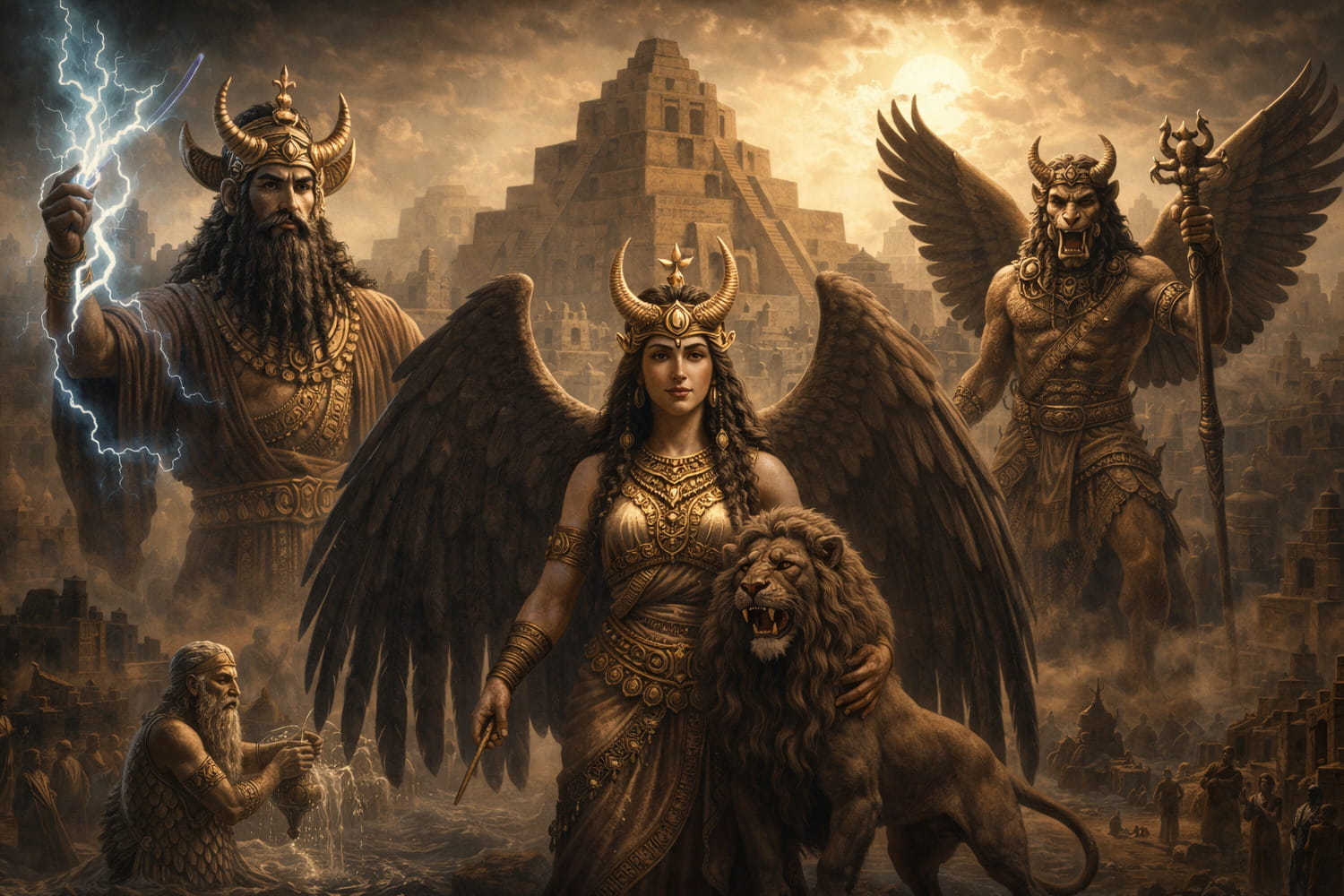
Sumerian mythology is one of the oldest belief systems in human history, which emerged in the lands of Mesopotamia more than five thousand years ago. This rich heritage influenced the development of many later religions and cultural traditions of the Middle East and the entire world. Many modern ideas about gods, the creation of the world, and the afterlife have their roots precisely in Sumerian legends. We have prepared fascinating facts for you that will reveal the secrets of this ancient mythological system. Read on to learn amazing facts and interesting facts that you might not have known before.
- Sumerians created one of the first written mythologies in human history using cuneiform script on clay tablets. These ancient texts preserved for posterity unique ideas about gods, the creation of the world, and the fate of humanity. Many of these documents were found by archaeologists during excavations of ancient cities Ur, Uruk, and Nippur.
- The supreme god of the Sumerian pantheon was considered Anu who ruled in the heavens and was the father of all other deities. His name literally translates as sky and he embodied supreme power and cosmic order. Sumerians believed that Anu rarely interfered in earthly affairs leaving this to younger gods.
- Enlil was the god of wind, storms, and fertility who played a key role in myths about the creation of the world. It was he who separated heaven and earth creating space for the life of people and other beings. Sumerians considered Enlil the patron of royal power and many rulers sought his blessing.
- Inanna later known as Ishtar was the goddess of love, war, and fertility with an extremely complex mythology. She could be both a tender lover and a merciless warrior who instilled fear in enemies. The myth of her descent into the underworld is one of the oldest narratives about death and rebirth.
- The Epic of Gilgamesh contains one of the first known stories about a worldwide flood which influenced later religious texts. The hero Utnapishtim receives a warning from the gods and builds a ship to save life from destruction. This story has amazing parallels with the biblical narrative about Noah and other ancient legends.
- Sumerians believed in an underworld called Kur which was ruled by the goddess Ereshkigal sister of Inanna. This gloomy realm was considered a place where the souls of the dead existed in a shadowy form without joy or pain. Entry to Kur was guarded by strict laws and even gods could not easily leave it.
- The concept of divine kingship originated precisely in Sumer where rulers were considered intermediaries between gods and people. Kings received their power from the gods and were supposed to ensure justice and prosperity for their people. Coronation ceremonies often included sacred rituals that emphasized this divine connection.
- Sumerian myths about the creation of the world describe how initially only a primordial ocean existed from which heaven and earth emerged. Gods organized chaos into cosmos and created conditions for the appearance of life and civilization. These ideas influenced later mythological systems throughout the region.
- Enki also known as Ea was the god of wisdom, water, and creative beginning who helped humanity in difficult times. It was he who taught people crafts, agriculture, and writing making their lives better. In flood myths Enki secretly saves heroes violating the prohibitions of other gods.
- Sumerian mythology mentions apkallu sages whom gods sent to earth to transmit the foundations of civilization to people. These semi-divine beings taught humanity to build cities, write laws, and worship gods. Legends about apkallu had a significant influence on later tales about prophets and teachers.
- The myth of Inanna’s descent into the underworld tells how the goddess passed through seven gates losing her ornaments and powers. This story symbolizes the cycle of death and rebirth of nature as well as inner transformation of personality. Inanna’s return to earth brought joy and renewal to all living things.
- Sumerians practiced sacred marriages between kings and priestesses of Inanna as a ritual to ensure fertility of the land and prosperity of the state. These ceremonies were considered a reenactment of the divine union on earth and had great religious significance. Participation in such rituals emphasized the divine nature of royal power.
- Anunnaki were a group of powerful deities who decided the fates of people and controlled natural forces of the world. They gathered for divine councils to make important decisions regarding humanity and cosmic order. Sumerians believed that each Anunnaki had their own sphere of influence and responsibilities.
- Sumerian flood hero Utnapishtim received immortality from the gods for his loyalty and became the only person who succeeded in this. His story inspired generations of seekers of eternal life and left a mark in many cultures. Details of this myth amaze with their similarity to later religious narratives.
- Sumerians believed in demons and evil spirits such as Lamashtu and Pazuzu who could bring diseases and misfortunes. To protect against them they used amulets, incantations, and special purification rituals. These ideas about supernatural forces influenced the demonology of many later cultures.
- Ziggurats were huge temple towers which Sumerians considered stairs to heaven where gods could descend to people. These architectural masterpieces were built from brick and decorated with colored glaze and sacred symbols. Priests performed important rituals on the tops of ziggurats to maintain connection with deities.
- Sumerian astrology linked the movement of celestial bodies with the will of gods and the fate of people creating foundations for future science. Priest-astronomers carefully observed stars and planets to predict events and interpret signs. This knowledge was passed down through generations and influenced the development of astronomy worldwide.
- The god Ningishzida was depicted in the form of a serpent and was associated with healing, magic, and the underworld. His symbol of a serpent coiling around a staff became one of the oldest signs of medicine. Sumerians turned to Ningishzida for protection from diseases and evil spells.
- Sumerian mythology had a significant influence on later Babylonian, Assyrian, and even Greek mythological traditions. Many gods, plots, and symbols were borrowed and adapted by neighboring peoples. This cultural exchange enriched world heritage and helped preserve ancient knowledge for future generations.
Studying this ancient system of beliefs opens up fascinating facts about the worldview and spiritual quests of the first civilizations for us. Each newly discovered amazing fact helps to better understand the origins of human culture and religious thought. Interesting facts about Sumerian mythology inspire further research and deeper understanding of our shared history. You might not have known how closely ancient myths are intertwined with modern ideas about the world and the place of humanity in it.


