
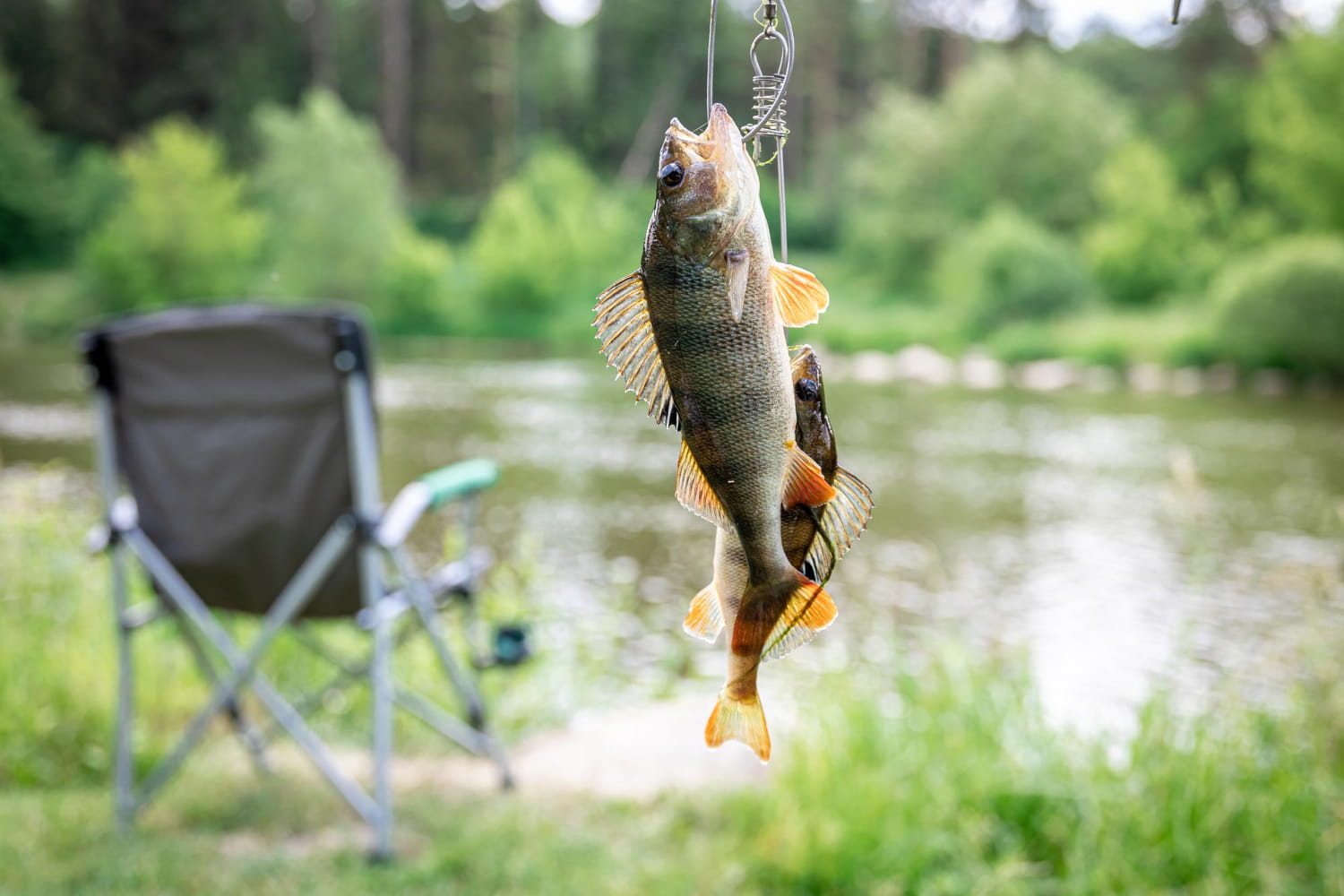
Perch is one of the most well-known inhabitants of freshwater bodies, often recognized even by those who are far from fishing or professional biology. This predatory fish has a unique body structure and complex behavioral habits, making it a true master of survival in various environmental conditions. Many people do not even suspect how diverse and rich the life of these striped creatures can be under the thick layer of water during different seasons. We have gathered fascinating facts for you that will reveal the secret sides of their existence and long species evolution. Read on to learn incredible details that you might not have known before in your life.
- Perch has two separate dorsal fins that are clearly divided from each other and perform different functions during active movement. The front fin consists of rigid spiny rays and serves as reliable protection against predators that try to swallow the fish whole. The rear fin is softer and helps create a powerful thrust for sudden acceleration when hunting for prey. Such a dual system allows the perch to maneuver with incredible agility among dense aquatic vegetation.
- The coloration of this fish can change significantly depending on water transparency and the type of bottom in a particular water body. In dark peat lakes, perch often acquire an almost black shade to become unnoticed by their victims. Conversely, in sandy quarries, their stripes become paler, and the general background of the body lightens for better camouflage. This adaptation occurs gradually throughout the life of an individual and is an example of amazing organism plasticity.
- Young individuals lead a schooling lifestyle, which helps them effectively defend themselves against larger predators in the first years of existence. The larger the school, the less likely it is that a particular fish will become lunch for a pike or catfish. Adult specimens usually switch to solitary hunting, although they sometimes may unite to attack large aggregations of small fish. Such a change in social behavior is a key factor in their successful survival in nature.
- The spines on the dorsal fin contain poisonous mucus that enters the wound during an accidental prick and causes severe pain and inflammation. This protective mechanism evolved millions of years ago as a response to constant pressure from waterfowl and other fish-eating animals. Even after the fish dies, the toxic properties of the mucus persist for a certain time, so anglers should be careful when removing the catch from the hook. People should immediately treat the prick site with an antiseptic to avoid infection and prolonged discomfort.
- Perch is a cannibal and without hesitation eats its own juveniles if it feels a lack of other available food in the water body. This cruel phenomenon helps regulate population numbers and ensures the survival of the strongest and most adapted individuals. Large specimens specifically hunt near spawning grounds, where the concentration of freshly hatched eggs and fry is maximally high. Such behavior demonstrates the harsh laws of nature, where hunger often prevails over any kinship instincts.
- Vision in these predators is tuned to recognize movement and contrasting colors, making them ideal hunters in murky water. They react particularly well to red and orange shades, which other fish species may see worse at great depths. This is precisely why anglers often use bright lures of these colors to provoke an attack from a passive perch. The fish eyes have a special layer of cells that improves vision in low-light conditions during twilight.
- The lifespan of perch can reach twenty-three years, although most individuals in wild conditions rarely live to such an age due to diseases and predators. The oldest representatives of the species usually inhabit deep northern lakes with cold water and minimal anthropogenic influence. Their growth slows down over the years, but they continue to gain mass thanks to efficient metabolism and hunting experience. Scientists determine the age of the fish by the number of rings on the scales or on the auditory bones inside the head.
- This fish is capable of withstanding significant fluctuations in water temperature, feeling comfortable both in cool mountain rivers and in warm ponds. They can survive even in water bodies with low oxygen levels, where other predator species quickly die from suffocation. Such tolerance to adverse conditions has allowed perch to inhabit practically all continents except Antarctica. Their physiology allows them to slow down metabolism at critical moments to conserve energy.
- During spawning, males protect the laid eggs from potential threats, although they do not build complex nests like some other fish species. The eggs are laid in long ribbons on underwater plants or submerged tree branches, where they remain until hatching. Parents can aggressively attack any creature that approaches the clutch, including fish significantly larger than themselves. This period is one of the few moments when perch show care for the next generation.
- Perch meat is considered a delicacy in many countries of the world thanks to its delicate texture and the absence of small bones in the fillet. It is rich in easily digestible protein and useful minerals, such as phosphorus and chromium, which are necessary for human health. Culinary experts value this fish because it retains juiciness even with simple cooking methods over an open fire. However, large individuals can accumulate heavy metals, so their consumption is sometimes limited by sanitary standards.
- Perch plays an important role in the ecosystem of water bodies, controlling the numbers of small fish and invertebrates, which prevents excessive reproduction of the latter. They serve as the main food resource for valuable commercial predator species, such as pike-perch or large pike. The disappearance of perch from a particular water body can lead to an imbalance in the food chain and degradation of the entire aquatic biocenosis. Ecologists use the state of the population of these fish as an indicator of the health of a particular river or lake.
These fascinating facts demonstrate how complex and multifaceted the life of an apparently ordinary perch is. Every detail of its structure and behavior is the result of millions of years of evolution and adaptation to changing environmental conditions. Understanding these processes helps us respect nature more deeply and approach the conservation of our planet water resources more responsibly. We hope that this collection of information has given you a new perspective on the world under water.


