
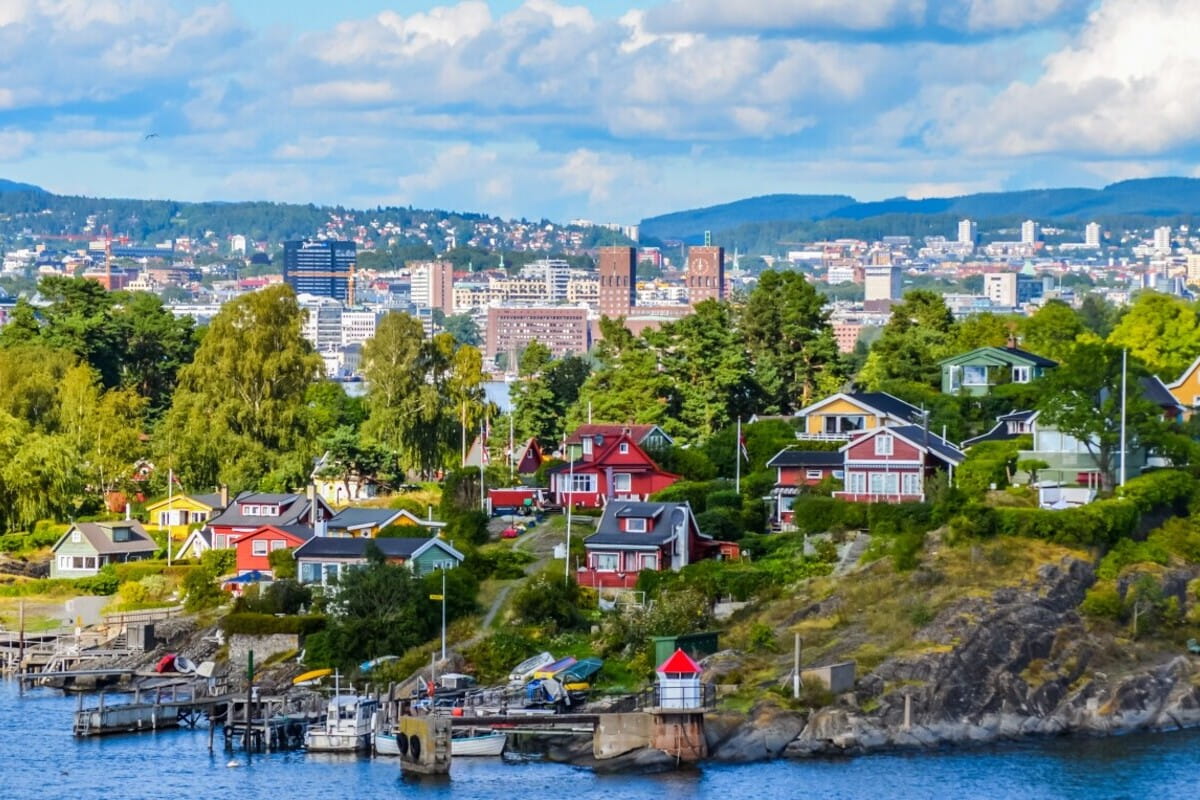
Oslo is the capital of Norway and one of the most fascinating cities in Northern Europe. It combines modern architecture, rich history, stunning natural surroundings, and a high standard of living. Fascinating facts about Oslo help explain why the city regularly appears on lists of the world’s most livable places. Here, fjords exist alongside contemporary neighborhoods, while cultural landmarks blend seamlessly with natural landscapes. You may not know that Oslo possesses many characteristics that make it unique even among Scandinavian capitals.
- Oslo is one of the oldest capitals in Northern Europe. It is believed that the city was founded around the eleventh century by King Harald Hardrada. For many centuries, it played an important role in Norway’s political and economic life. Its history spans nearly a thousand years.
- During the seventeenth century, a large portion of the city was destroyed by a devastating fire. Afterward, King Christian IV ordered it to be rebuilt closer to Akershus Fortress. For a period of time, the city was even known as Christiania. Its historic name, Oslo, was restored only in the twentieth century.
- Oslo is located beside the picturesque Oslofjord. Dozens of small islands are scattered along its coastline. Many of these islands can be reached by public ferries. As a result, spending time in nature is an important part of everyday life for local residents.
- Despite being a capital city, a significant portion of Oslo is covered by forests and natural areas. Hundreds of kilometers of hiking trails can be found within and around the city. Residents actively participate in skiing, running, and cycling. Nature remains a fundamental element of the urban environment.
- Oslo is considered one of the most environmentally conscious cities in the world. Local authorities actively promote electric transportation and bicycle infrastructure. The number of green spaces continues to increase throughout the city. Environmental initiatives have become a key part of its development.
- The Norwegian capital is home to the world-famous Vigeland Sculpture Park. It features more than two hundred sculptural works created by Gustav Vigeland. The sculptures depict various stages of human life and relationships between people. The park is one of the country’s most visited attractions.
- Akershus Fortress has protected the city for more than seven hundred years. It has survived numerous wars and historical events. Throughout its history, it has served as a royal residence, military base, and prison. Today, it remains one of Norway’s most important historical landmarks.
- Oslo is the center of the Nobel Peace Prize ceremony. Unlike the other Nobel Prizes, which are awarded in Sweden, this ceremony takes place in Norway. Every year, it attracts significant international attention. Laureates travel from around the world to attend the event.
- One of the most famous museums dedicated to the Vikings is located in Oslo. It houses remarkably well-preserved ships that are more than a thousand years old. These vessels were discovered during archaeological excavations. The exhibits provide valuable insight into the lives of Scandinavian seafarers.
- Oslo is home to many works by the renowned artist Edvard Munch. Visitors can view a substantial portion of his artistic legacy in the city. Munch is regarded as one of the most influential figures in European Expressionism. His paintings attract art enthusiasts from across the globe.
- The city contains the modern building of the Norwegian National Opera and Ballet. Part of its roof is open to the public. Visitors can walk across it while enjoying panoramic views of the city. The structure has become one of the symbols of contemporary Oslo.
- Oslo offers one of the highest qualities of life among European capitals. Its education, healthcare, and public transportation systems are highly developed. Safety standards are also exceptionally high. These factors make the city an attractive place to live.
- During winter, Oslo residents actively participate in skiing. Numerous ski trails and sports facilities are located near the city. Skiing is an important part of Norwegian culture. Many children begin practicing the sport at an early age.
- Holmenkollen is one of the most famous skiing venues in the world. International ski jumping and biathlon competitions are regularly held there. The complex also includes a museum dedicated to the history of skiing. Tourists from many countries visit the site every year.
- Oslo is one of the leading maritime centers of Northern Europe. Its port handles substantial volumes of cargo and passenger traffic. The maritime industry remains an important component of the local economy. It also plays a significant role in Norway as a whole.
- The population of Oslo is highly diverse. People from many different countries have made the city their home. This diversity contributes to a wide range of cultural traditions and culinary influences. As a result, Oslo has become increasingly cosmopolitan.
- During summer, daylight hours in Oslo can be exceptionally long. Although the city is not located above the Arctic Circle, evenings remain bright for many hours. This creates a special atmosphere for outdoor activities and recreation. Residents take full advantage of the extended daylight.
- Great importance is placed on cycling within the city. New bicycle lanes and dedicated routes are added every year. Authorities encourage residents to choose environmentally friendly modes of transportation. This helps reduce air pollution and improve urban sustainability.
- Oslo has received numerous international awards for sustainable development and environmental initiatives. Other cities around the world study its approaches and achievements. Many projects focus on reducing emissions and improving energy efficiency. These efforts make Oslo a model for modern urban planning.
- Within the city limits, people can quickly travel from a modern business district to protected natural areas. Such close proximity to nature is uncommon among major capitals. This is often considered one of Oslo’s greatest advantages. The city successfully balances urban development with environmental preservation.
Amazing facts about Oslo reveal that this Scandinavian capital is far more interesting than it may first appear. It combines centuries of history, modern technology, and a deep respect for nature. Fascinating facts about the city help explain why it is frequently regarded as one of the best places to live in the world. You may not know that it is precisely the harmonious combination of tradition and innovation that has made Oslo famous far beyond the borders of Norway.


