
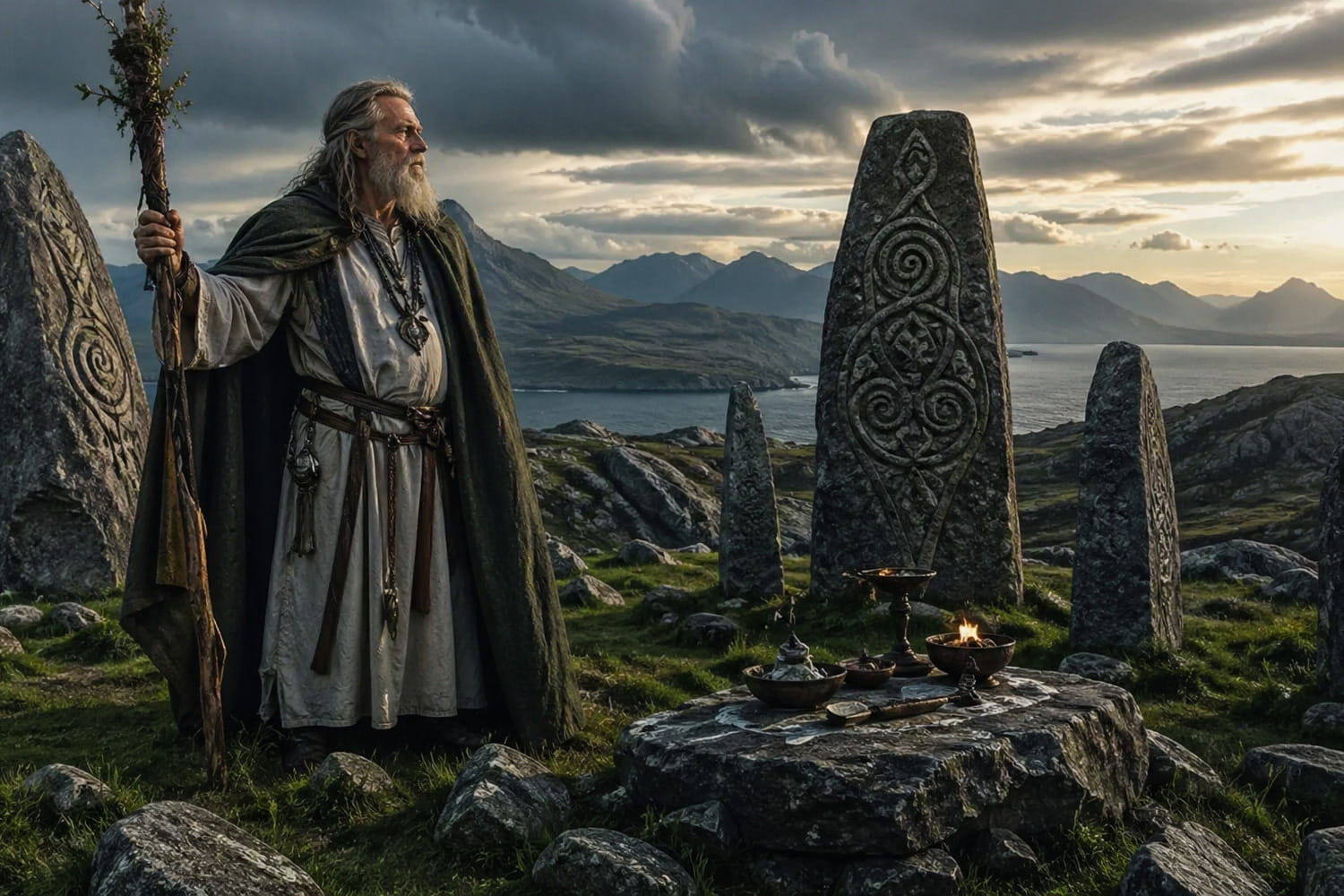
In the depths of European history lives a rich heritage of ancient tribes whose beliefs and legends continue to captivate the imagination of the modern world. Celtic mythology represents a unique blend of natural wisdom, magical creatures, and heroic epics that formed over thousands of years. You might not know how deeply these ancient concepts influenced modern cultural traditions and the folklore of many peoples. We invite you to immerse yourself in a world of amazing facts that will reveal the secrets of the Celtic worldview to you. These fascinating facts will help you better understand the spiritual heritage of one of the most mysterious civilizations of antiquity.
- Celtic mythology was not a unified system of beliefs but consisted of numerous regional variations that developed in Ireland, Wales, Scotland, and continental Europe. Different tribes worshipped their own gods and spirits, although many characters shared common traits and functions. Such diversity is explained by the absence of centralized religious authority and the predominantly oral transmission of knowledge. Researchers continue to discover new connections between local deities and pan-Celtic archetypes.
- The main group of deities in Irish tradition was considered the Tuatha Dé Danann, which translates as people of the goddess Danu. These supernatural beings possessed magical abilities and arrived on the island in misty ships, bringing four treasures with them. They ruled the land before the arrival of humans, after which they retreated to the underworld, becoming fairies and other mythical creatures. Their stories survived in medieval manuscripts recorded by Christian monks.
- The god Dagda served as the supreme ruler of the pantheon and master of life and death, fertility and wisdom. He possessed a magical cauldron that was always full of food and a heavy club capable of both killing and resurrecting. His image combined features of a mighty warrior, a generous host, and a cunning sorcerer. Dagda also controlled the changing of seasons and ensured the well-being of his people.
- Morrigan was considered the goddess of war, fate, and prophecies, often appearing on the battlefield in the form of a raven. She could predict victory or defeat, influencing the course of battle through magical spells and illusions. This triple goddess embodied both destructive and creative forces of nature. Her name translates as great queen or phantom, which emphasizes her mystical nature.
- Lug was the god of light, crafts, and mastery, whose name is associated with the Celtic festival Lughnasadh. He possessed a magical spear that always hit its target and could perform any work better than anyone else. This universal hero defeated the one-eyed giant Balor in the decisive battle at Mag Tuired. His cult was widespread throughout Celtic Europe under various names.
- Druids served as priests, judges, teachers, and keepers of knowledge in Celtic society. Their training lasted up to twenty years and included the study of poetry, astronomy, law, and magical practices. Druids believed in the transmigration of souls and communicated with nature spirits through sacred groves and springs. Roman sources describe them as powerful figures capable of stopping battles with a single word.
- The festival of Samhain was celebrated at the end of October and marked the end of the harvest and the beginning of the dark half of the year. On this night, according to Celtic beliefs, the boundary between the world of the living and the world of the dead became particularly thin. People lit bonfires and wore masks to ward off evil spirits or blend in with them. This tradition formed the basis of modern Halloween with its carnivals and symbolism.
- Beltane was celebrated on the first of May as a festival of fire, fertility, and the beginning of the summer season. Celts lit large bonfires through which they drove cattle for protection against diseases and evil forces. Young people danced around the fire, and couples jumped through the flames to ensure a happy marriage. This ritual symbolized the renewal of nature and life energy after a long winter.
- Celts believed in the Otherworld, which existed parallel to reality and was accessible through caves, burial mounds, and water bodies. This world was not a place of punishment or reward but rather an eternal realm of youth, joy, and magic. Heroes often entered it through invitations from fairies or by accident, returning with amazing gifts. Time in the Otherworld flowed differently, and a few days there could correspond to years in the ordinary world.
- Cú Chulainn, the main hero of the Ulster Cycle, was a demigod with superhuman strength and battle frenzy during combat. His life was regulated by a complex system of geasa, magical prohibitions whose violation led to death. He trained under the warrior woman Scáthach, who taught him secret combat techniques and gave him a magical spear. His tragic fate became a symbol of heroism and the inevitability of destiny in Celtic literature.
- Sacred animals played an important role in Celtic mythology as intermediaries between gods and humans. The boar symbolized courage and warrior spirit, the stag embodied the spiritual path and connection with the forest, and the raven was a messenger of the gods. These images often appeared on coins, weapons, and ritual objects as protective symbols. Reverence for animals reflected the Celts’ deep respect for the natural world and its mysteries.
- Mistletoe was considered a particularly sacred plant growing on oaks and was harvested by druids during solemn ceremonies. It was cut with a golden sickle on the sixth day of the lunar cycle, with belief in its healing and protective properties. Mistletoe symbolized immortality, fertility, and the connection between heaven and earth through the host tree. This tradition has survived in modern Christmas customs of kissing under a sprig of mistletoe.
- Celtic goddesses often embodied the sovereignty of the land and the ruler’s right to power through ritual marriage. The goddess Ériu gave her name to Ireland, and Rhiannon in Welsh mythology possessed magical horses and song. These strong female figures could be both benevolent protectresses and fierce avengers. Their stories emphasize the important role of women in Celtic spirituality and public life.
- Magical objects occupy a central place in Celtic legends as sources of power and tests for heroes. The sword Excalibur, Lug’s spear, Dagda’s cauldron, and the Stone of Fal possessed unique properties and chose their owners. These artifacts were often passed down through generations or appeared at critical moments in history. Their images influenced later chivalric romances and fantasy literature.
- Celtic mythology survived thanks to the work of Christian monks who recorded oral traditions in Latin and Old Irish. They often adapted pagan stories, adding biblical allusions or moralizing elements while preserving the main narrative. Without these manuscripts, such as the Book of Invasions of Ireland or the Mabinogion, we would have lost most of this heritage. Modern researchers carefully separate primary myths from medieval interpretations.
- The concept of geas represented a magical prohibition or obligation imposed on a person, the violation of which led to fatal consequences. Heroes often received geasa from prophets, gods, or sorcerers, which shaped their destiny and tested their character. This idea emphasizes the Celtic understanding of the inseparable connection between word, action, and consequences. Geasa added drama to legends and demonstrated the power of the word in the magical worldview.
- Water deities and sacred springs were revered by Celts as places of power where one could receive healing or prophecy. The goddess Boann was associated with the River Boyne and the well of wisdom, while Sulis guarded the healing waters at Bath. Believers left coins, jewelry, and small figurines at springs as gifts to spirits. This tradition of visiting sacred waters has survived in many regions to this day.
- Celtic knots and spiral ornaments carried deep symbolic meaning, reflecting the infinity of life and the interconnectedness of all things. These patterns adorned crosses, jewelry, and manuscripts, combining Christian motifs with pagan symbolism. The absence of beginning and end in knots symbolized the eternity of the soul and the cyclical nature of existence. Modern interpretations of these signs are popular in tattoos and decorative arts.
The world of Celtic mythology continues to inspire researchers and creative people with its amazing facts and profound wisdom. Each new discovery in this field adds fascinating facts to our understanding of ancient beliefs and their influence on modernity. You might not know how multifaceted this heritage is, but it is precisely its uniqueness that makes Celtic mythology an inexhaustible source of inspiration. Interesting facts about this ancient world remain an important key to understanding European cultural identity.


