
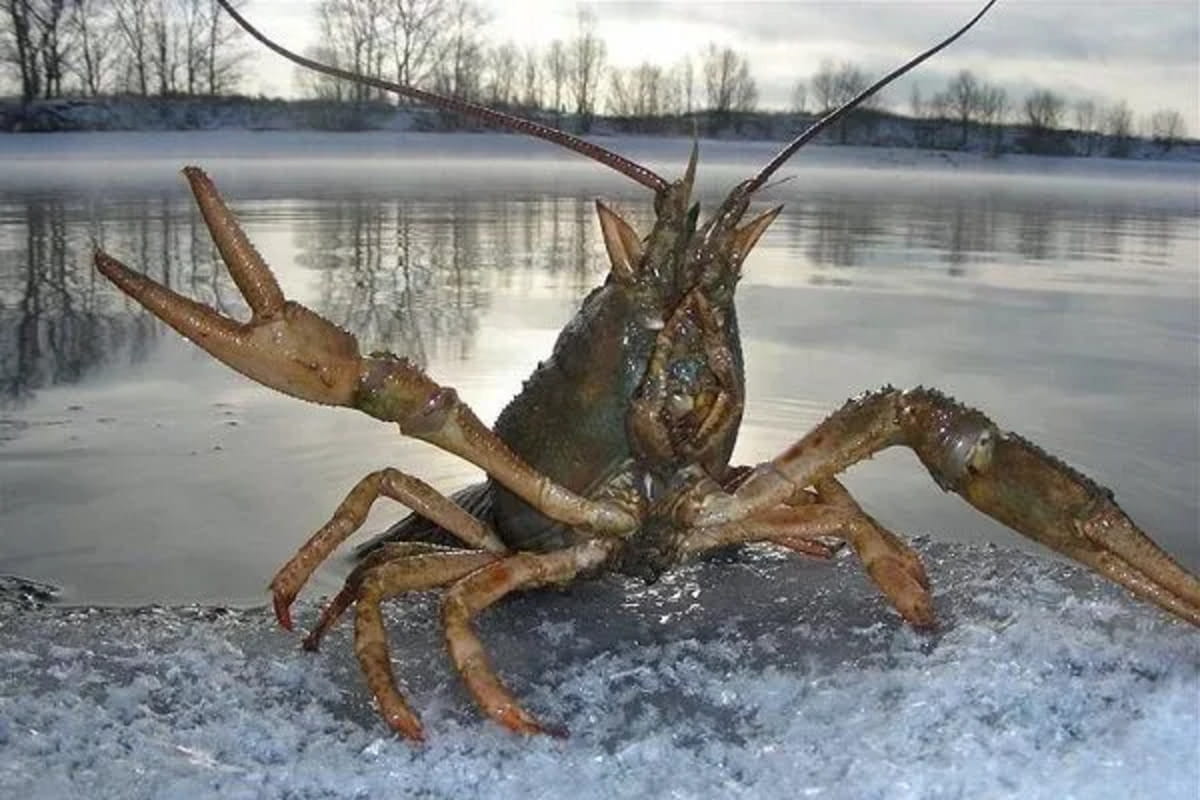
Crayfish are among the most ancient inhabitants of freshwater bodies on our planet, with a history spanning millions of years of evolution. You might not know that these amazing creatures possess unique adaptations for survival in the complex conditions of the underwater world. Interesting facts about their biology and behavior amaze the imagination and demonstrate the incredible diversity of nature. Fascinating facts about the role of crayfish in ecosystems help understand their important significance for the balance of aquatic environments. Let us examine in more detail the key aspects of the life of these mysterious invertebrate animals.
- Crayfish belong to the order of decapod crustaceans and inhabit predominantly freshwater bodies with clean water. They have a strong chitinous exoskeleton that protects them from predators and mechanical damage. These creatures lead a nocturnal lifestyle, hiding during the day in burrows or under stones at the bottom. Their sensitive antennae help them navigate in darkness and find food using chemical signals.
- Crayfish possess the ability to regenerate lost limbs, which is a unique adaptation for survival in a dangerous environment. If a predator grabs a crayfish by its claw, it can consciously detach it and escape, then later grow a new one. This process takes several molts and requires significant energy expenditure from the organism for restoration. Young individuals regenerate limbs much faster than adult specimens.
- Molting is a critically important process in the life of a crayfish because it allows the animal to grow and renew its worn exoskeleton. During molting, the crayfish sheds its old exoskeleton and temporarily remains without protection, so it hides in a safe place. The new exoskeleton is initially soft and gradually hardens over several days under the influence of minerals from the water. During this period, the crayfish is especially vulnerable to predator attacks and tries not to leave its shelter.
- Crayfish are omnivorous animals and feed on both plant and animal food depending on resource availability. They consume algae, small invertebrates, dead fish, and organic debris that settles on the bottom. Such varied nutrition makes them important sanitarians of water bodies that maintain ecosystem cleanliness. Crayfish contribute to water purification by efficiently processing organic waste into simpler compounds.
- The respiratory system of crayfish allows them to obtain oxygen from water using gills located under the exoskeleton. The gills are constantly washed with water thanks to movements of special appendages, which ensures efficient gas exchange. Some species of crayfish can briefly stay on land if their gills remain moist. This adaptation helps them move between water bodies during dry periods or avoid danger.
- Crayfish have a complex open-type circulatory system where hemolymph freely bathes internal organs. Their blood has a bluish tint due to the copper content in the respiratory pigment hemocyanin. The crayfish heart is located in the dorsal part of the body and pumps fluid throughout the organism through a system of vessels. This system efficiently supplies tissues with oxygen and nutrients even at low temperatures.
- The sensory organs of crayfish are extremely developed for life in an aquatic environment with limited visibility. Their compound eyes provide a wide field of view and the ability to see in darkness thanks to sensitive photoreceptors. Statocysts at the base of antennae help determine body position in space and maintain balance. Crayfish are also sensitive to chemical signals in water, which helps them find food, partners, and avoid danger.
- Crayfish reproduction occurs in autumn when the male fertilizes the female using special abdominal appendages. Fertilized eggs attach to the female’s abdomen and develop during winter months under her protection. In spring, small crayfish hatch from the eggs and initially stay on the mother’s body for safety. The young become independent after several molts and begin leading an independent life in the water body.
- Crayfish play an important role in food chains of freshwater bodies, being both predators and prey simultaneously. They serve as food for fish, birds, and mammals while controlling the population of small organisms and vegetation. Their activity of loosening the substrate contributes to aeration of water body bottoms and mixing of nutrients. This creates favorable conditions for the development of aquatic flora and fauna, supporting biodiversity.
- The population numbers of crayfish in many regions are declining due to water body pollution and destruction of natural habitats. Crayfish are very sensitive to water quality and quickly die when toxic substance levels rise or oxygen content decreases. Protecting clean rivers and lakes is an important condition for preserving these creatures for future generations. Many countries are implementing programs for reintroducing crayfish into natural water bodies to restore populations.
- In the cuisine of many countries, crayfish are considered a delicacy and prepared in various ways depending on regional traditions. The most popular method is boiling crayfish in salted water with spices and dill to enhance flavor. Crayfish meat is rich in protein, vitamins, and minerals, making it a nutritious food product for humans. However, it is important to consume crayfish caught in clean water bodies to avoid poisoning from harmful substances.
- Crayfish exhibit interesting behavior when defending their territory from competitors and other members of their species. They use their claws to demonstrate strength and deter rivals without physical contact, which conserves energy. If the conflict cannot be resolved through display, crayfish engage in combat, trying to grab the opponent by the claw or exoskeleton. The winner usually gains access to better shelters and food sources, which increases its chances of survival.
- The lifespan of crayfish depends on the species and environmental conditions and can range from ten to twenty years in nature. In favorable conditions with clean water and sufficient food, crayfish live significantly longer and reach larger sizes. Slow metabolism and the ability to enter a dormant state help them survive unfavorable periods with limited resources. Research on crayfish lifespan helps scientists better understand aging processes in invertebrate animals.
- Crayfish are capable of changing their exoskeleton coloration depending on the surrounding environment and physiological state of the organism. This adaptation helps them camouflage among aquatic vegetation and avoid predators, increasing survival chances. During molting, the new exoskeleton may have more intense coloration that gradually fades over time under the influence of sunlight and water. Some crayfish species have bright coloration to warn predators about their inedibility or toxicity.
- Scientific research on crayfish has great significance for biology and medicine thanks to their relatively simple nervous system. Their nervous system is used as a model for studying mechanisms of nerve impulse transmission and reactions to stimuli. Crayfish also serve as research objects in toxicology for assessing the impact of pollution on aquatic ecosystems and animal health. Results of these studies help develop effective methods for environmental protection and biodiversity conservation.
Incredible facts about crayfish demonstrate how complex and well-adapted these ancient inhabitants of freshwater bodies truly are. You might not know that these creatures play a decisive role in maintaining ecological balance and the cleanliness of aquatic ecosystems. These fascinating facts only partially reveal the mysteries of crayfish life, leaving room for new scientific discoveries. Studying these animals helps humanity understand more deeply the interconnections in nature and the importance of preserving water resources for future generations.


