
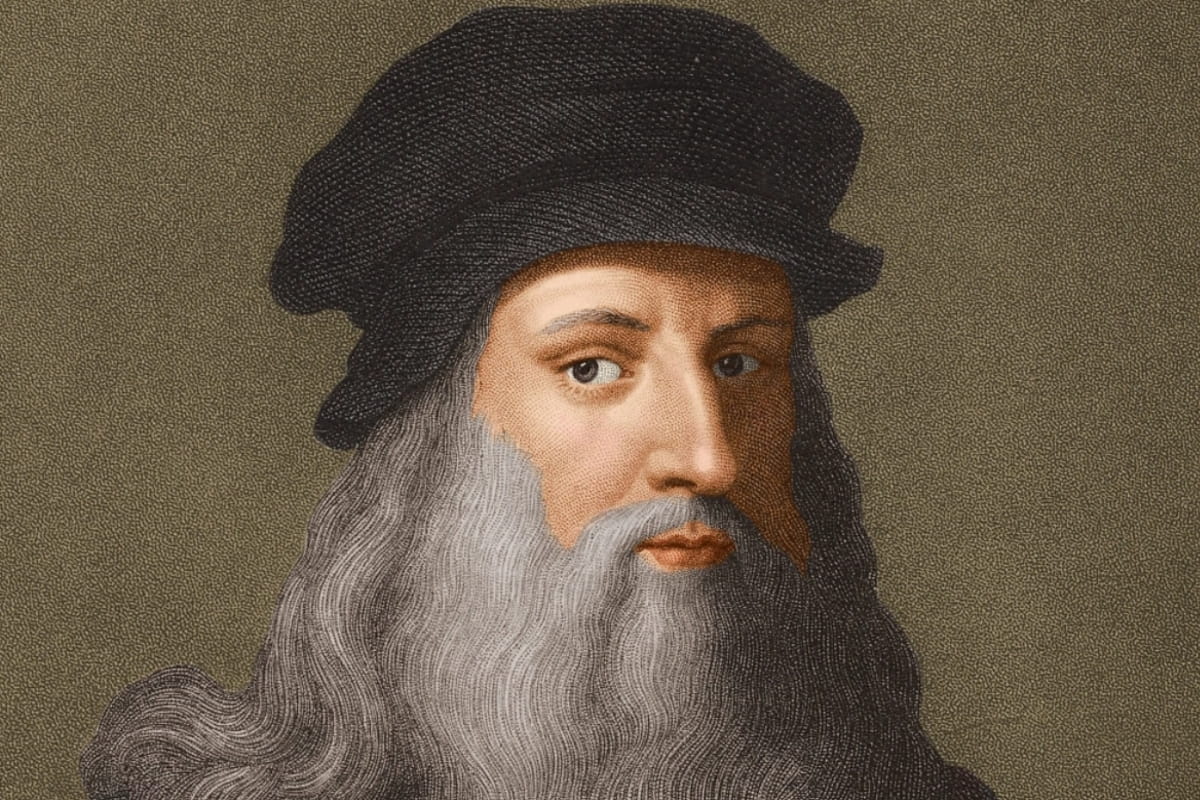
Leonardo da Vinci remains one of the most enigmatic and influential figures in human history, whose talents encompassed art, science and engineering. Many people know him merely as a genius painter, but in reality his legacy includes thousands of inventions, scientific discoveries and philosophical reflections. You might not know that this master anticipated his time by centuries in many fields of knowledge. In this article we will examine fascinating facts that will help better understand the uniqueness and multifaceted nature of this great master of the Renaissance period.
- Leonardo da Vinci was born on the fifteenth of April fourteen hundred and fifty-two in the small town of Vinci near Florence. He was the illegitimate son of a notary and a peasant woman, which limited his access to classical education. However this did not prevent him from becoming self-taught and achieving incredible heights in various fields of knowledge. His early talent for drawing allowed him to enter the workshop of the famous sculptor Verrocchio.
- Leonardo was left-handed and used a unique method of writing mirror text. He wrote from right to left and his notes could only be read with the help of a mirror. Researchers believe that such a writing method helped him keep the secrecy of his ideas and protect intellectual property. This feature may also have been related to his natural inclination for spatial thinking.
- His most famous painting the Mona Lisa is kept in the Louvre and attracts millions of visitors annually. The artist worked on this portrait for many years and constantly refined the details. The enigmatic smile of the model still remains the subject of numerous discussions and scientific research. Leonardo never gave the painting to the client and kept it with him until the end of his life.
- The Last Supper in the Milanese monastery of Santa Maria delle Grazie is a masterpiece of religious painting. Leonardo used an experimental painting technique which over time led to the rapid deterioration of the fresco. Modern conservators make significant efforts to preserve this unique work of art. The composition of the painting and the psychological depth of the apostles’ images are considered unsurpassed in world painting.
- Leonardo da Vinci created thousands of pages of notebooks filled with drawings, sketches and scientific observations. His diaries cover topics from human anatomy to hydrodynamics and optics. Many of these records were lost or scattered across various collections around the world after his death. Modern researchers continue to study these documents and discover new aspects of his genius.
- He studied the structure of the human body in detail through dissection of corpses, which was forbidden by the church in his time. His anatomical drawings amaze with their precision and artistic mastery even by modern standards. Leonardo was the first to correctly depict the position of the foetus in the womb and describe the functions of heart valves. These studies laid the foundations for the development of modern medicine and physiology.
- Leonardo designed flying machines including ornithopters with bird-like wings and prototypes of helicopters. His drawings demonstrate a deep understanding of the principles of aerodynamics and flight mechanics. Although these inventions could not be realised during his lifetime due to the lack of necessary materials they inspired future aircraft designers. Many modern engineers recognise his pioneering role in the development of aviation technology.
- He developed the concept of an armoured fighting vehicle which is considered a precursor to the modern tank. This project included a round body with cannons and a movement mechanism powered by people. Leonardo also created drawings of catapults, ballistae and other military instruments for various rulers. His engineering ideas often anticipated the technological capabilities of the Renaissance era.
- Leonardo da Vinci was a vegetarian and deeply respected all living beings. He often bought caged birds at markets only to release them into the wild. This love of nature was reflected in his art and scientific research. Modern biographers consider him one of the first defenders of animal rights in human history.
- He possessed the unique technique of sfumato which creates soft transitions between colours and shadows. This method allowed achieving incredible realism and depth in depicting human faces. Sfumato became one of the most influential techniques in world painting and was used by many masters after Leonardo. His mastery in conveying light and shadow is still studied in art academies around the world.
- Leonardo worked for many influential patrons including Lodovico Sforza in Milan and King Francis the First. He often changed his place of residence in search of better conditions for creativity and scientific research. He spent the last years of his life in France where he enjoyed special respect from the monarch. His legacy became a bridge between the Italian Renaissance and the European Enlightenment.
- He created the famous drawing the Vitruvian Man which illustrates the ideal proportions of the human body. This work combines art with mathematics and demonstrates the harmony between man and the universe. The image of a man in a circle and square became a symbol of the Renaissance and humanism. Modern designers and architects still use these proportions in their projects.
- Leonardo often left his works unfinished due to the constant search for perfection and new ideas. Many of his paintings and engineering projects were never completed during his lifetime. This feature sometimes caused disappointment among clients but also testifies to his inexhaustible curiosity. Modern researchers consider these unfinished works valuable sources for understanding his creative process.
- He studied geological processes and correctly explained the origin of fossils in rocks. Leonardo observed river currents and soil erosion drawing conclusions about changes in the earth’s surface. His ideas about landscape evolution anticipated official science by several centuries. Modern geologists recognise his pioneering role in the development of earth sciences.
- Leonardo da Vinci died on the second of May fifteen hundred and nineteen in the Chateau du Clos Luce near Amboise in France. According to legend he died in the arms of King Francis the First although historians doubt the authenticity of this story. His remains were buried in the local church but the exact burial place still remains a subject of discussion. The legacy of this genius continues to inspire millions of people around the world.
Examining these incredible facts we realise how unique and multifaceted Leonardo da Vinci truly was. His life and work demonstrate how the combination of art, science and engineering can lead to revolutionary discoveries. Fascinating facts about this great master inspire new generations of researchers to strive for knowledge and creative achievements. You might not know that every drawing and every record of Leonardo carries within itself priceless wisdom accessible to each of us today.


