
The Catholic Church is the largest Christian organisation in the world and one of the oldest continuously functioning institutions in the history of humanity, whose influence on civilisation is difficult to overestimate. From magnificent cathedrals to refined works of art, from universities to hospitals — the traces of Catholicism permeate every corner of world culture. Interesting facts about Catholicism open before us a remarkable world of traditions, rituals, and events that have been taking shape over the course of two millennia. This religion is not merely a spiritual system — it is a living history that continues to unfold before our very eyes. Incredible facts about Catholicism will convince you that behind the well-familiar images and symbols lies a multitude of unexpected discoveries.
- The Catholic Church is the largest religious organisation in the world — according to various estimates, more than 1.3 billion people belong to it, which constitutes approximately 17 percent of the entire population of the planet. It is present in virtually every country in the world and encompasses all continents. The greatest number of Catholics live not in Europe, as is commonly assumed, but in Latin America — Brazil is the country with the largest number of Catholics in the world. The demographic centre of Catholicism is steadily shifting from Europe to Africa and Asia, where the number of believers is growing rapidly.
- The word Catholic derives from the Greek katholikos, meaning universal or general. The term was first used by Ignatius of Antioch around the year 107 AD to denote a single universal Church as distinct from individual local communities. Gradually this word became the proper name of the largest branch of Christianity. In various languages it retains its Greek root, although in everyday usage it is often employed in a narrower sense to refer specifically to the Roman Catholic Church.
- The Pope is not only a religious leader but also the head of state of Vatican City — the smallest sovereign state in the world, whose area amounts to just 0.44 square kilometres. Despite its microscopic dimensions, the Vatican maintains diplomatic relations with more than 180 states of the world. The Vatican City State has its own currency, postal service, railway station, radio station, and even its own army — the Swiss Guard. The Vatican is also the repository of one of the richest collections of art and archives in the history of humanity.
- The doctrine of papal infallibility, according to which the Pope is infallible in matters of faith and morality when he speaks ex cathedra — that is, from the apostolic throne — was officially proclaimed only in 1870 at the First Vatican Council. This is a comparatively late dogmatic definition against the backdrop of the two-thousand-year history of the Church. The doctrine has been applied officially on only two occasions — in 1854 with regard to the Immaculate Conception of the Virgin Mary, and in 1950 with regard to the Assumption of the Blessed Virgin Mary. It is important to understand that infallibility pertains exclusively to official doctrinal proclamations and by no means to any and every statement made by the Pope.
- The Catholic Church officially recognises the existence of miracles and possesses a detailed bureaucratic procedure for their verification. For the canonisation of a saint, confirmation of at least two miracles that occurred after beatification is ordinarily required. Every reported miracle is carefully investigated by a special commission comprising medical doctors, theologians, and canonists. The verification procedure is so rigorous that critics sometimes joke that the Vatican is the most sceptical institution in the world with regard to supernatural phenomena.
- The conclave — the closed assembly of cardinals for the election of a new Pope — takes its name from the Latin cum clave, meaning under lock and key. The tradition of locking the cardinals away arose after the death of Pope Clement IV in 1268, when the cardinals were unable to reach agreement for nearly three years. The exasperated citizens of Viterbo locked them in a building and even removed the roof in order to compel them to reach a decision more quickly. Today the conclave is held in the Sistine Chapel, and black or white smoke rising from the chimney signals to the world the absence or presence of a decision.
- The Catholic Church founded the first universities in Europe — the University of Bologna (1088), the University of Paris (1150), and the University of Oxford (1167) came into being under the direct patronage or strong influence of the Church. The idea of a university as a place for the systematic pursuit of knowledge across various fields is in large measure a fruit of medieval Catholic thought. Today the Catholic Church maintains the largest network of private educational institutions in the world — more than 140,000 schools and over 1,000 universities. This educational network encompasses millions of pupils and students on every continent.
- The Inquisition, one of the most well-known and controversial institutions of the Catholic Church, existed in several forms over the course of several centuries. Modern historical research has substantially refuted a number of popular conceptions about it — in particular, the number of people executed was significantly smaller than is commonly assumed in popular culture. The Spanish Inquisition, which is often portrayed as the most brutal, according to modern calculations executed approximately 1 to 3 percent of all defendants, while the majority of cases ended in pardon or minor punishment. The institution once known as the Holy Inquisition today exists in the form of the Dicastery for the Doctrine of the Faith and concerns itself with theological matters without any punitive functions whatsoever.
- The family of sacraments in Catholicism comprises seven sacraments — baptism, confirmation, the Eucharist, penance, anointing of the sick, holy orders, and matrimony. Each sacrament is considered a visible sign of invisible divine grace, instituted by Christ himself. Unlike most Protestant denominations, which recognise only two sacraments — baptism and communion — the Catholic tradition regards all seven as necessary elements of the spiritual life. The theological justification for precisely seven sacraments was definitively articulated at the Council of Trent in the sixteenth century.
- Celibacy — that is, the obligatory state of remaining unmarried for priests of the Latin rite — did not become a compulsory norm from the very beginnings of the Church but rather gradually, with its definitive introduction occurring during the Gregorian Reform in the eleventh and twelfth centuries. Prior to that time, married men could become priests, and only after ordination were they forbidden from contracting marriage. In Catholic Churches of the Eastern rite that are in communion with Rome, married men can still to this day be ordained as deacons and priests. The question of a possible relaxation of the requirement of celibacy for certain categories of clergy remains a subject of discussion in the contemporary Church.
- The Catholic canon of Holy Scripture comprises 73 books, whereas most Protestant denominations recognise only 66. The seven additional books included by Catholics in their canon — Tobit, Judith, the First and Second Books of Maccabees, Sirach, Wisdom, and Baruch — are classified by Protestants as apocrypha or deuterocanonical books. These books formed part of the Greek translation of the Old Testament — the Septuagint — which was used by the first Christians. The decision to include these books in the Catholic canon was confirmed by the Council of Trent in response to the Protestant Reformation.
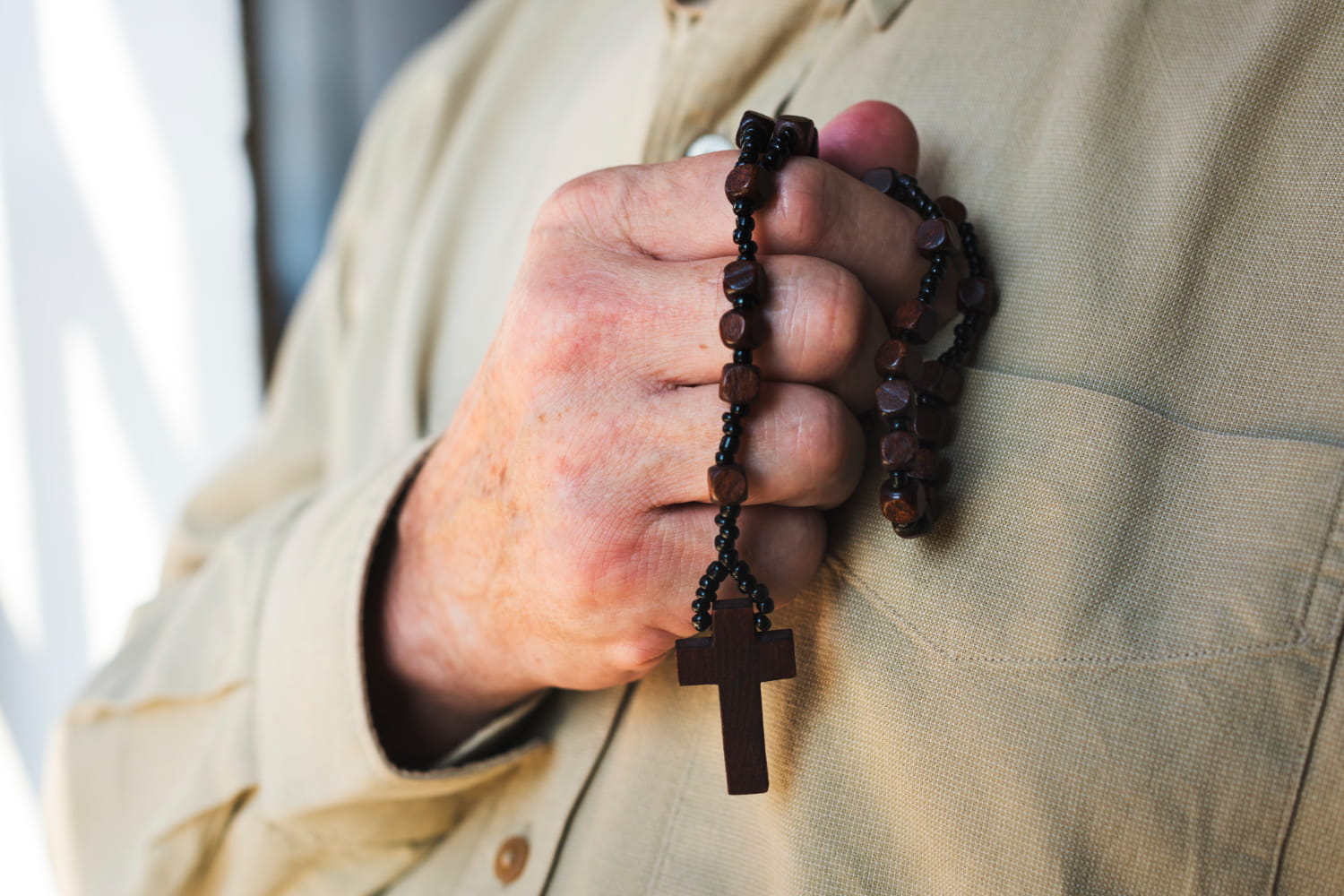
- The Rosary — one of the most recognisable symbols of Catholicism — is a comparatively late acquisition of Church tradition. The modern form of the Rosary took shape approximately in the fifteenth century and became definitively established through the activity of the Dominican Order. The legend that the Rosary was handed to Saint Dominic by the Virgin Mary herself is a pious tradition that has no documentary confirmation in early sources. The devotional practice of the Rosary involves the meditative repetition of a certain number of Our Father, Hail Mary, and Glory Be prayers, accompanied by simultaneous reflection upon the mysteries from the lives of Christ and Mary.
- The Vatican Apostolic Library is one of the oldest and most important scholarly libraries in the world, officially founded in 1475, though its collection includes manuscripts dating from considerably earlier periods. It preserves more than 1.1 million books, 75,000 manuscripts, 8,500 incunabula, and numerous paintings, coins, and medals. For a long period this library was effectively closed to outside researchers, but today it is open to accredited scholars from throughout the world. Among its treasures are some of the oldest surviving manuscripts of the Bible and rare documents from antiquity and the Middle Ages.
- The Catholic Church maintains a register of officially recognised saints that numbers more than 10,000 names, although the exact figure varies depending on the methods of calculation employed. The process of canonisation is lengthy and complex — from the death of a candidate to the proclamation of their sainthood, decades and even centuries not infrequently pass. The fastest canonisation in the modern Church is considered to be that of Mother Teresa of Calcutta, which took place in 2016 — just 19 years after her death. Saints in the Catholic tradition are not merely objects of veneration but also heavenly intercessors, to whom the faithful turn with requests for assistance in specific matters.
Captivating facts about Catholicism persuade us beyond any doubt that this religion is an extraordinarily complex and multidimensional phenomenon that cannot be reduced to any simple definition. Over twenty centuries of its existence, the Catholic Church has experienced heights and depths, reforms and schisms, yet has preserved its institutional unity and spiritual strength. What you might not have known about Catholicism opens up new dimensions for understanding not only this religion but also the whole of Western civilisation, which was shaped to a significant degree under its influence. To study Catholicism is to immerse oneself in one of the most magnificent spiritual and cultural achievements of humanity.


