
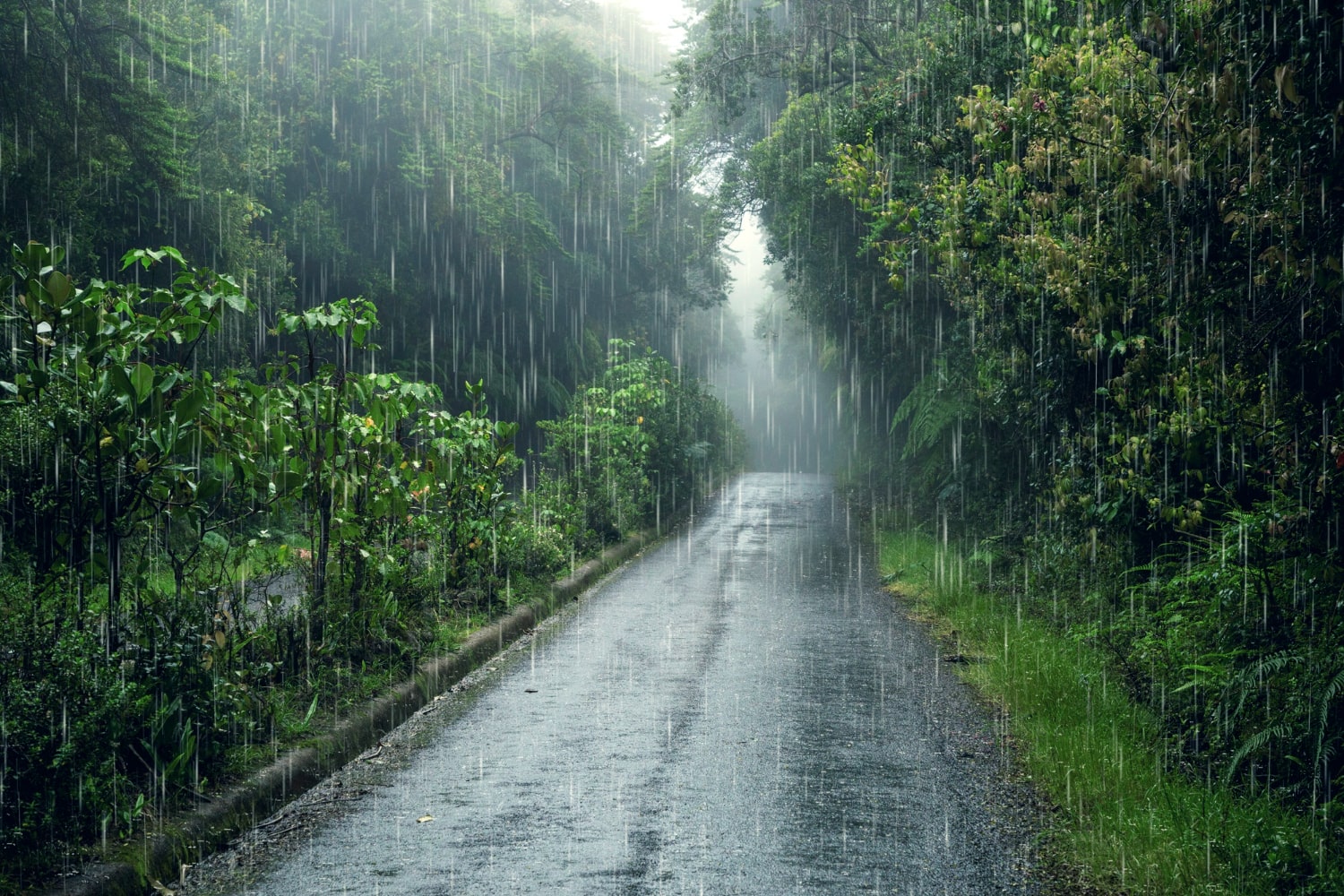
Rain is one of the most familiar natural phenomena, yet behind its everyday presence lies a complex and truly fascinating system of processes. It shapes climate, sustains life on Earth, and influences culture, daily routines, and human emotions. Many interesting facts about rain are connected not only with meteorology, but also with physics, biology, and even psychology. Among them are incredible facts that can change the way we look at ordinary drops of water falling from the sky. You may not know just how diverse and multifaceted rain can be.
- Rain forms as a result of the condensation of water vapor in the atmosphere. Tiny droplets of water merge together and gradually increase in size. When their weight becomes too great to remain suspended in the air, they fall to the ground. This process is constantly taking place all over the planet.
- The shape of raindrops is not perfectly spherical. Very small drops are nearly round, while larger ones become flattened at the bottom due to air resistance. Extremely large drops may even break apart as they fall. For this reason, the common image of a teardrop-shaped raindrop is inaccurate.
- The speed at which raindrops fall depends on their size. Small droplets descend slowly and can remain airborne for a long time. Larger drops reach the ground much faster and with greater force. This difference directly affects the intensity of rainfall.
- There are several types of rain that differ in how they form. Some develop when warm air rises, while others occur when air masses collide. Rain can also be caused by terrain features, especially in mountainous areas. This explains why rainfall varies so much across different regions.
- Rain can fall even in desert environments. In such places it is rare, but extremely important for local ecosystems. After rainfall, deserts can quickly come to life. Plants and animals are adapted to make the most of these brief periods of moisture.
- In tropical regions, rain can be exceptionally intense. Large amounts of water may fall within a very short time. These downpours are often accompanied by thunderstorms and strong winds. They play a crucial role in maintaining the climatic balance of the tropics.
- Rain plays a central role in the natural water cycle. It returns water from the atmosphere back to Earth’s surface. Some of this water flows into rivers and lakes, while some infiltrates the soil. Without this process, life on Earth would not be possible.
- The distinctive smell after rain has a scientific explanation. It is known as petrichor and is produced by substances released from soil and plants. Raindrops help disperse these compounds into the air. This is why the air smells so fresh after rainfall.
- Rain can influence air temperature. During rainfall, the air usually becomes cooler. This is caused by the evaporation of water and reduced solar heating. On hot days, rain often brings a noticeable sense of relief.
- There is a phenomenon known as acid rain. It forms when water vapor interacts with pollutants present in the atmosphere. Such rain can damage plants, soils, and bodies of water. It is a clear example of how human activity can affect natural processes.
- In some regions, rain follows a seasonal pattern. Monsoon rains determine the rhythm of life for millions of people. Agriculture and water supplies depend heavily on them. Fascinating facts about rain are often closely linked to monsoon climates.
- Rain can be highly localized and fall over a very small area. Just a few kilometers away, the weather may be completely dry and sunny. This happens due to the complex movement of air currents in the atmosphere. Such situations are especially common during summer.
- The intensity of rain is measured by the amount of precipitation that falls over a specific period of time. Special meteorological instruments are used for this purpose. Even small differences in measurements can lead to significant consequences. These values help determine the risk of floods or droughts.
- Rain affects soil erosion. Flowing water can wash away the upper layers of soil. In moderate amounts, this can contribute to soil renewal. However, prolonged or heavy rainfall may lead to land degradation.
- In mountainous regions, rain is often a major cause of landslides. Soil saturated with water loses its stability. This creates serious risks for roads and human settlements. As a result, accurate rainfall forecasting in such areas is extremely important.
- Rain can influence human emotional well-being. For some people, it is associated with calmness, comfort, and a sense of peace. Others may experience a drop in mood during long periods of gloomy weather. These reactions are shaped by both biological and cultural factors.
- In many cultures, rain symbolizes renewal and new beginnings. It is often associated with fertility and the start of a new life cycle. Traditional rituals frequently included prayers for rain. This highlights its importance throughout human history.
- Rain helps clean the air. Falling droplets capture dust and pollution particles. After rainfall, the air often feels noticeably fresher. This effect is particularly evident in urban areas.
- Sometimes rain falls together with dust or sand. This occurs when winds carry fine particles from desert regions. Water mixes with these particles while still in the atmosphere. As a result, unusual colored deposits can appear on the ground.
- Rain-like phenomena also exist on other planets. Instead of water, completely different substances may fall from the sky. This shows that the basic mechanism of precipitation is universal. Incredible facts about rain extend far beyond Earth itself.
Rain is an essential part of natural processes and everyday human life. Interesting facts about rain reveal just how complex this phenomenon truly is. Incredible facts and fascinating observations allow us to see rain as more than just weather, but as the result of many interacting forces of nature. If you look more closely, you may discover how many secrets are hidden within ordinary drops of water falling from the sky.


