
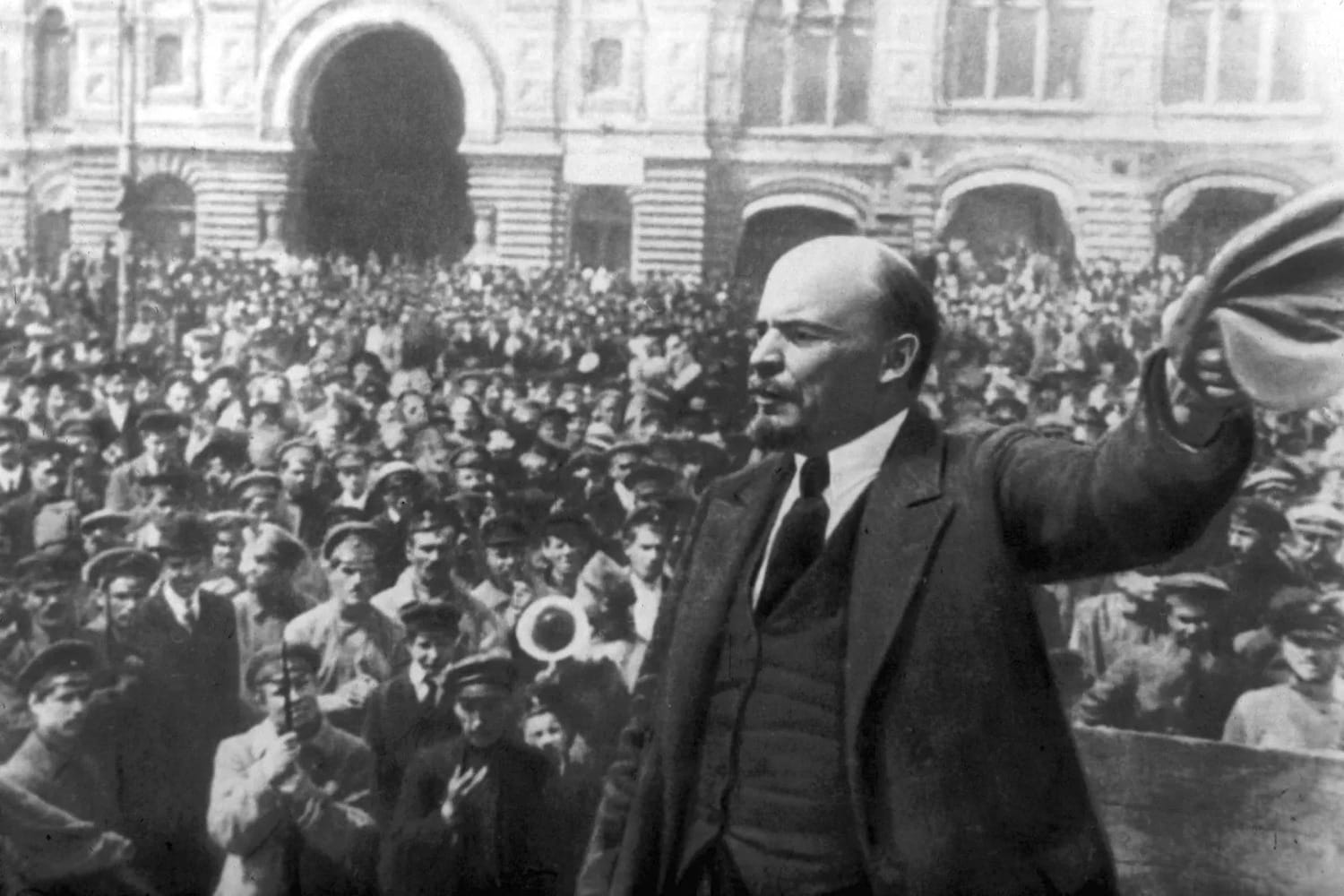
Vladimir Lenin is considered one of the most influential and controversial political figures of the twentieth century. His ideas, decisions, and activities had a profound impact on world history, politics, and social developments. Interesting facts about Vladimir Lenin help us better understand not only his personality but also the era in which he lived. Historians, political scientists, and researchers continue to debate his legacy to this day. You may not know that many aspects of his biography are far more complex and fascinating than they are often portrayed in popular accounts.
- Lenin’s real name was Vladimir Ilyich Ulyanov. He began using the pseudonym Lenin during the early years of his political career. Several theories exist regarding the origin of this name. The most widely accepted explanation connects it to the Lena River in Siberia.
- Lenin was born on April 22, 1870, in the city of Simbirsk, which is now known as Ulyanovsk. His father worked in the field of education and held a respected social position. The family was considered well educated and financially comfortable. The children received a strong academic upbringing.
- A major influence on Lenin’s life was the execution of his older brother Alexander. He was convicted for participating in a plot against the Russian emperor. The event deeply affected the future revolutionary. Many historians consider it one of the factors that contributed to his political radicalization.
- During his youth, Lenin studied law. He completed his legal education through external examinations and qualified to practice as a lawyer. However, his legal career was short-lived. Political activity attracted him much more than legal work.
- Lenin was proficient in several foreign languages. He read literature in German, French, and English. This allowed him to study the works of European thinkers directly. Education and intellectual development played an important role throughout his life.
- Because of his revolutionary activities, Lenin was repeatedly persecuted by the authorities. He was arrested and sent into exile on several occasions. Part of his life was spent under police surveillance. Despite these challenges, he continued his political work.
- One of the places where Lenin served his exile was the village of Shushenskoye in Siberia. He spent several years there at the end of the nineteenth century. During this period, he devoted much of his time to reading and writing. It was also there that he married Nadezhda Krupskaya.
- After his exile, Lenin spent many years living abroad. He resided in Switzerland, Germany, France, and several other countries. While overseas, he maintained contact with his supporters and worked on party publications. Many of his important writings were produced during this period of emigration.
- Lenin was one of the founders of the Bolshevik faction of the Russian Social Democratic Labour Party. The split between the Bolsheviks and the Mensheviks became a significant event in the history of the revolutionary movement. The Bolsheviks later developed into an independent political force. They ultimately came to power in 1917.
- During the First World War, Lenin opposed Russia’s participation in the conflict. He viewed the war as a struggle among major powers for influence and resources. His position attracted both support and criticism. It became an important element of his political platform.
- In April 1917, Lenin returned to Russia after many years in exile. His arrival was one of the notable events of that period. Soon afterward, he presented a program of political reforms. It gained widespread support among Bolshevik supporters.
- Lenin played a central role in the October Revolution of 1917. After the Bolsheviks seized power, he became the head of the new government. His decisions influenced the formation of the Soviet political system. This period became a turning point in world history.
- In 1918, an assassination attempt was made against Lenin. He was seriously wounded but survived. The consequences of the attack were studied by doctors and historians for many years. Some researchers believe that the injuries affected his later health.
- Throughout his life, Lenin wrote a large number of articles, pamphlets, and books. His works addressed politics, economics, revolutionary struggle, and social development. Many of his writings were translated into numerous languages. They became the foundation for the further development of Marxist-Leninist ideology.
- In 1922, the Union of Soviet Socialist Republics was established. Lenin played an active role in the process of its formation. The new state united several Soviet republics. It would continue to exist for nearly seven decades.
- The final years of Lenin’s life were marked by serious health problems. He suffered several strokes. As a result, his involvement in governing the country gradually declined. Political influence increasingly shifted to other leaders.
- Lenin died on January 21, 1924, at the age of fifty-three. His death attracted widespread attention both within the country and internationally. Afterward, a personality cult began to develop around him. His name was extensively used in political propaganda.
- Following his death, Lenin’s body was embalmed. A special mausoleum was constructed for him in Moscow. The mausoleum became one of the most recognizable symbols of the Soviet era. Millions of people visited it over the years.
- During the twentieth century, cities, streets, enterprises, and educational institutions were named after Lenin. Monuments dedicated to him were erected in many countries around the world. After the collapse of the Soviet Union, attitudes toward this legacy began to change. Different countries approached this process in different ways.
- Lenin remains the subject of scholarly research and public debate. Some view him as an outstanding revolutionary and political theorist. Others focus on the controversial consequences of his actions and policies. For this reason, interest in his life and legacy continues to this day.
Amazing facts about Vladimir Lenin demonstrate that his biography was closely connected to some of the most significant events of the twentieth century. His activities influenced the political map of the world and left a lasting mark on the history of many nations. Fascinating facts about this political figure help us better understand the complex processes of his era. You may not know that discussions about his legacy continue many decades after his death.


