
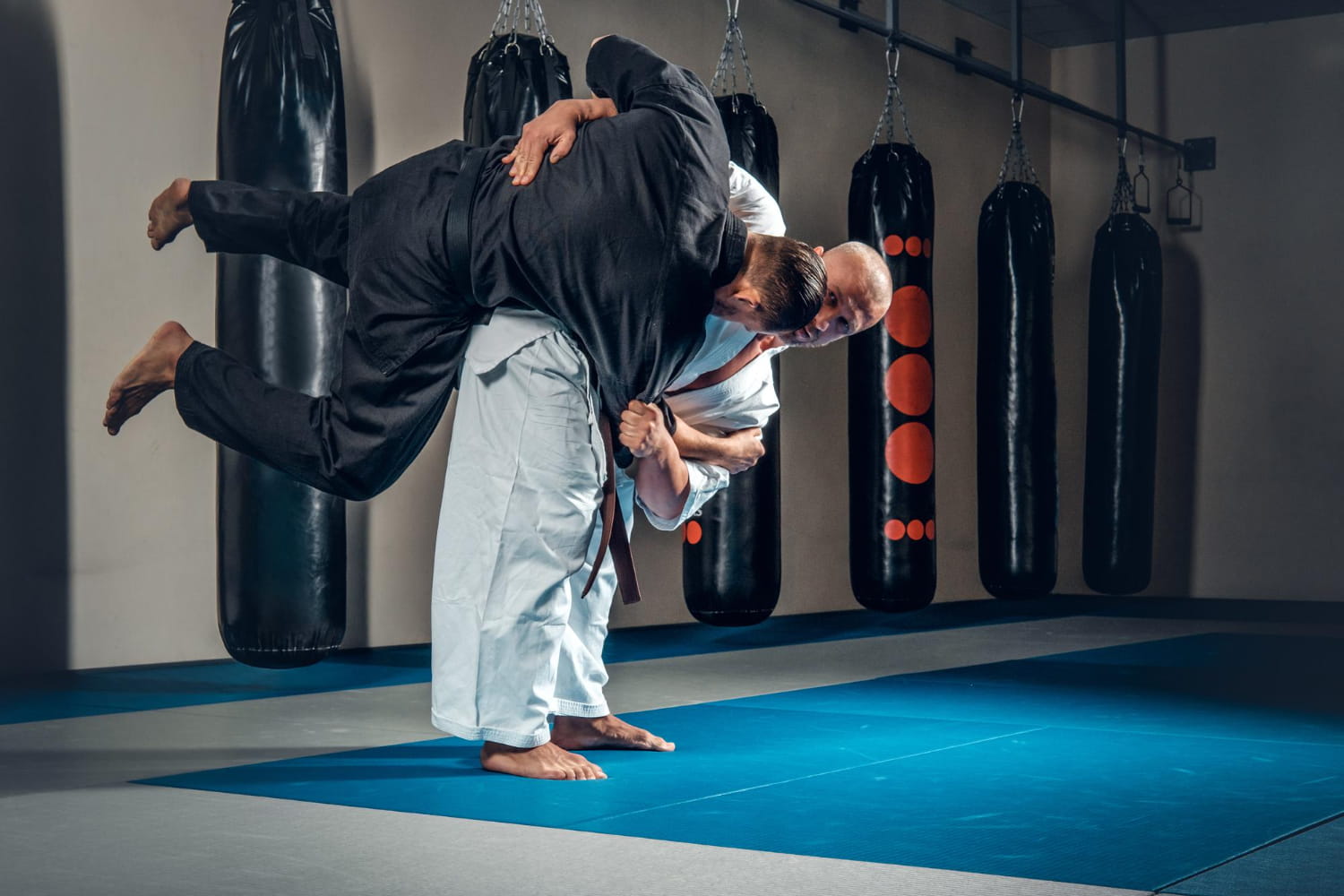
Among the martial arts of the world, there is one combat sport that was born not in ancient Asia nor in medieval Europe, but in the Soviet sports halls of the twentieth century, and in a short space of time gained recognition across the entire world. Sambo is a unique system of wrestling and self-defence that absorbed the best elements from dozens of combat traditions of different peoples and transformed them into something fundamentally new. Interesting facts about sambo reveal the fascinating history of a martial art behind which stand vivid personalities, complex destinies, and genuine sporting passion. Few people are aware that behind this sport lies an entire philosophy of human self-improvement — physical, moral, and spiritual. Incredible facts about sambo will convince you that this discipline deserves attention not only as an effective combat system but also as a unique cultural phenomenon.
- The abbreviation sambo stands for the Russian words meaning self-defence without weapons and reflects the core philosophy of this martial art — the ability to protect oneself in any situation without the use of weapons. The name was officially confirmed in the 1940s, although the system itself had been actively developed since the 1920s. The name is simultaneously a programme, a motto, and a concept — all contained within a single word. The simplicity and precision of this abbreviation is one of the reasons why the term sambo is equally understood by athletes throughout the world without the need for translation.
- The official founders of sambo are considered to be two outstanding Soviet sportsmen and coaches — Vasili Oshchepkov and Viktor Spiridonov, who during the 1920s and 1930s were independently and in parallel developing their own systems of hand-to-hand combat. Oshchepkov studied judo directly in Japan under the guidance of the founder of that sport, Jigoro Kano, and became one of the first foreigners to receive a black belt. Spiridonov, for his part, drew upon jujutsu and folk styles of wrestling. The synthesis of their work, refined by Oshchepkov’s student Anatoly Kharlampiev, formed the sambo that we know today.
- Anatoly Kharlampiev, often referred to as the father of sambo, carried out an enormous amount of work in systematising the new martial art, travelling to dozens of regions of the Soviet Union and studying the folk wrestling techniques of dozens of different peoples. He gathered techniques from the Georgian wrestling style chidaoba, the Armenian koh, the Uzbek kurash, the Tatar köräsh, and many other national styles. Thanks to his tireless efforts, sambo became a truly multinational synthesis of combat traditions. It was Kharlampiev who secured the official recognition of sambo as a sport in the USSR in 1938.
- Sambo was officially recognised as a sport in the USSR on 16 November 1938 by an order of the All-Union Committee for Physical Culture and Sport — this date is considered the birthday of sambo as an official sporting discipline. The path to recognition was far from straightforward and took more than a decade of active effort on the part of enthusiasts. Recognition opened the way for the organisation of official competitions, the training of coaches, and the spread of sambo throughout the entire country. Today, 16 November is celebrated every year as Sambo Day in Russia and many other countries.
- Sambo is divided into several independent disciplines, the most important of which are sport sambo and combat sambo. Sport sambo focuses on throws, holds, and joint locks, but prohibits strikes and chokes. Combat sambo, by contrast, permits strikes with the hands and feet, choking techniques, and is brought as close as possible to real hand-to-hand combat. In addition, there exists self-defence sambo — an applied section intended for civilians and law enforcement officers.
- The attire of a sambo competitor — a belted jacket and shorts — differs significantly from the judogi worn by judokas and reflects the distinctive identity of this sport. The sambo jacket, known as a sambovka, has special loops on the sleeves to facilitate gripping. The colour of the competition jacket is traditionally red or blue, depending on the draw. The footwear of a sambo competitor consists of special wrestling boots with a soft sole, which distinguishes sambo from many other forms of wrestling in which athletes take to the mat barefoot.
- The first USSR Championship in sambo was held in 1939 in Leningrad and brought together athletes from various republics of the Soviet Union. Even at that early stage, the level of technical preparation among the participants impressed judges and spectators alike with the variety and effectiveness of the techniques on display. The competition demonstrated that sambo had already established itself as a fully-fledged sporting discipline with its own clear system of rules and officiating. The holding of the championship gave a powerful impetus to the spread of sambo across all regions of the country.
- The first World Championship in sambo was held in 1973 in Tehran and caused a genuine sensation within the international sporting community. Soviet sambo competitors won the majority of gold medals, demonstrating to rivals from other countries a technique honed over decades. Even at that first championship, representatives from various continents were in attendance, which attested to the global interest in the sport. Since that time, World Championships in sambo have been held on a regular basis and attract participants from more than 100 countries.
- Sambo has made a significant contribution to the development of mixed martial arts and is one of the foundational disciplines for many champions of mixed martial arts competitions. Such outstanding fighters as Fedor Emelianenko, Khabib Nurmagomedov, and Andrei Arlovski have their deep roots in sambo. The techniques for transitioning from striking to grappling, which are characteristic of sambo, proved to be extraordinarily effective inside the cage. Sambo gave mixed martial arts not only techniques but also a particular combat mentality — pragmatic, adaptive, and emotionless.
- In sambo there exists a unique concept of victory by a clean win, analogous to ippon in judo — a competitor who executes an effective throw causing the opponent to land on their back, or forces them to submit through a joint lock, wins the contest regardless of the score on the scoreboard. This concept makes every second of a bout exceptionally tense, since a single mistake can instantly determine the outcome of the entire contest. Victory on points is merely a fallback option when neither competitor has been able to gain a decisive advantage. Such a system of rules makes sambo one of the most spectacular of all combat sports.
- Sambo has been and continues to be actively used in the preparation of Soviet and Russian security forces — the army, the police, and the special services. The KGB, and subsequently the FSB, included sambo in the mandatory combat training programme for their personnel. Combat sambo was regarded as one of the most effective means of hand-to-hand combat for operational units. The practical effectiveness of sambo in real conflict situations has been one of the principal reasons for its enduring popularity among military personnel and law enforcement officers.
- The International Amateur Sambo Federation, known as FIAS, was founded in 1984 and today unites more than 130 national federations from every continent. The federation is actively working towards the inclusion of sambo in the programme of the Olympic Games, and this process has gathered considerable momentum in recent years. Sambo has already received recognition from the International Olympic Committee as a sport, which represents an important step on the road to an Olympic debut. Supporters of sambo throughout the world are eagerly awaiting the moment when their sport takes its rightful place among the Olympic disciplines.
- Sambo exerted a significant influence on the development of Brazilian jiu-jitsu through a complex chain of mutual influences between various martial arts. Some researchers trace direct parallels between the technical arsenal of sambo and that of modern Brazilian jiu-jitsu, particularly in ground work and in the system of joint locks. Both styles emerged at approximately the same time and both drew inspiration from the Japanese tradition of judo and jujutsu. The interaction of these two systems vividly illustrates how martial arts develop through the exchange of ideas between different cultures.
- In the United Kingdom, sambo has its own traditions and is practised in numerous clubs throughout the country. The British Sambo Federation is an active member of the international sambo movement and regularly participates in European and World Championships. British competitors have on numerous occasions stood on the podium at international tournaments, confirming the high standard of the domestic sambo school. The discipline enjoys growing popularity in the United Kingdom both among competitive athletes and among those who train for recreational purposes.
Captivating facts about sambo persuade us beyond any doubt that this martial art is something considerably greater than merely a collection of combat techniques. Over the decades of its existence, sambo has transformed itself into a genuine cultural phenomenon, uniting the sporting traditions of dozens of peoples and continuing to win new hearts throughout the world. What you might not have known about sambo opens up a new perspective on this discipline as a living system that is constantly developing and adapting to the demands of the age. Sambo is not merely a sport — it is a unique legacy of human ingenuity, perseverance, and the aspiration towards perfection.


