
Table of Contents
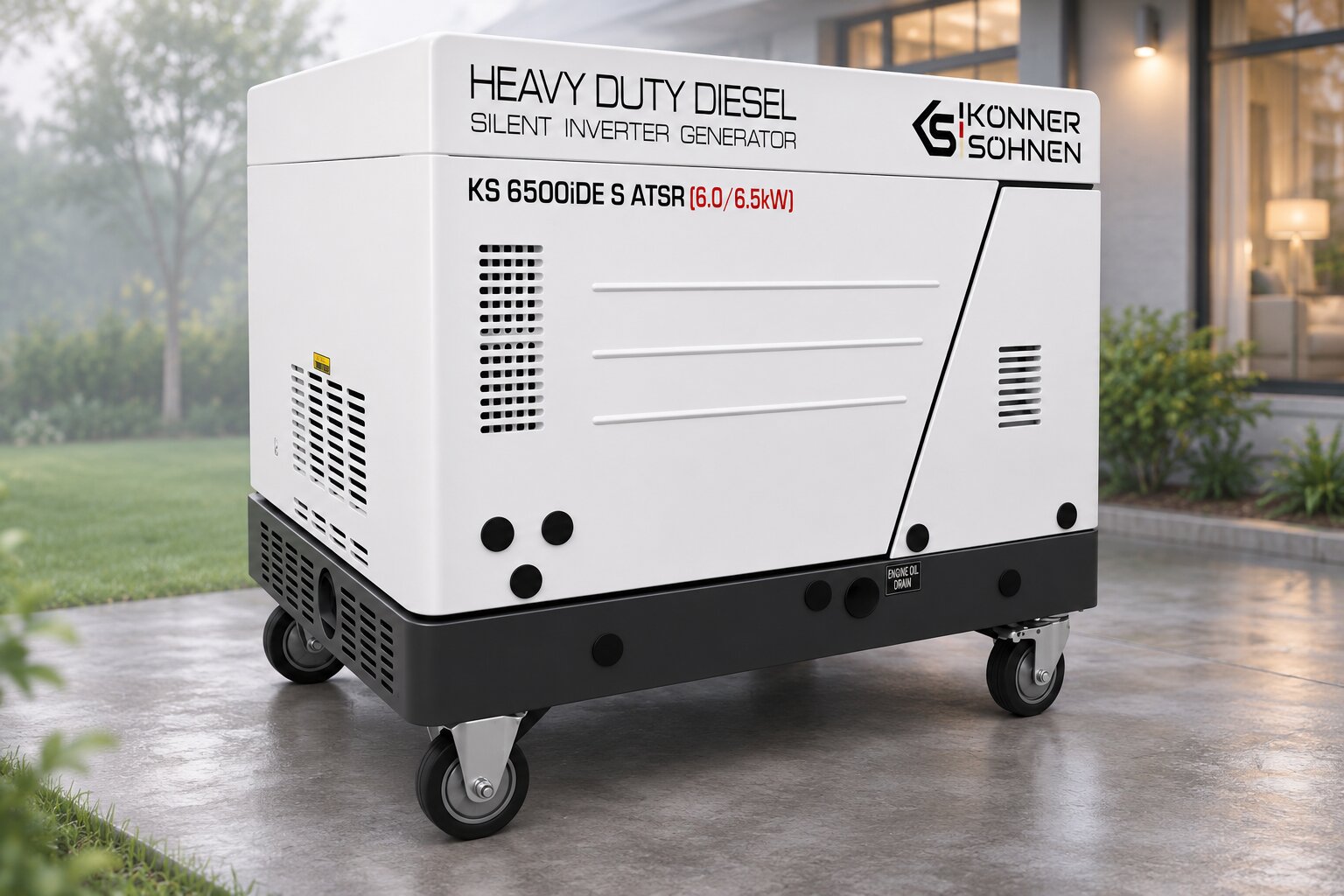
Power outages always seem to happen at the worst possible moment, and pulling a starter cord on a cold engine can turn starting a generator into a real challenge. In such situations, generators with batteries come in handy. These models feature an electric starter that allows the engine to start at the push of a button or the turn of a key. The battery supplies power to the starter and recharges while the engine is running. This article explores the advantages and limitations of these generators, along with the situations in which they are most useful.
How a Generator with a Battery Works
These models are equipped with a starter battery, usually a 12 V unit similar to those found in cars. When the start button is pressed, the starter motor turns the crankshaft and starts the engine. Once the engine is running, a charging winding replenishes the energy used during startup.
Many models also include a manual recoil starter. This provides a backup option if the battery runs out of charge.
Advantages of Electric Starting
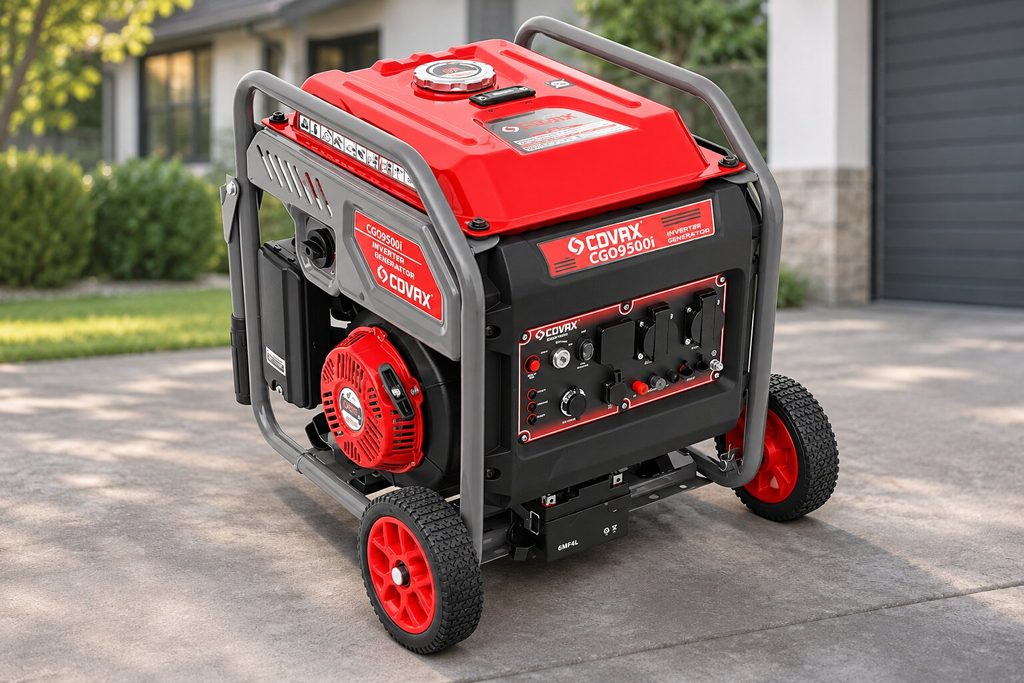
The main advantage of this type of generator is its quick and reliable startup. Users do not need to exert physical effort, making the generator easy to operate for almost any family member. The key benefits of electric starting include:
- starting the generator within seconds without physical effort;
- greater convenience for people who find it difficult to pull a starter cord sharply;
- reduced wear on the manual starter mechanism;
- the option to enable automatic starting through an automatic transfer switch (ATS) on compatible models.
The last feature is particularly valuable for homes that require a continuous power supply even when their owners are away.
Disadvantages and Limitations
An additional component brings additional maintenance responsibilities. The battery requires attention, while the generator itself becomes more complex and heavier than a model with manual starting:
- the battery has a limited lifespan and needs replacement every few years;
- during long periods of inactivity, it gradually loses its charge, potentially preventing the electric starter from working;
- battery capacity decreases in cold weather, making the engine harder to start;
- the generator is heavier and larger than compact models without electric starting.
Most of these limitations can be managed with a simple routine: starting the generator for a few minutes every month or two and periodically checking the battery’s charge level.
When Is This Type of Generator Useful?
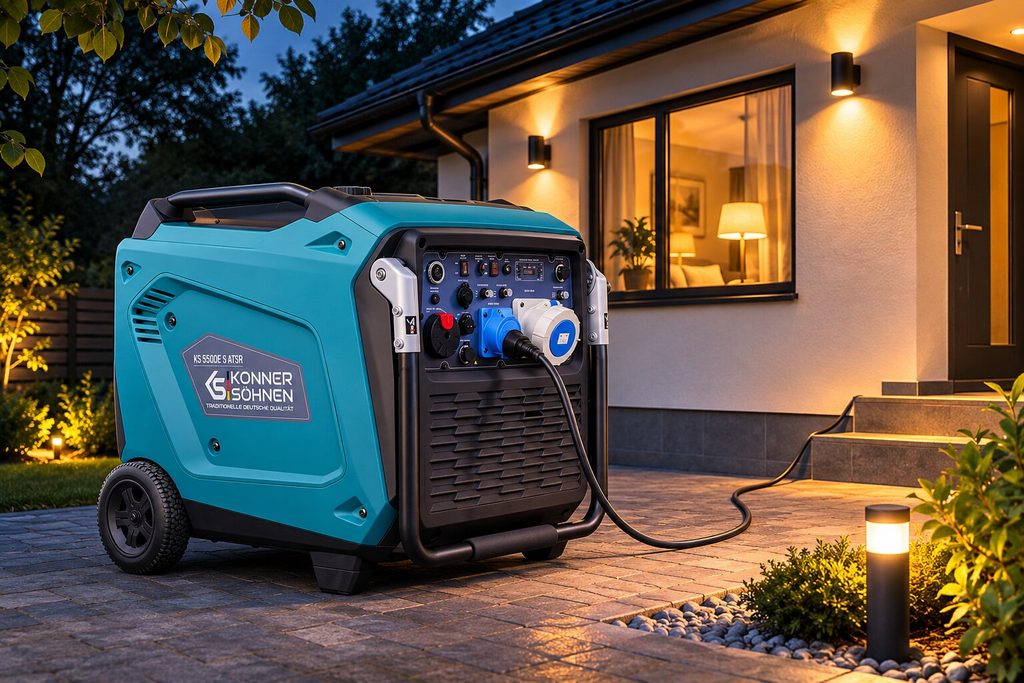
Electric starting is particularly worthwhile when a generator needs to be switched on frequently or at short notice. If the unit is only used once a year to power a small tool, a simpler model may be sufficient. A battery-equipped generator is especially useful in the following situations:
- providing backup power for a private home where outages can last several hours;
- supplying electricity to a holiday cottage or country house where the generator is started as needed;
- powering a small shop, office, or workshop where equipment downtime can result in lost customers;
- operating on a construction site where the generator is switched on and off several times a day.
In these situations, the convenience of easy starting quickly outweighs the additional maintenance requirements.
How to Choose the Right Model
Before purchasing a generator, it is worth assessing your needs and the unit’s technical specifications. Following a few steps can help you avoid unnecessary expenses:
- Calculate the total power consumption of all devices that will operate simultaneously, allowing extra capacity for the starting currents of electric motors.
- Determine which type of power supply is required: single-phase for household appliances or three-phase for machinery and pumps.
- Check whether the generator includes a manual recoil starter as a backup in case the battery becomes discharged.
- Compare fuel tank capacity and noise levels, especially if the generator will be located near a residential building.
A generator with a battery can be started within seconds without physical effort. When equipped with a suitable automatic control system, it can even start without human intervention. However, it does require attention to the condition of its battery. The Elmir catalog allows customers to compare models by power output, fuel type, and starting method, making it easier to choose a generator that will provide electricity exactly when it is needed.


