
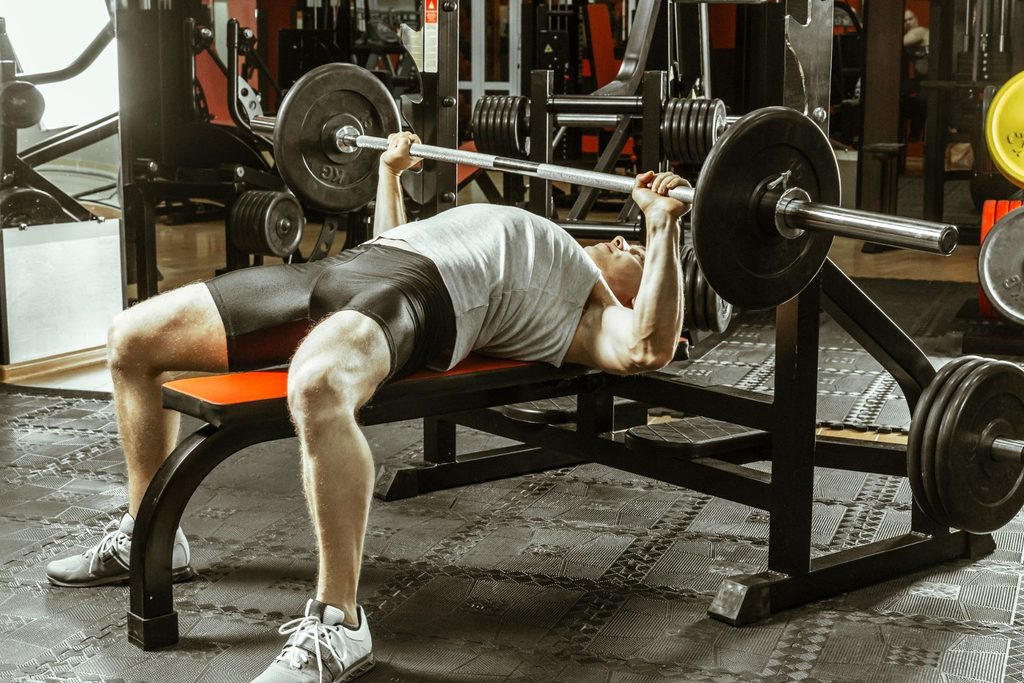
Regular pressing exercises with gradually increasing weights can help build chest strength at home. A weight bench is suitable for these workouts, providing stable back support when using dumbbells or a barbell. An adjustable design allows you to change the angle of your upper body and target your muscles from different positions. Even two workouts per week can lead to progress when performed with proper technique.
Which Exercises Are Best for Home Workouts?
The chest muscles are primarily engaged during movements that involve pushing weight away from the torso. Dumbbells allow each arm to work independently, while a barbell is well suited for gradually increasing the overall load. An effective home workout routine does not require a large collection of exercise machines. The following exercises are suitable for comprehensive chest development:
- dumbbell bench press – strengthens the chest muscles and engages the triceps;
- incline bench press – with the backrest set at a 15–30° angle, shifts the emphasis toward the upper chest muscles;
- dumbbell flyes – target the chest using lighter weights and a controlled range of motion;
- standard push-ups – work the chest muscles without any additional equipment;
- paused bench press – helps develop strength without relying on momentum.
Beginners can start with 2–3 sets of 8–12 repetitions. The final repetitions should require effort but should not involve jerky movements or a loss of control.
When choosing a bench from the COMFY online store, you can compare maximum weight capacities, dimensions, and adjustment mechanisms. Barbell exercises also require racks that are compatible with the barbell’s dimensions.
How Can You Increase Training Weight Without Overloading Your Muscles?
Proper body positioning reduces the risk of shoulder joint injuries. During the bench press, keep your feet on the floor, pull your shoulder blades together, and maintain contact between your hips and the bench. Lower the dumbbells smoothly, avoiding excessive muscle stretching at the bottom of the movement. Keep your elbows at an angle of approximately 45–70° relative to your torso. The weight should not force you to change the path of the movement.
Tracking the results of each workout is a convenient way to achieve gradual progress. If you can complete three sets with proper technique, you can switch to slightly heavier dumbbells and continue working within the 8–12 repetition range.
Chest muscles need time to recover after intense exercise. It is advisable to allow at least 48 hours between demanding workouts and extend the recovery period if you experience significant fatigue. Gradually increasing the training load helps strengthen muscles while minimizing unnecessary risks. Visit comfy.ua to explore the specifications of different weight benches and choose suitable equipment for strength training at home.


