
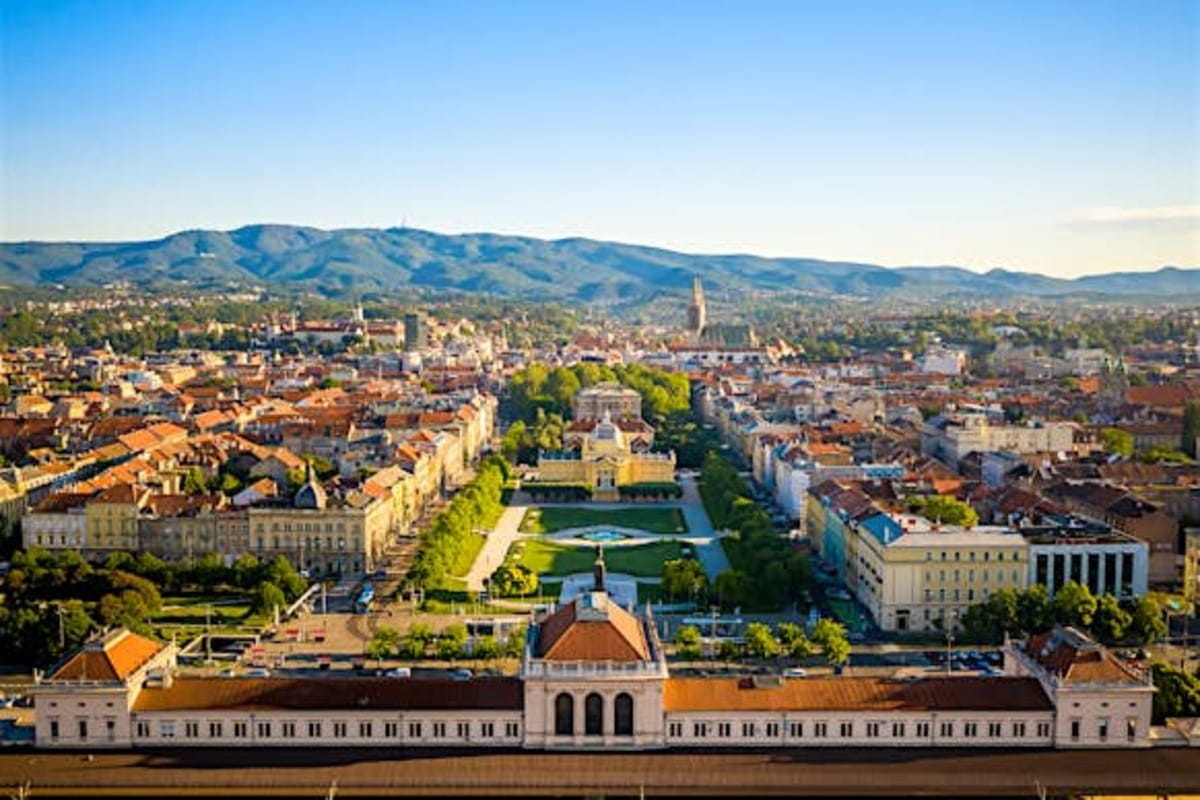
Zagreb, the capital of Croatia, masterfully blends the charm of historic streets with modern vitality and a distinctive Central European character infused with subtle Mediterranean influences. Incredible facts about this city reveal a place where two historic districts — Gradec and Kaptol — once stood as separate towns before merging into today’s vibrant capital. You might not know that Zagreb ranks among Europe’s greenest capitals or that it houses the continent’s oldest continuously operating functional railway station. Fascinating facts about Zagreb transform it from an ordinary capital into a genuine gem where every corner conceals a historical secret waiting to be discovered.
- Zagreb officially became Croatia’s capital only in 1848, when Ban Josip Jelačić relocated the administrative center from Varaždin to Zagreb following a devastating fire. Prior to this pivotal moment, the city served as an important regional hub but lacked official status as the capital of Croatian lands. Jelačić’s decisive action fundamentally altered the city’s historical trajectory, transforming it into the political and cultural heart of the nation. The square before the main railway station bears his name and remains one of the city’s primary gathering places for residents and visitors alike.
- The city lies in northern Croatia, within the Sava River valley, and is embraced by the Medvednica mountain range, which provides natural protection against cold northern winds. This strategic location grants Zagreb a unique climate, blending continental winters with pleasantly warm summers. Medvednica serves as a beloved recreational area for city dwellers, offering skiing opportunities in winter and forest trail hiking during warmer months. Atop Sljeme peak stands the medieval Medvedgrad fortress, providing breathtaking panoramic views across the entire urban landscape.
- Zagreb is considered one of Europe’s greenest capitals, with parks and green spaces occupying nearly thirty percent of the city’s total area. Among its most celebrated green zones is Maksimir Park, established in 1794, making it one of the oldest public parks on the continent. This expansive park also houses Zagreb Zoo, founded in 1925 and the only Croatian zoo holding membership in the European Association of Zoos and Aquaria. The Botanical Garden affiliated with Zagreb University boasts a collection exceeding ten thousand plant species gathered from across the globe.
- A unique characteristic of Zagreb is its status as the only European capital featuring an operational pneumatic mail system, functioning continuously since 1899. This network of tubes, spanning over thirty kilometers, connects major government buildings, enabling mail delivery within minutes. Although modern technology has diminished its practical necessity, the system remains functional and is recognized as a technical heritage monument. Only a handful of cities worldwide, including Prague and Vienna, maintain similar historical systems partially preserved to the present day.
- The Zagreb funicular links the Lower Town with the Upper Town and holds distinction as one of the world’s shortest funicular railways, with a mere sixty-six meter length. Despite its compact size, it has operated without interruption since 1890, making it Europe’s second oldest funicular after Lisbon’s. Constructed to ease the climb up Grič hill, where the historic city center resides, this charming transport solution remains a beloved tourist attraction and city symbol, even appearing on Croatian currency.
- Zagreb’s Museum of Broken Relationships stands as a unique institution worldwide, dedicated to stories of heartbreak and concluded romantic partnerships. Founded in 2006, this museum has collected over one thousand donated items, including gifts, letters, and personal possessions contributed by individuals following breakups. Each artifact accompanies a personal narrative from its donor, creating an exceptionally emotional and profoundly human experience for visitors. The museum has gained international recognition and been named one of Europe’s most original museums by numerous travel publications.
- Zagreb Railway Station holds the distinction of being Europe’s oldest continuously operating functional railway station, having opened in 1892 and still serving passenger trains today. This historic station occupies a central city location and represents an architectural treasure in the Secession style. Having survived World War II and numerous modernizations, it has preserved its original appearance and late nineteenth century atmosphere. Today, it functions not merely as a transportation hub but also as a popular meeting place for Zagreb’s residents.
- Zagreb hosts the world’s only museum dedicated to Croatian inventors, honoring scientists and engineers from Croatian territories who contributed significantly to global scientific advancement. Among its most notable exhibits are works by Nikola Tesla, Ferdinand Šašić, and Slavoljub Penkala, inventor of the mechanical pencil. Housed within the library building of the Croatian Academy of Sciences and Arts, the museum displays original documents, models, and personal belongings of these innovators. This institution highlights the substantial Croatian contribution to the development of modern technologies.
- Zagreb Cathedral, dedicated to the Assumption of Mary, stands as Croatia’s tallest building, featuring twin spires reaching one hundred three meters in height. Severely damaged by an earthquake in 1880, the cathedral was reconstructed in neo-Gothic style according to designs by architect Hermann Bollé. Its facade displays statues of Croatian saints and kings, reflecting the nation’s spiritual heritage. Within the cathedral rest the relics of King Tomislav, the first ruler of unified Croatia.
- Zagreb maintains a unique tradition of firing a cannon shot daily at noon from the summit of Grič hill, a practice dating back to 1870. Originally established to help synchronize city clocks and remind residents of prayer time, the tradition continues with a special device now simulating the cannon’s sound rather than using an actual artillery piece. Locals and visitors alike often pause to hear this daily signal, which has become an integral part of Zagreb’s cultural identity.
- Zagreb is the only city globally featuring a doll and toy museum, housing a collection of over one thousand antique dolls gathered from across Europe. Located in the Kornić Palace on St. Mark’s Square, this museum was founded in 1948. Its oldest exhibits date to the early nineteenth century and include handcrafted dolls made from porcelain, wood, and textiles. Particularly popular with children, the museum offers a unique journey into the history of childhood play.
- At Zagreb’s heart, on St. Mark’s Square, stands the parliament building, distinguished by its unique tiled roof crafted from colorful ceramics arranged in the shapes of Croatian coats of arms. This roof has become one of the city’s most recognizable symbols, frequently appearing on souvenirs and tourist materials. St. Mark’s Square serves as the historic core of the old town, surrounded by Gothic structures preserved since medieval times. The square’s distinctive triangular shape renders it architecturally unique among European urban spaces.
- Zagreb ranks among the few European cities preserving original medieval underground tunnels, once used for defense and communication between different city sections. Constructed during the thirteenth century, these tunnels are partially accessible to tourists, who can traverse an underground route exceeding one kilometer in length. During guided tours, visitors learn about the city’s history while observing remnants of medieval walls and fortifications. Certain tunnels continue serving municipal utility purposes today.
- Zagreb houses the world’s sole museum dedicated to Nikola Tesla’s technical achievements, containing original documents, photographs, and models of inventions by this remarkable scientist of Croatian origin. Established in 1954, the museum holds over three thousand exhibits related to Tesla’s life and work. Among its most precious items is Tesla’s personal archive, including correspondence and scientific notes. The institution regularly hosts scientific conferences and exhibitions focused on contemporary technological developments.
- Zagreb features a unique system of urban fountains, numbering over one hundred distinct installations distributed throughout the city. The most famous is the Mandušec Fountain on Ban Jelačić Square, depicting a boy holding a fish, which has become an iconic city symbol. Many fountains possess historical significance, having been constructed during the nineteenth century in the Secession style. During summer months, these fountains transform into favorite gathering spots for residents and tourists seeking refreshment from the heat.
- Zagreb is home to Southeastern Europe’s oldest university library, founded in 1607 by historian Ivan Zlatarić. Now part of the National and University Library of Croatia, this institution houses over four million books and documents. Its most valuable holdings include manuscripts by medieval Croatian authors and the earliest printed books in the Croatian language. The library also maintains a unique collection of sixteenth century European maps.
- Zagreb stands as the only city worldwide featuring a museum of Croatian folk costumes, containing over two thousand authentic garments from various Croatian regions. Housed within the Ethnographic Museum building and established in 1919, each costume is accompanied by information about its region of origin and the social status of its wearer. The museum regularly organizes exhibitions dedicated to traditional Croatian holidays and cultural rituals.
- Zagreb features a unique monument honoring local cafés, erected in 2018 on Zrinjevac Square. This sculpture depicts a small table with two chairs and coffee cups, symbolizing the importance of café culture in the city’s social fabric. Zagreb is renowned for its coffee culture, where residents spend hours discussing life and politics over cups of coffee. This tradition originated during the Austro-Hungarian period and remains an essential element of urban lifestyle.
- Zagreb possesses a unique system of urban elevators, constructed during the nineteenth century to facilitate movement between the Upper and Lower Towns. The most famous is the elevator on Tomićeva Street, opened in 1893 and still transporting passengers today. This elevator ranked among Europe’s first electric lifts and represented a technological sensation of its era. These elevators now function not merely as transportation but as historical monuments attracting curious visitors.
- Zagreb hosts Croatia’s oldest theatre — the Croatian National Theatre — founded in 1860 and housed in a magnificent neo-baroque building. Designed by Viennese architects Ferdinand Fellner and Hermann Helmer, who created numerous theatres across Central Europe, the building features sculptures and paintings depicting renowned Croatian and European playwrights. The theatre regularly presents opera, ballet, and dramatic performances, enjoying tremendous popularity among city residents.
These fascinating facts about Zagreb unveil a city of extraordinary historical depth and cultural richness that successfully harmonizes tradition with contemporary life. Incredible insights into its distinctive museums, transportation systems, and architectural treasures remind us that even modest European capitals can conceal genuine treasures. You might not have realized how multifaceted this city truly is, but now understand that Zagreb represents a genuine pearl of Central Europe, where every corner narrates its own unique story. A journey to Zagreb promises not merely relaxation but an enchanting voyage through time and culture that will leave lasting impressions.


