
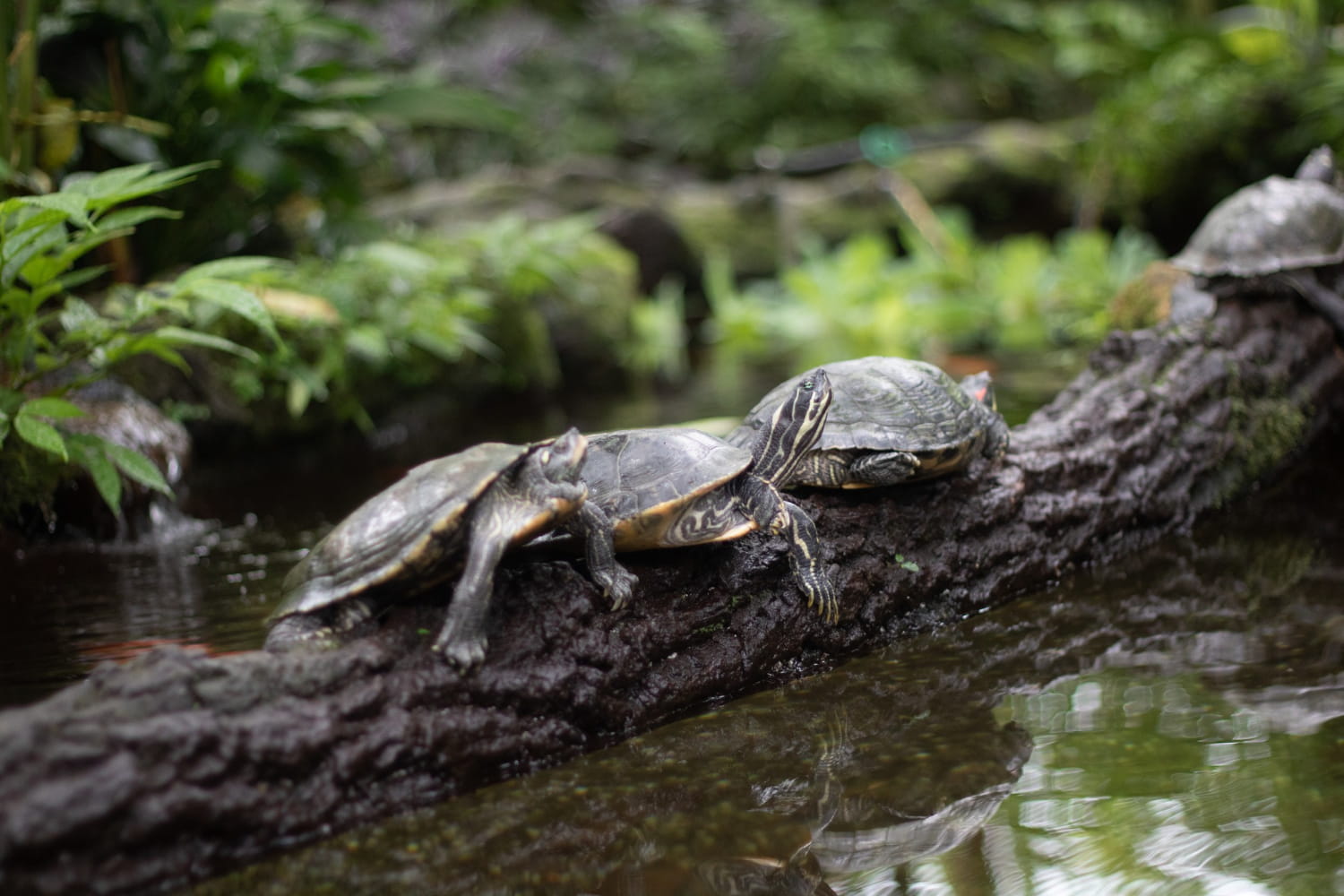
Turtles are among the oldest living creatures on Earth, having survived the age of dinosaurs, dramatic climate shifts, and multiple mass extinction events. Their unique shell, slow-paced lifestyle, and remarkable resilience make them true marvels of nature. They inhabit incredibly diverse environments—from tropical oceans to deserts and forests—adapting to conditions that might seem inhospitable to life. In this article, you’ll discover fascinating facts about various turtle species, their behavior, longevity, and ecological roles. You might not have known just how complex, intelligent, and vital these animals truly are, often underestimated simply because of their deliberate pace.
- Turtles have existed on Earth for over 220 million years, making them contemporaries of early dinosaurs. The oldest known turtle fossils date back to the Triassic period, long before flowering plants or mammals evolved. Their anatomy has changed very little over millions of years, a testament to the evolutionary success of their body plan. This stability is precisely what enabled them to endure several planetary-scale catastrophes.
- A turtle’s shell is not an external covering like that of crustaceans—it is an integral part of its skeleton. Formed from fused ribs and vertebrae, it is covered with keratinous scutes. A turtle cannot crawl out of its shell; it is permanently attached to its spine and ribcage. While this provides excellent protection, it also means the animal carries this weight throughout its entire life.
- Sea turtles can travel thousands of kilometers across oceans to return to the exact beach where they were born to lay their own eggs. They navigate using Earth’s magnetic field as a kind of internal map, allowing them to pinpoint their natal shores with astonishing accuracy. This phenomenon, known as natal homing, remains one of the most mysterious aspects of their biology. Some individuals cover more than 10,000 kilometers during a single migration cycle.
- The largest turtle in the world is the leatherback sea turtle, which can reach lengths of up to 2 meters and weigh over 900 kilograms. Unlike other sea turtles, it lacks hard bony plates; instead, its shell is covered with a leathery, oil-slicked skin. It is also the fastest turtle—capable of swimming at speeds up to 35 km/h. Despite its massive size, it feeds almost exclusively on jellyfish.
- The smallest turtle in the world is the speckled padloper tortoise from South Africa, whose shell rarely exceeds 8 centimeters in length as an adult. It is so tiny it can comfortably fit in the palm of a human hand. This tortoise lives in moist fynbos habitats and is rarely seen due to its secretive nature. Habitat loss has placed it at serious risk of extinction.
- Turtles do not have teeth, but their beaks are highly specialized for their diets. Herbivorous species possess broad, flat beaks for cropping vegetation, while carnivores have sharp, hooked beaks for tearing flesh. Some sea turtles even have backward-pointing spines in their throats that help them grip slippery prey like jellyfish. This adaptation allows them to feed efficiently without traditional teeth.
- The temperature of the sand where turtle eggs incubate determines the sex of the hatchlings. If the nest stays below 28°C, mostly males develop; above 31°C, mostly females emerge. Intermediate temperatures produce a mix of both sexes. This makes turtles especially vulnerable to climate change, as rising global temperatures could lead to heavily female-biased populations and eventual reproductive collapse.
- Turtles can live exceptionally long lives—some land tortoises exceed 150 years. Jonathan, a Seychelles giant tortoise residing on Saint Helena Island, was born around 1832 and is still alive today, making him the oldest known living land animal on the planet. Their longevity is linked to slow metabolism, low stress levels, and efficient cellular repair mechanisms. In many ways, turtles experience time differently than most animals.
- Sea turtles can hold their breath underwater for 4 to 7 hours when resting or sleeping. During active swimming, they surface every few minutes to breathe. But in a state of rest, their metabolic rate drops dramatically, minimizing oxygen consumption. This ability helps them conserve energy and avoid predators during long oceanic journeys.
- Some turtles, like the alligator snapping turtle, use lures to hunt. They have a worm-like appendage on their tongue that wriggles to attract fish; when prey comes close, the turtle snaps its jaws shut in a fraction of a second. This is one of the very few known cases of tool-like baiting behavior among reptiles. It reveals an unexpected level of cunning and behavioral sophistication.
- Turtles are not deaf, despite lacking external ear openings. They detect sound through internal ears that respond to vibrations. Scientific studies have shown they can hear low-frequency sounds and even recognize the voices of their caretakers in captivity. This debunks the common myth that turtles are completely isolated from the auditory world.
- Most turtle species are threatened or endangered due to poaching, ocean pollution, and destruction of nesting beaches. Plastic waste is especially deadly—turtles often mistake plastic bags for jellyfish and die from intestinal blockages. Every rescued turtle contributes meaningfully to biodiversity conservation. International protection programs are helping, but global cooperation is essential for their survival.
- Turtles play crucial roles in maintaining healthy ecosystems. For example, sea turtles help sustain coral reef health by eating sponges that would otherwise overgrow and smother corals. Land tortoises disperse plant seeds through their droppings, aiding forest regeneration. Even abandoned nests enrich beach soils with nutrients. Without turtles, many natural processes would fall out of balance.
- In many cultures, turtles symbolize wisdom, longevity, and steadfastness. In Native American cosmology, the Earth is said to rest on the back of a great turtle. In ancient Chinese astronomy, the turtle’s shell represented the heavens, while its body symbolized the earth. These enduring symbols reflect humanity’s deep respect for turtles across millennia.
These interesting facts about turtles reveal that beneath their calm exterior lies a world of biological complexity and ecological significance. The astonishing truths about their navigation, lifespan, and environmental impact highlight turtles as irreplaceable components of global biodiversity. Captivating insights into their intelligence and adaptability dismantle outdated stereotypes of them as simple or sluggish creatures. You might not have known that turtles are not merely ancient survivors—they are living emblems of resilience, deserving of our protection and reverence.


