
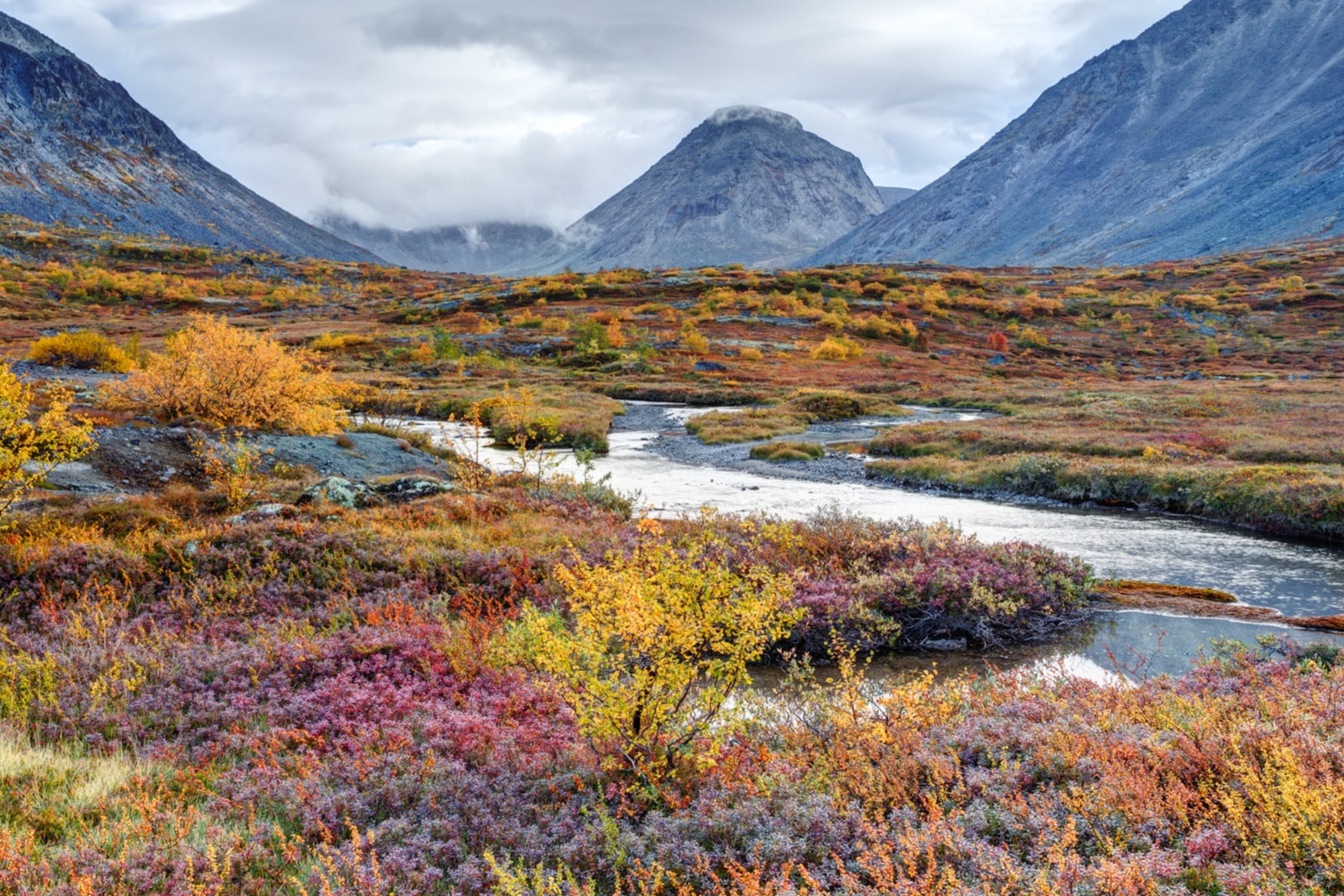
The tundra is one of the most severe yet most astonishing biomes on our planet, stretching across vast expanses in the polar regions of Earth. This cold and windy land, where winter lasts for most of the year, may appear lifeless, yet in reality it conceals an incredible wealth of life and unique natural phenomena. You may not have known that the tundra plays a critically important role in regulating the global climate and stores enormous reserves of carbon. Fascinating facts about this ecosystem will open up a world of extraordinary beauty and fragile balance existing on the edge of survival.
- The word tundra comes from the Finnish word tunturi, meaning treeless plain or barren elevation. This name accurately reflects the characteristic landscape of the region, where trees cannot grow due to extreme conditions. It is precisely the absence of forest cover that is one of the defining features of this biome. The term entered scientific usage in the 19th century and is used to describe similar ecosystems throughout the world.
- The tundra occupies approximately 10 percent of Earth’s land surface, located predominantly in the Northern Hemisphere around the Arctic Ocean. The largest areas of tundra are found in Russia, Canada, Alaska, and Scandinavia. In the Southern Hemisphere, tundra occurs only on some subantarctic islands and on the coast of Antarctica. The total area of tundra ecosystems is approximately 8 million square kilometres.
- Permafrost is one of the most characteristic features of the tundra, where the soil remains frozen year-round at depths ranging from a few centimetres to hundreds of metres. Only a thin upper layer of soil, called the active layer, thaws in summer to a depth of 25 to 100 centimetres. Permafrost has existed for thousands of years and contains the remains of ancient plants and animals. In some regions of Siberia, the depth of permafrost exceeds 1,500 metres.
- The tundra stores enormous reserves of carbon that exceed the amount of carbon in Earth’s atmosphere by nearly twofold. Organic remains of plants and animals have accumulated in the permafrost over millennia, not decomposing due to low temperatures. Global warming threatens to release this carbon in the form of methane and carbon dioxide. This could significantly accelerate climate change, creating a dangerous feedback loop.
- Tundra plants have developed unique adaptations for survival in extreme conditions. Most plants are low-growing, which helps them avoid strong winds and utilise warmth from the soil. Many species have dark colouration for better absorption of solar heat. Some plants can carry out photosynthesis at temperatures below zero degrees Celsius.
- Lichens are among the most widespread organisms in the tundra and can survive in conditions where other plants perish. They grow extremely slowly, sometimes only a few millimetres per year. Reindeer moss is the primary food source for reindeer and caribou. The age of some lichen colonies can reach several thousand years.
- The tundra is home to many animal species that have adapted to life in harsh conditions. Among the most well-known inhabitants of the tundra are reindeer, musk oxen, Arctic foxes, Arctic hares, and lemmings. Most mammals have dense fur and a thick layer of subcutaneous fat to retain heat. Some animals, such as the Arctic fox and snowshoe hare, change their coat colour depending on the season.
- Lemming populations in the tundra demonstrate dramatic cycles of abundance that repeat approximately every three to four years. In peak population years, these small rodents can form the foundation of the food chain for many predators. Myths about mass lemming suicides are false and arose from misunderstanding of their migrations. Fluctuations in lemming numbers affect populations of Arctic foxes, owls, and other predators.
- The polar night and polar day are characteristic phenomena for tundra regions due to their location beyond the Arctic Circle. In winter, the sun may not appear above the horizon for several months. In summer, conversely, the sun does not set, providing round-the-clock illumination. This allows plants to grow rapidly and flower during the short summer season.
- In summer, the tundra becomes a nesting ground for millions of migratory birds from around the world. Among them can be seen geese, ducks, waders, loons, and Arctic terns. The Arctic tern undertakes the longest migration of any bird, travelling from the Arctic to the Antarctic and back. The large quantity of insects, especially mosquitoes, provides birds with a rich food source.
- Mosquitoes and other blood-sucking insects breed in the tundra in incredible numbers during summer due to numerous bogs and bodies of water. Their numbers can be so high that they pose a threat to the health of large animals. Caribou often migrate to open windswept areas or to snow patches to escape mosquito attacks. According to some estimates, there can be up to 80 million mosquitoes per hectare in the tundra.
- Tundra soils are very poor in nutrients due to the slow decomposition of organic matter in cold conditions. Most nutrients are concentrated in the upper thin layer of soil. Tundra plants often form symbiotic relationships with fungi for better absorption of nutrients. Any disturbances to the soil cover recover extremely slowly, sometimes over centuries.
- Reindeer and caribou are keystone species of tundra ecosystems in Eurasia and North America respectively. They undertake some of the longest migrations among land animals, covering up to 5,000 kilometres per year. Their hooves are adapted for walking on snow and soft ground. Reindeer are the only deer in which both males and females have antlers.
- Musk oxen are remnants of Pleistocene megafauna that survived the Ice Age and still inhabit the tundra. Their long hair, called qiviut, is one of the warmest natural fibres in the world. Musk oxen form a defensive circle around their young when attacked by predators such as wolves. This strategy was effective against wolves but made them vulnerable to hunters with firearms.
- Alpine tundra exists on the summits of high mountains throughout the world, even in tropical latitudes. Conditions in alpine tundra are similar to Arctic tundra due to low temperatures and strong winds. However, alpine tundra receives more sunlight and does not have permafrost. The Andes, Himalayas, and African highlands have their own unique tundra ecosystems.
- Global warming is affecting the tundra faster than most other biomes on the planet. Temperatures in the Arctic are rising two to three times faster than the global average. This is leading to the melting of permafrost, changes in species ranges, and the encroachment of woody vegetation into tundra zones. The process known as Arctic greening is radically changing the appearance of this biome.
- Indigenous peoples of tundra regions, such as the Inuit, Nenets, Chukchi, and Sami, have adapted to life in harsh conditions over thousands of years. Their culture and way of life are closely connected to tundra animals, especially reindeer and marine mammals. The traditional knowledge of these peoples about tundra ecosystems is invaluable to modern science. Climate change threatens their traditional way of life and cultural heritage.
- The tundra may seem like a quiet place, but in reality it is filled with the sounds of life, especially in summer. Birdsong, animal calls, and the buzzing of insects create a unique acoustic landscape. In winter, sounds are predominantly created by wind and the movement of snow and ice. The cracking of permafrost due to temperature changes is also a characteristic sound of the Arctic tundra.
Incredible facts about the tundra demonstrate how complex and unique this ecosystem is, which at first glance appears empty and lifeless. From microscopic lichens to enormous caribou herds, from permafrost to the northern lights, the tundra conceals a multitude of astonishing phenomena and adaptations. These fascinating details remind us of the fragility of this biome and the necessity of its preservation in the face of global climate changes that threaten to transform the tundra forever.


