
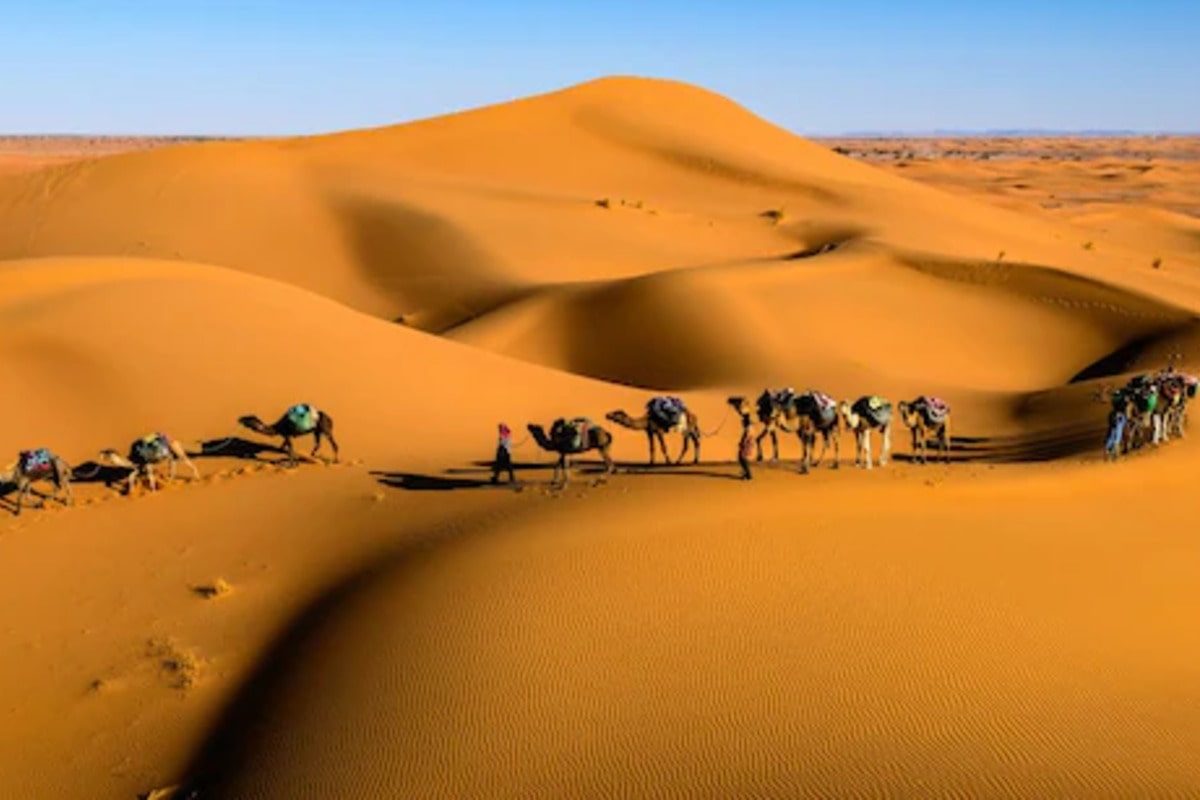
The Thar Desert, also known as the Great Indian Desert, is one of the most densely populated deserts in the world and a unique natural phenomenon of Asia. This enormous sandy expanse stretches predominantly within the borders of India and Pakistan, creating a dramatic landscape with dunes, salt flats and sparse vegetation. Incredible facts about the Thar Desert reveal to us a world of extreme conditions, unique biodiversity and ancient cultures that have adapted to life in one of the harshest environments on the planet. From its geological history to modern ecological challenges, this desert remains an object of scientific interest and cultural significance. Get ready to learn fascinating details about this amazing region, as you might not have known most of these astonishing features.
- The Thar Desert covers an area of approximately 200,000 square kilometers, located predominantly in the Indian state of Rajasthan and the Pakistani province of Sindh. Approximately 85 percent of the desert is located in India, with the remainder belonging to Pakistan. This makes Thar the ninth largest desert in the world and the most densely populated desert area on the planet.
- Unlike many other large deserts of the world, Thar is home to over 80 people per square kilometer in some areas. The total population of the desert exceeds 30 million people. This extraordinary population density makes Thar a unique example of how humans have adapted to life in extreme desert conditions.
- The desert formed approximately 10,000 years ago as a result of climatic changes that led to the desiccation of the region. Geological studies show that the territory was once significantly more humid with numerous rivers and lakes. Gradual climate change and tectonic movements transformed fertile lands into the arid desert we see today.
- The temperature in the Thar Desert can fluctuate from 50 degrees Celsius in summer to nearly zero in winter. The summer months from April to June are the hottest, when daytime temperatures regularly exceed 45 degrees. Night temperatures can drop sharply, creating extreme daily fluctuations of up to 30 degrees, which is typical for desert climate.
- Annual rainfall in the Thar Desert is only from 100 to 500 millimeters, with most rain falling during the monsoon season from July to September. These monsoon rains are critically important for the survival of local flora and fauna. However, rainfall distribution is extremely uneven, and some years can be almost completely dry.
- The Thar Desert is home to over 140 species of birds, many of which are migratory and visit the region in winter. Among the most notable species is the great Indian bustard, which is a large ground bird and endemic to the region. The desert’s wetlands, such as Sambhar Lake, attract thousands of flamingos and other waterfowl during migratory seasons.
- The unique ecosystem of the desert supports approximately 23 species of lizards and 25 species of snakes. The saw-scaled viper and sand boa are among the most common reptiles of the region. Many of these creatures have developed special adaptations for survival in heat, including nocturnal lifestyle and ability to burrow in sand to avoid extreme temperatures.
- The great Indian bustard, a critically endangered bird species, finds refuge predominantly in the Thar Desert. This large bird can weigh up to 15 kilograms and is one of the heaviest flying birds in the world. Conservation efforts include special reserves and captive breeding programs to prevent its extinction.
- The Thar Desert has relatively rich vegetation compared to other deserts thanks to monsoon rains. Approximately 700 plant species thrive in this region, including acacias, euphorbias and various grasses. Khejri trees are particularly important, providing shade, fodder for livestock and fuel for the local population.
- The animal world of the desert includes the chinkara or Indian gazelle, which is the most numerous large mammal of the region. These graceful antelopes are adapted to life in arid conditions and can go without water for extended periods. Chinkara populations experience threats from hunting and habitat loss but remain a notable part of the ecosystem.
- Desert National Park, established in 1981, encompasses an area of 3,162 square kilometers in the heart of the Thar Desert. The park protects unique ecosystems of sand dunes, salt plains and grasslands. It is an important site for conservation of rare and endangered species, including the Indian fox, desert cat and numerous birds of prey.
- Beneath the Thar Desert lie significant reserves of groundwater that are vitally important for population survival. Traditional water collection systems, such as stepwells and tanks, have been used for centuries. Modern drilling and irrigation technologies have allowed expansion of agriculture, although overuse of groundwater raises concerns about its depletion.
- The Indian wolf finds one of its last refuges in the Thar Desert and adjacent regions. These wolves are somewhat smaller than their Eurasian relatives and adapted to life in hot arid conditions. Conflicts with local herders and habitat loss threaten their survival, making conservation measures critically important.
- Sand dunes in the Thar Desert can reach heights up to 150 meters in some areas. These dunes constantly move under the influence of wind, changing the desert landscape. Although most dunes are relatively low, their mobility creates challenges for settlements and infrastructure in the region.
- The desert is rich in mineral resources, including gypsum, phosphates, fuller’s earth and limestone. Extraction of these resources has become an important economic activity in the region. Large deposits of natural gas and oil have also been discovered beneath the desert, making it strategically important for the energy security of both countries.
- The culture of Rajasthan is deeply connected with the Thar Desert, reflected in the bright clothing, music and architecture of the region. Traditional festivals, such as the desert festival in Jaisalmer, celebrate the desert’s heritage through camel races, folk dances and crafts. Sandstone forts and palaces, such as Jaisalmer Fort, are testament to engineering mastery and architectural beauty in desert conditions.
- Camels play a central role in life in the Thar Desert, providing transportation, milk, meat and wool for the local population. The Rajasthani camel is a special breed adapted to the harsh conditions of the desert. Unfortunately, camel populations are declining due to mechanization of transport and changes in traditional lifestyle, raising concerns about preservation of this iconic animal.
- The Thar Desert faces serious environmental challenges, including desertification, land degradation and biodiversity loss. Overgrazing of livestock, cutting of trees for firewood and unsustainable water use accelerate ecosystem degradation. Climate change intensifies these problems, making the region more arid and unpredictable in terms of rainfall.
- Agriculture in the Thar Desert relies on drought-resistant crops such as millet, sorghum and beans. Traditional dry farming practices allow crops to be grown with minimal water. The Rajasthan Canal irrigation project, which carries water from the Sutlej River, has transformed parts of the desert into productive agricultural land, although this has also created new environmental challenges.
- Archaeological finds in the Thar Desert testify to a rich prehistoric human presence in the region. Stone Age tools and rock paintings indicate that the territory was inhabited thousands of years ago. Remains of the ancient Indus Valley civilization were discovered on the outskirts of the desert, indicating former more favorable climatic conditions.
- Unique plant adaptations include deep root systems for accessing groundwater and waxy leaf coatings to minimize moisture loss. Some plants have the ability to survive for years in dormant state, waiting for rare rains to germinate. These adaptations make desert flora extremely resilient to extreme conditions.
- Wind farms have become a notable part of the Thar Desert landscape in recent decades. Constant strong winds make the region ideal for wind energy production. India has invested significantly in renewable energy development in the desert, contributing to reduced dependence on fossil fuels and job creation for the local population.
- Traditional desert architecture includes houses with thick walls, small windows and flat roofs for protection from heat. Building materials include clay, sand and stone, which are readily available in the region. The design of houses reflects deep understanding of climatic conditions and the need to preserve water and coolness inside premises.
These fascinating facts about the Thar Desert demonstrate the extraordinary complexity and richness of this unique ecosystem, where life thrives despite extreme conditions. Each aspect of the region’s geography, biology and human culture reflects millennia of adaptation and interaction between nature and civilization. The incredible resilience of both natural ecosystems and human communities of the Thar Desert reminds us of the power of adaptation and the importance of preserving these unique environments for future generations. Studying the Thar Desert helps us better understand the dynamics of desert ecosystems and the challenges faced by millions of people who call this harsh but beautiful region their home.


