
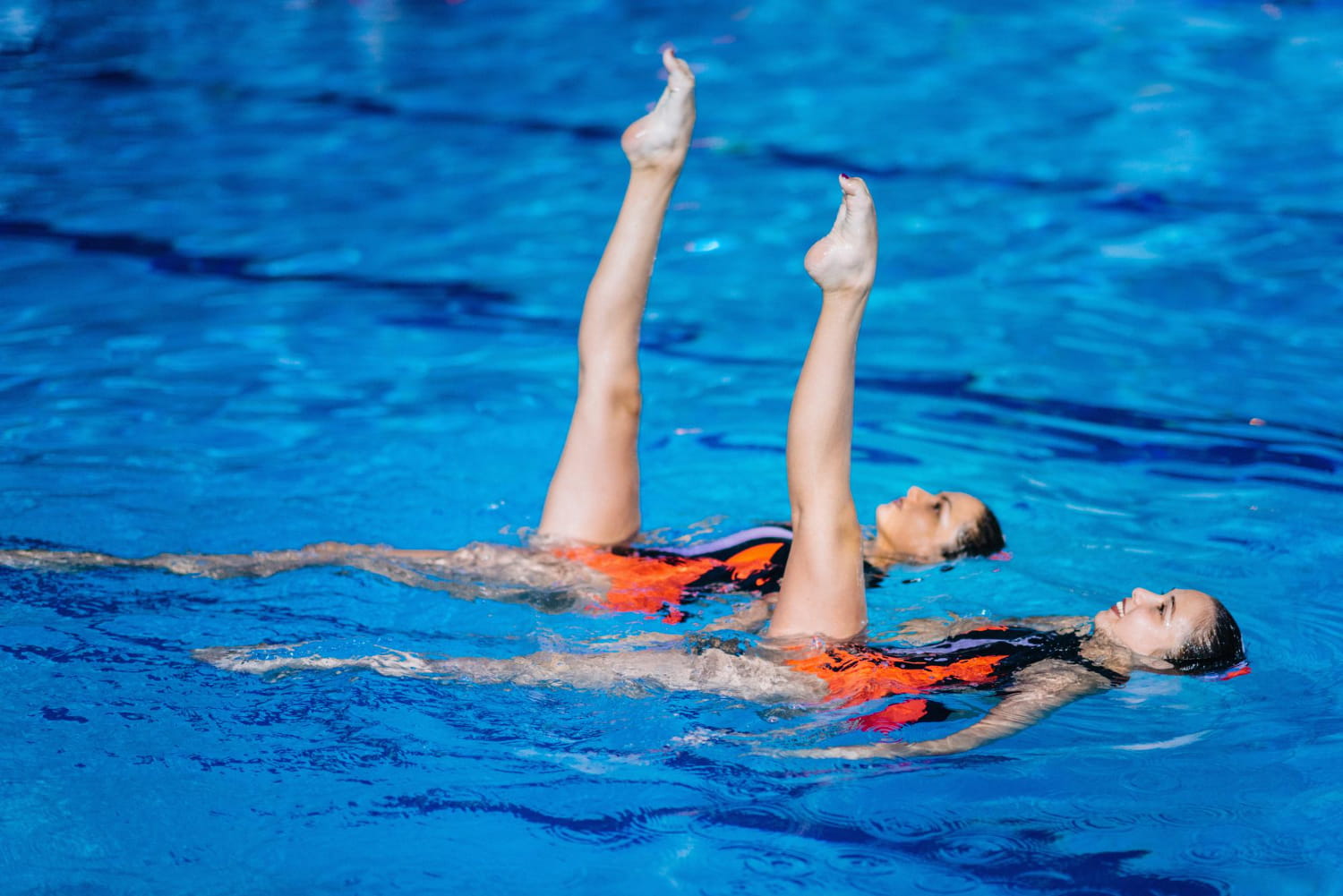
Synchronized swimming combines sport, art, and remarkable physical endurance, even though it often appears light and effortless to spectators. Behind the graceful movements in the water lie years of intense training, strict discipline, and highly complex technical demands. This discipline has a rich history and many unique features that you may not know. Interesting facts about synchronized swimming help explain why it is considered one of the most demanding Olympic sports. Below is an extensive selection of facts that reveal this sport from many different angles.
- Synchronized swimming originated in the early twentieth century as a blend of water stunts and dance. At first, it was viewed mainly as an entertainment spectacle rather than a competitive sport. Over time, structured rules and judging systems were introduced. This gradual formalization transformed aquatic performances into a recognized athletic discipline.
- Early synchronized swimming competitions were held without unified international standards. Each country interpreted technique and choreography in its own way. This often caused confusion and disagreements during international events. As a result, the need for standardized rules and judging criteria became unavoidable.
- Synchronized swimming was included in the Olympic Games only in 1984. Before that, it developed for decades outside the Olympic program. Olympic recognition significantly raised its global status. From that moment, training intensity and technical complexity increased dramatically.
- One of the defining features of synchronized swimming is prolonged breath control. During routines, athletes may remain underwater for dozens of seconds at a time. In some programs, the total time spent without breathing exceeds two minutes. This requires specialized respiratory training and precise control of heart rate.
- Muscular endurance plays a crucial role in synchronized swimming. Athletes maintain constant body tension even when movements appear smooth and effortless. Water resistance makes every action more physically demanding. For this reason, training sessions can be more exhausting than in many land-based sports.
- Judging in synchronized swimming considers far more than simple synchronization. Artistic expression and musical interpretation are equally important. A routine must have a clear structure with a beginning, development, and conclusion. This is why each performance resembles a carefully staged aquatic show.
- Music in synchronized swimming is played underwater through specialized speakers. Athletes can hear the rhythm clearly even while fully submerged. This system allows precise timing and coordination. Without underwater sound equipment, complex routines would be extremely difficult to perform.
- Swimsuits used in synchronized swimming are designed to meet specific technical requirements. They must be durable, flexible, and resistant to chlorine. At the same time, they cannot restrict movement in any way. Visual design also contributes significantly to the overall impression of a routine.
- Makeup in synchronized swimming serves a practical purpose in addition to aesthetics. Strongly defined facial features help judges recognize expressions from a distance. Only waterproof cosmetics are used during competitions. Hairstyles are fixed with special gelatin to prevent hair from moving in the water.
- Synchronized swimming demands an exceptional sense of timing. Even a minor delay in a single movement can lower the score of an entire team. For this reason, athletes spend years developing internal rhythm. Counting musical beats eventually becomes an automatic skill.
- Team routines rely on complete trust among participants. During complex lifts and formations, athletes support one another underwater. A small mistake can disrupt the entire element. This makes psychological preparation just as important as physical training.
- For many years, synchronized swimming was considered an exclusively female sport. Only in the twenty-first century did men begin competing regularly at international events. Their inclusion introduced new technical elements and expanded creative possibilities. Mixed duets marked a significant stage in the evolution of the discipline.
- A large portion of synchronized swimming training takes place outside the pool. Athletes perform strength, flexibility, and coordination exercises on land. Ballet and gymnastics techniques are frequently incorporated. This approach allows movements to be refined without water resistance.
- Flexibility is a critical physical attribute in synchronized swimming. Many elements require extreme joint mobility. As a result, stretching occupies a substantial part of daily training. Without proper flexibility, executing complex figures would pose a serious injury risk.
- Judging synchronized swimming is considered one of the most challenging tasks in sport. Technique, synchronization, difficulty, and artistry are evaluated simultaneously. Judges must observe multiple athletes at the same time. This requires exceptional focus and extensive experience.
- Pool depth for synchronized swimming competitions is strictly regulated. It must allow athletes to perform elements without touching the bottom. Even slight deviations can affect technical execution. Therefore, competition venues undergo careful inspection before events begin.
- Synchronized swimming develops an extraordinary level of coordination. Athletes must control arms, legs, core, and breathing simultaneously. All of this occurs in an unstable aquatic environment. Such precise control is achieved only through years of consistent practice.
- Injuries in synchronized swimming are less common than in contact sports, but they still occur. The shoulders, back, and knees are most frequently affected. This is due to repetitive movements and sustained physical strain. Recovery and rehabilitation are therefore essential components of training.
- Despite its graceful appearance, synchronized swimming requires a high level of energy expenditure. Athletes can burn hundreds of calories during a single training session. The intensity of effort is often compared to running or cycling. This clearly demonstrates how physically demanding the sport truly is.
In conclusion, interesting facts about synchronized swimming reveal its depth and complexity. Incredible facts show how much unseen effort lies behind every elegant movement in the water. Fascinating facts help us understand that this discipline is far more than a beautiful spectacle. The combination of strength, precision, endurance, and artistry gives synchronized swimming a truly unique place in the world of sport.


