
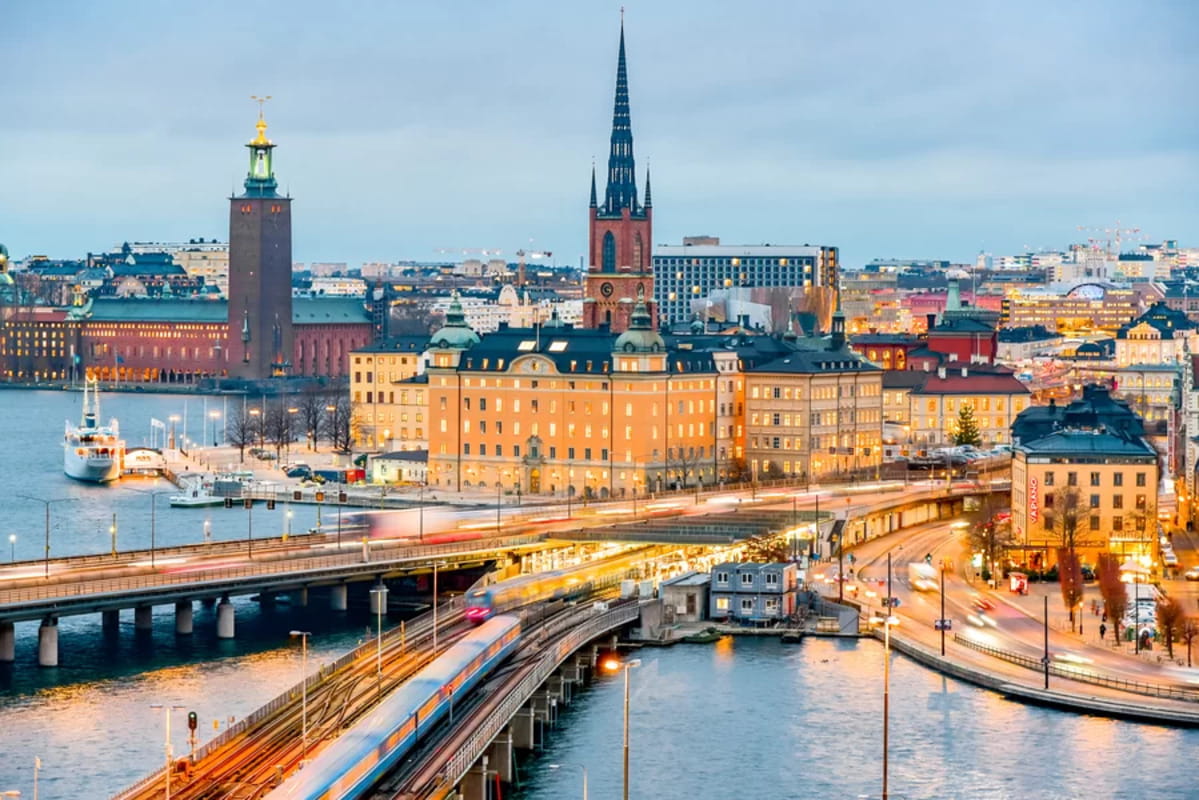
Sweden stands as a nation of striking contrasts where cutting-edge innovation seamlessly blends with ancient customs and polar nights gracefully transition into luminous summer days. Incredible facts about this Scandinavian kingdom reveal a society that pioneered gender equality in the nineteenth century and developed a unique model of social welfare admired worldwide. You might not know that Sweden ranks as Northern Europe’s largest country by land area or that it embraces the cherished tradition of “fika” — mandatory coffee breaks woven into the fabric of daily life. Fascinating facts about Sweden transform it from a typical travel destination into a genuine laboratory of progressive social concepts and environmental innovation.
- Sweden holds the distinction of being Northern Europe’s largest country by territory with an area exceeding four hundred fifty thousand square kilometers. Despite its impressive size the nation maintains a relatively modest population of approximately ten million inhabitants. This demographic reality makes Sweden one of Europe’s most sparsely populated countries with an average density of fewer than twenty five people per square kilometer. The majority of residents concentrate in southern regions while vast northern territories remain pristine wilderness with minimal human presence.
- Sweden has maintained an uninterrupted period of peace for more than two centuries having last participated in armed conflict back in 1814. This longstanding policy of neutrality enabled the country to avoid devastation during World War II while preserving its infrastructure and economic stability. However in 2022 Sweden applied for NATO membership marking the end of its two hundred year tradition of military non alignment. This historic decision emerged in response to shifting geopolitical realities following Russia’s invasion of Ukraine.
- Sweden embraces the unique cultural institution of “fika” which designates mandatory coffee breaks throughout the working day. This tradition carries such significance that numerous Swedish companies formally schedule dedicated fika periods within their daily timetables. During fika Swedes not only enjoy coffee but also engage in meaningful conversation share personal updates and strengthen social bonds. Fika represents a cornerstone of Swedish culture actively promoting work life balance and human connection in an increasingly digital world.
- Sweden became the first country globally to decriminalize homosexual relations back in 1944 establishing an early foundation for LGBTQ+ rights. The nation further demonstrated leadership by granting full legal recognition to same sex marriages in 2009 well ahead of many Western nations. Swedish society exhibits remarkable tolerance and acceptance toward LGBTQ+ individuals reflected in widespread public support. Vibrant Pride celebrations attract tens of thousands of participants annually including prominent politicians and celebrities demonstrating genuine societal inclusion.
- Sweden operates a distinctive tax incentive system allowing citizens to claim deductions for home renovation expenses through the ROT-avdrag program. This initiative enables residents to recover up to fifty percent of labor costs as tax rebates when hiring licensed professionals for household repairs. A parallel system called RUT-avdrag provides similar benefits for services caring for elderly family members. These programs effectively combat the shadow economy while simultaneously supporting legitimate employment and maintaining housing quality across generations.
- Sweden leads the world in waste management with merely four percent of household waste ending up in landfills. The vast majority undergoes incineration in specialized facilities that generate both district heating and electricity for urban centers. Sweden’s recycling efficiency has become so remarkable that neighboring countries including Norway and the United Kingdom actually export their waste to Swedish processing plants. Swedish children learn meticulous waste sorting from early childhood making environmental consciousness an ingrained cultural value rather than merely a policy.
- Sweden maintains the unique legal principle of “allemansrätten” or everyman’s right granting public access to private land for recreational purposes. This centuries old tradition permits citizens to roam freely through forests gather berries and mushrooms and even camp temporarily on private property provided they cause no damage. The right does not extend to areas immediately surrounding homes which remain protected as private zones. This legislation embodies the Swedish philosophy that nature belongs to everyone and should remain accessible regardless of land ownership.
- Sweden pioneered gender equality legislation in 1845 becoming the first nation to establish legal frameworks promoting women’s rights. The country continued its progressive trajectory by granting women suffrage in 1919 decades before many comparable nations. Contemporary Sweden consistently ranks among global leaders in gender equality metrics with women occupying more than forty percent of parliamentary seats. In 2014 the Swedish government formally declared the nation a feminist state institutionalizing equality as a fundamental principle of governance and foreign policy.
- Sweden celebrates Midsummer or “midsommar” as one of its most significant annual festivals marking the summer solstice with vibrant communal gatherings. Participants dance around elaborately decorated maypoles adorned with flowers while singing traditional songs passed down through generations. Families typically celebrate outdoors with picnics featuring pickled herring new potatoes and fresh strawberries harvested during this brief abundant season. This cherished tradition embodies Swedish appreciation for nature’s cycles and the preciousness of extended daylight during their relatively short summer months.
- Sweden hosts Sarek National Park recognized as Europe’s oldest national park established in 1909 and among the world’s most pristine wilderness areas. Located in the remote northern mountains Sarek deliberately lacks marked trails visitor centers or any tourist infrastructure preserving its raw natural character. The park features dramatic alpine landscapes with towering peaks deep valleys and over one hundred glaciers feeding crystal clear rivers. This untouched territory provides sanctuary for Arctic wildlife including reindeer wolverines golden eagles and the elusive Arctic fox thriving in undisturbed habitats.
- Sweden operates the world’s most generous parental leave system granting parents a combined four hundred eighty days of paid leave per child. Each parent receives ninety days reserved exclusively for them with the remaining days shareable according to family needs and preferences. Parents receive approximately eighty percent of their salary during leave creating genuine economic feasibility for extended time with newborns. This policy actively encourages paternal involvement in childcare while supporting gender equality within family structures and workplace environments.
- Sweden stands at the forefront of environmental innovation with legally binding legislation targeting net zero carbon emissions by 2045. The nation already generates more than fifty percent of its energy from renewable sources primarily hydropower and wind installations distributed across its landscape. Swedish urban centers feature extensive cycling infrastructure efficient electric public transportation and progressive policies discouraging private car usage in city centers. Stockholm earned distinction as the inaugural European Green Capital in 2010 setting standards subsequently adopted by cities across the continent.
- Sweden observes Saint Lucy’s Day or “lussegrädd” on December thirteenth with processions led by young women wearing white gowns and candle adorned crowns. Participants carry traditional saffron flavored buns called lussekatter shaped in distinctive S patterns symbolizing light during the darkest time of year. This celebration blends pre Christian winter solstice traditions with Christian martyrdom narratives creating a uniquely Swedish cultural synthesis. Families gather for special breakfasts featuring these symbolic pastries marking the gradual return of daylight after the winter solstice.
- Sweden experimented with the world’s first official “Minister of Time” position though largely symbolic aimed at raising awareness about work life balance importance. The nation also pioneered six hour workday trials in various companies demonstrating maintained or even improved productivity alongside enhanced employee wellbeing. These initiatives reflect the Swedish conviction that quality of life should supersede pure economic output in societal measurements. Swedish work culture emphasizes efficiency during working hours rather than presenteeism creating space for personal fulfillment outside professional obligations.
- Sweden maintains a state alcohol retail monopoly through Systembolaget which exclusively sells beverages exceeding three point five percent alcohol content. Established to minimize alcohol related harm this system features strictly limited opening hours no promotional advertising and staff trained in responsible sales practices. Despite occasional criticism regarding convenience the model has contributed to Sweden achieving among Europe’s lowest rates of alcohol abuse and alcohol related mortality. The monopoly reinvests profits into public health programs further supporting its harm reduction mission.
- Sweden’s Riksdag represents one of the world’s oldest continuously functioning parliaments with origins tracing back to the 1435 Arboga meeting of representatives. While its modern unicameral form emerged in 1971 the institution embodies centuries of democratic evolution unique in European history. The parliament building occupies Helgeandsholmen island in central Stockholm featuring architecture blending neoclassical grandeur with functionalist elements. This historic institution continues adapting to contemporary challenges while maintaining traditions that have sustained Swedish democracy through centuries of change.
- Sweden offers exceptional opportunities to witness the aurora borealis particularly in northern regions above the Arctic Circle during winter months. The town of Abisko has gained international recognition for its microclimate creating unusually clear skies ideal for northern lights observation. Visitors can experience this celestial phenomenon from glass igloos thermal baths or guided wilderness excursions under star filled skies. Indigenous Sami communities share cultural perspectives on the lights connecting modern tourism with ancient Arctic traditions and cosmological understanding.
- Sweden consistently ranks among global leaders in innovation producing the highest number of patents per capita in Europe. The nation serves as birthplace to transformative companies including Spotify Skype Volvo and IKEA each revolutionizing their respective industries through distinctive approaches. Swedish education emphasizes creativity critical thinking and collaborative problem solving from early childhood fostering innovation as a cultural value. Government supported incubators venture capital networks and university industry partnerships create fertile ground for translating ideas into globally competitive enterprises.
- Sweden preserves the distinctive culinary tradition of surströmming fermented Baltic herring renowned for its powerful aroma often described as challenging to unaccustomed palates. This ancient preservation method developed centuries ago when salt was scarce continues primarily in northern coastal communities maintaining cultural continuity. Proper consumption involves eating outdoors with tunnbröd flatbread boiled potatoes finely diced onion and sour cream to balance the intense flavor. Despite international notoriety surströmming remains a cherished seasonal delicacy connecting modern Swedes to their maritime heritage and regional identity.
- Sweden has legally enshrined its commitment to becoming the world’s first fossil fuel free welfare nation with binding climate legislation targeting zero net emissions by 2045. The nation actively invests in green steel production using hydrogen instead of coal pioneering industrial decarbonization at scale. Swedish cities implement congestion pricing low emission zones and extensive charging infrastructure accelerating the transition to electric transportation. This comprehensive approach demonstrates that ambitious climate action and high living standards can coexist when supported by coherent policy frameworks and societal consensus.
These fascinating facts about Sweden reveal a nation that masterfully balances progressive social values with profound respect for natural environments and cultural heritage. Incredible insights into its innovative policies distinctive traditions and environmental leadership remind us that thoughtful governance can create societies where human dignity and ecological responsibility flourish together. You might not have realized how comprehensively Sweden has reimagined the relationship between citizens state and nature but now understand its role as a living laboratory for sustainable modernity. A journey through Sweden offers not merely scenic beauty but profound lessons in crafting societies that honor both human potential and planetary boundaries.


