
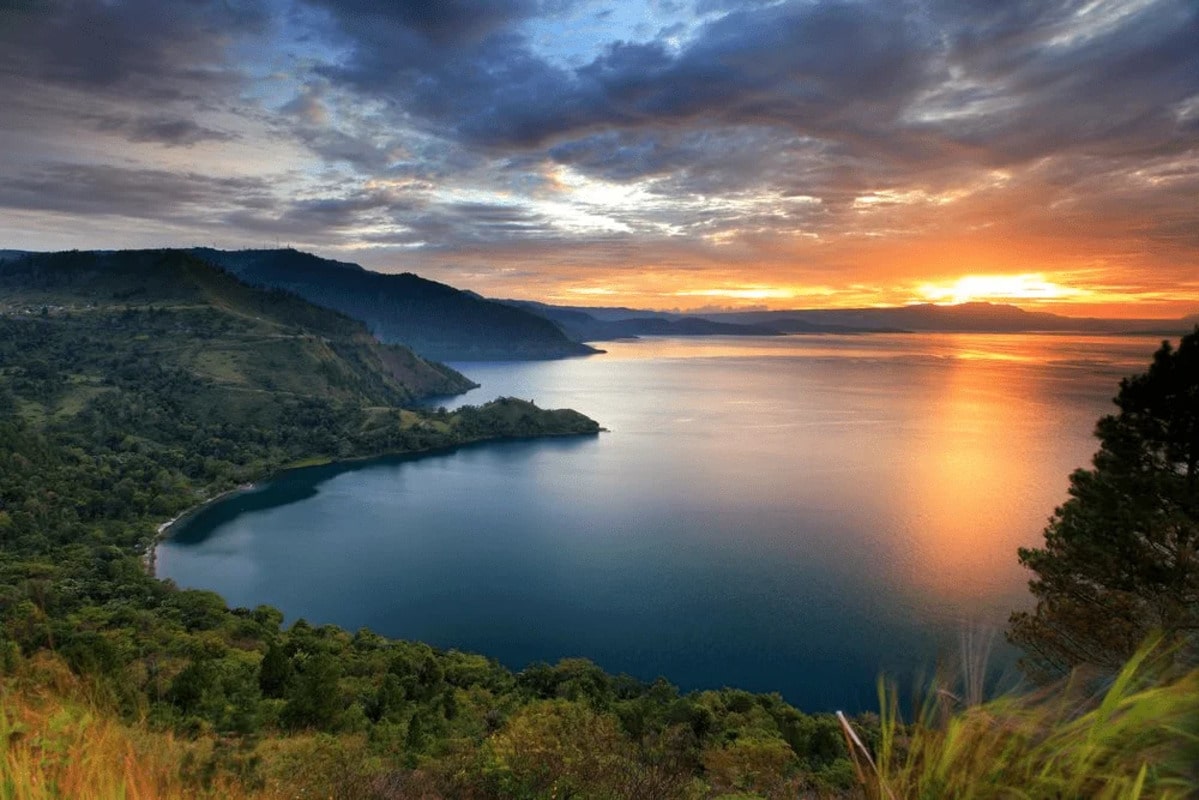
Sumatra is one of the largest islands on our planet and a true gem of the Indonesian Archipelago. This tropical paradise amazes visitors with its biological diversity, ancient rainforests, and unique animals that cannot be found anywhere else in the world. The island combines majestic volcanoes, crystal-clear lakes, and the rich cultural heritage of numerous peoples. We present to you fascinating facts about this incredible island that you may not have known.
- Sumatra is the sixth largest island in the world with an area of approximately 473,000 square kilometers. It is the largest island that belongs entirely to Indonesia. The island stretches for nearly 1,800 kilometers from northwest to southeast. In terms of size, Sumatra exceeds such European countries as Germany and Great Britain.
- Sumatra is home to the Sumatran orangutan, which is a critically endangered species found nowhere else in the world. These large great apes are among the closest relatives of humans, with whom we share approximately 97 percent of our DNA. The population of Sumatran orangutans has declined to approximately 14,000 individuals due to deforestation. They spend most of their lives in trees and rarely descend to the ground.
- Lake Toba in Sumatra is the largest volcanic lake in the world. It was formed approximately 74,000 years ago as a result of the most powerful volcanic eruption in the last 25 million years. The dimensions of the lake are impressive, as its length is approximately 100 kilometers and its width reaches 30 kilometers. In the middle of the lake lies Samosir Island, which is larger in area than Singapore.
- The eruption of the Toba supervolcano was so powerful that it caused a global volcanic winter that lasted several years. According to some theories, this catastrophe led to a dramatic reduction of the human population to just a few thousand individuals. Volcanic ash from this eruption is found in deposits throughout South Asia and even in Africa. This eruption is considered one of the greatest cataclysms in Earth’s history.
- The Sumatran tiger is the smallest of all tiger subspecies and is endemic to the island. These majestic predators are on the brink of extinction, with only about 400 individuals remaining in the wild. Sumatran tigers have the darkest coloration among all tigers and the narrowest stripes. They are excellent swimmers and often hunt prey in water.
- Sumatra is home to the Rafflesia arnoldii, which has the largest flower in the world. The diameter of this flower can reach one meter, and its weight can exceed 10 kilograms. The Rafflesia has no stem, leaves, or roots and is a parasitic plant that lives off jungle vines. This flower is known for its pungent smell of rotting flesh, which attracts pollinating insects.
- Sumatra has an extraordinarily rich geological history and is located at the boundary of two tectonic plates. The island is part of the so-called Pacific Ring of Fire and has more than 90 volcanoes, of which approximately 15 are active. The highest point on the island is Mount Kerinci at 3,805 meters. Earthquakes and volcanic activity are common occurrences for the island’s inhabitants.
- In 2004, one of the most powerful earthquakes in recorded history occurred off the coast of Sumatra with a magnitude of 9.1 to 9.3. This earthquake triggered a devastating tsunami that claimed the lives of more than 230,000 people in countries around the Indian Ocean basin. The province of Aceh in northwestern Sumatra suffered the most, losing more than 170,000 residents. This tragedy became one of the deadliest natural disasters in modern history.
- The Sumatran rhinoceros is the smallest and most vulnerable of all five rhinoceros species in the world. This species is the only Asian rhinoceros with two horns and the only rhinoceros with a hairy coat. Fewer than 80 individuals of this species remain in the wild. Sumatran rhinoceroses are predominantly solitary animals and lead a nocturnal lifestyle.
- The tropical rainforests of Sumatra are listed as a UNESCO World Heritage Site as one of the richest centers of biodiversity on the planet. These forests are home to more than 10,000 plant species, of which approximately 17 percent are endemic. More than 200 mammal species and approximately 580 bird species live here. Unfortunately, these unique ecosystems are rapidly disappearing due to deforestation for palm oil plantations.
- Sumatra is one of the largest producers of palm oil in the world, which has both economic benefits and environmental consequences. Oil palm plantations occupy millions of hectares of former tropical forests. Palm oil production provides employment for millions of Indonesians. However, the expansion of plantations is the main threat to the survival of Sumatran orangutans, tigers, and rhinoceroses.
- More than 50 million people live on Sumatra, making it one of the most densely populated islands in the world. The island is home to many ethnic groups, including the Batak, Minangkabau, Acehnese, and Malays. Each of these groups has its own unique language, culture, and traditions. The population of the island predominantly practices Islam, although the Batak in the north are traditionally Christian.
- The Minangkabau people of West Sumatra have one of the largest matriarchal systems in the world. In this culture, property is passed down through the female line, and children take their mother’s surname. Men traditionally live in their wives’ homes after marriage. This unique social structure coexists with Islam, which the majority of Minangkabau practice.
- Traditional Batak houses, known as rumah adat, have distinctive roofs shaped like buffalo saddles. These architectural masterpieces are built without the use of nails and can stand for centuries. Every element of the house has symbolic meaning and is connected to Batak cosmology. Today, these traditional houses are an important tourist attraction and a symbol of the island’s cultural heritage.
- Sumatran coffee is one of the most valuable and expensive in the world. The Gayo region in the north of the island is famous for its Arabica with a unique flavor profile. Kopi luwak coffee, which passes through the digestive system of civets, is also produced in Sumatra. The volcanic soils of the island give local coffee a distinctive earthy taste with notes of chocolate and spices.
- Sumatra has a developed network of national parks that protect the unique flora and fauna of the island. Gunung Leuser National Park in the north is one of the last places where Sumatran orangutans, tigers, rhinoceroses, and elephants live together in the wild. Kerinci Seblat National Park is the largest on the island and covers more than 13,000 square kilometers. These protected areas are critically important for preserving the biodiversity of the region.
- The Sumatran elephant is a distinct subspecies of the Asian elephant and the smallest among Asian elephants. These animals are endangered, with fewer than 3,000 individuals remaining in the wild. Sumatran elephants play an important role in the ecosystem by dispersing plant seeds and creating paths through dense forests. Conflicts between elephants and humans are increasing due to the reduction of natural habitats.
- The Strait of Malacca, which separates Sumatra from the Malay Peninsula, is one of the most important sea routes in the world. Approximately one quarter of global maritime trade passes through this strait. The strait has strategic importance for transporting oil from the Persian Gulf to East Asia. The width of the strait at its narrowest point is only 65 kilometers.
- The province of Aceh in northern Sumatra is the only province in Indonesia where Sharia law is officially enforced. This autonomy was granted after the signing of a peace agreement that ended a long conflict between separatists and the central government. Aceh has a rich history as an important trading center on the spice route. It was through Aceh that Islam spread to the Indonesian Archipelago beginning in the 13th century.
- Sumatra is home to one of the largest natural gas fields in the world called Arun. Indonesia was for a long time one of the largest exporters of liquefied natural gas thanks to this field. The island is also rich in oil, coal, gold, and other minerals. The extraction of natural resources is an important component of the island’s economy.
- Sumatra has a unique freshwater fish fauna, including arowanas and numerous species of cyprinids. The rivers of the island are home to giant catfish that can reach lengths of more than 2 meters. Freshwater dolphins and crocodiles also inhabit the waters of Sumatra. Many fish species on the island are endemic and are not found anywhere else in the world.
- The climate of Sumatra is typically equatorial with high humidity and abundant rainfall throughout the year. The average annual temperature on the island is approximately 26 to 28 degrees Celsius. The monsoon season brings particularly intense rains from November to March. These climatic conditions promote the lush growth of tropical vegetation.
- Medan is the largest city in Sumatra with a population of more than 2.5 million people and is the fourth largest city in Indonesia. The city is an important economic center and a gateway for tourists visiting Lake Toba and the national parks. Palembang, the second largest city on the island, was the capital of the powerful Srivijaya Empire from the 7th to 11th centuries. These cities combine modern infrastructure with rich historical heritage.
- Sumatra is home to the titan arum, which has the largest unbranched flower cluster in the world. This plant can reach heights of more than 3 meters and, like the Rafflesia, emits the smell of rotting flesh. The blooming of the titan arum is a rare event that occurs only once every few years. Thousands of people gather to witness the flowering of this unique plant.
These incredible facts demonstrate how unique and diverse Sumatra is from both a natural and cultural perspective. The island is a true treasure trove of biodiversity, where species that exist nowhere else on the planet have been preserved. However, the future of these natural riches depends on humanity’s efforts to protect the tropical forests and their inhabitants.


