
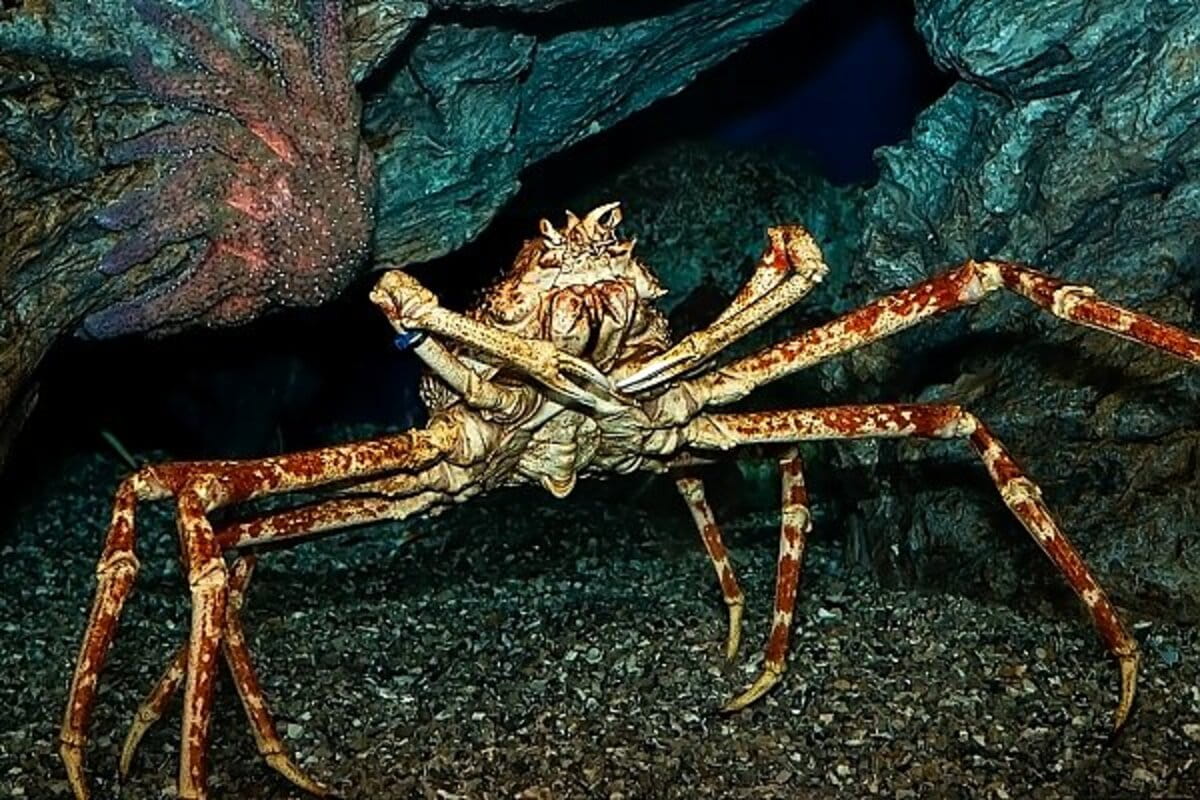
In the world of marine life, there are creatures that astonish with their size, appearance, and unusual way of living. Among them, spider crabs stand out as true giants of the deep—beings that inspire both awe and wonder. Despite their name, they are not closely related to spiders, but their body structure bears a striking resemblance, giving them an enigmatic look. You may not have known that these creatures can live for over a century, travel vast distances across the ocean floor, and possess unique survival mechanisms. Below is a collection of fascinating facts about these deep-sea dwellers, each revealing a new layer of their mysterious nature.
- Spider crabs belong to the family Lithodidae, which includes more than 120 species primarily found in the cold waters of the Pacific and Atlantic Oceans. The most well-known representative is the red king crab (Paralithodes camtschaticus), commonly encountered off the coasts of Alaska and Kamchatka. These crabs differ from typical crabs in body shape and possess long legs that resemble those of spiders. It is precisely this external similarity that earned them their common name.
- The largest known spider crab is the Japanese spider crab (Macrocheira kaempferi), which can reach a leg span of up to 3.7 meters, making it the largest arthropod on Earth. Its body can weigh up to 19 kilograms, and even heavier specimens have been recorded. This crab lives at depths of up to 600 meters and is primarily nocturnal. Despite its enormous size, it is quite elusive and rarely encountered by humans.
- Spider crabs can live exceptionally long lives—some species exceed 100 years in age. This longevity is linked to their slow metabolism, typical of cold-water marine organisms. Throughout their lives, they undergo numerous molts, shedding their exoskeleton to grow. Each molt allows them to increase slightly in size, but also leaves them vulnerable to predators during the soft-shell phase.
- Unlike many other crustaceans, spider crabs have an asymmetrical body, which helps them maneuver effectively among rocks and crevices. Their carapace is often uneven, covered with bumps and spines that provide extra protection and camouflage. This adaptation enables them to hide successfully from predators such as sea wolves and large fish. Additionally, the asymmetry aids in maintaining balance while moving across steep or uneven surfaces.
- Spider crabs are omnivorous but primarily hunt mollusks, sea urchins, worms, and other invertebrates. They use their powerful claws to crack open shells or extract soft tissues from within. When food is scarce, they may even scavenge dead conspecifics or organic debris. This scavenging behavior makes them vital contributors to the marine ecosystem by helping clean the ocean floor.
- Reproduction in spider crabs occurs only once every few years, with females laying up to 500,000 eggs in a single brood. After fertilization, the female carries the eggs under her abdomen for several months until they hatch into larvae. The larvae go through multiple developmental stages in the water column before settling on the seafloor. Only a small fraction survives to adulthood due to predation and environmental challenges.
- Spider crabs possess highly developed sensory organs, particularly their antennae, which allow them to detect chemical cues in the water. This ability helps them locate prey from considerable distances, even in the pitch-black depths. They are also sensitive to vibrations, which alerts them to approaching predators. While their eyesight is poor, it is sufficient for life on the seabed where vision plays a secondary role.
- Although spider crabs may appear intimidating, they are not aggressive and typically avoid confrontation whenever possible. When threatened, they prefer to flee or hide rather than attack. However, if cornered, they will use their claws defensively. People handling them should exercise caution, as their grip can be surprisingly strong and painful.
- Spider crabs cannot grow continuously because their exoskeleton does not expand with their body. Therefore, they must molt regularly to shed their old shell and form a new, larger one. During molting, they are extremely vulnerable and often seek shelter to avoid predators. The molting process itself can take several hours, and the new shell takes days to fully harden.
- The Japanese spider crab sometimes uses camouflage by attaching algae, sponges, or other organisms to its carapace. This helps it blend into the surrounding environment and avoid detection by predators. Such behavior is an example of symbiosis, as the attached organisms also benefit from the mobile habitat. This strategy is observed in many deep-sea creatures seeking concealment.
- Spider crabs are capable of traveling significant distances, especially during mating season or when searching for food. They crawl along the seabed using their long legs and can cover several kilometers in a single day. Their speed depends on water temperature and terrain; in colder water, their movements slow due to reduced metabolic activity.
- Humans have been harvesting spider crabs for decades, particularly the red king crab, whose meat is considered a delicacy. Overfishing has led to dramatic declines in some populations, prompting strict quotas and fishing regulations. Today, fishermen use specialized traps designed to minimize bycatch of juveniles and egg-bearing females. Conservation of these species is now a critical priority in marine management.
- Despite their massive size, spider crabs have a relatively simple nervous system based on ganglia distributed along their body. This setup allows them to coordinate movement and respond to stimuli without a complex brain. Most of their behaviors are instinctive, making them predictable in their actions. Nevertheless, they can learn from experience—for instance, avoiding traps after a previous encounter.
- Spider crabs lack an internal skeleton like vertebrates, but their external exoskeleton serves both protective and supportive functions. It is composed of chitin reinforced with calcium carbonate, making it quite tough. However, since the exoskeleton cannot stretch, molting is essential for growth. After molting, they often consume their old shell to reclaim valuable calcium.
- The temperature range suitable for spider crabs is quite narrow—from 1 to 10 degrees Celsius. They cannot tolerate warm water, so their distribution is limited to polar and subpolar regions. Climate change and ocean warming pose serious threats to their populations. Some studies suggest they may migrate even deeper in search of colder waters, though this could limit their access to food and breeding grounds.
These captivating facts about spider crabs reveal just how intricate and diverse the underwater world truly is. Though seemingly distant from human life, these creatures play a crucial role in marine ecosystems and continue to be subjects of scientific inquiry. You may not have realized how sensitive they are to environmental changes, making their conservation not only a matter of biodiversity but also a responsibility we owe to the natural world. The astonishing truths about these deep-sea inhabitants remind us that even in our modern age, countless mysteries of the ocean remain waiting to be discovered.


