
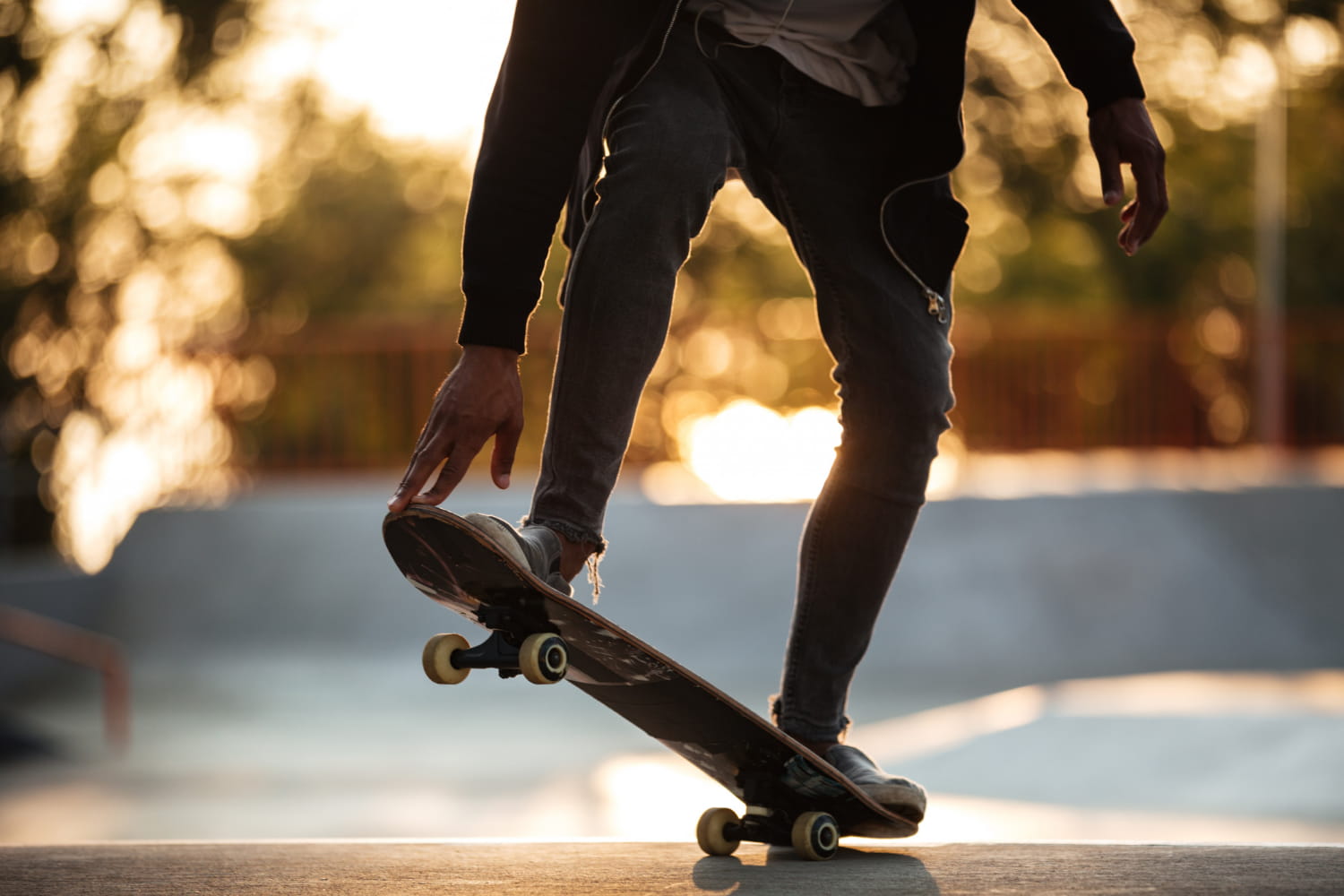
Skateboarding has traveled a journey from a surfers’ children’s pastime to a global cultural phenomenon uniting millions of enthusiasts worldwide. This extreme discipline has not only formed a unique subculture with its own fashion, music, and art, but has also become an official Olympic sport. Behind its multifaceted history, skateboarding conceals numerous incredible facts revealing its influence on modern society and mass culture. From technological innovations in board construction to revolutionary tricks that changed perceptions about the possibilities of the human body – you may not have known about the numerous aspects of this captivating phenomenon. We invite you to discover interesting facts about skateboarding that demonstrate its evolution from street entertainment to a recognized sport and art form.
- Skateboarding emerged in the 1940s-1950s in California as an alternative to surfing for days without waves. Surfers attached wheels from roller skates to wooden boards, creating the ability to practice similar movements on land. This invention was initially called sidewalk surfing, which emphasized its origin. The first skateboards were very primitive, poorly controlled, and often led to injuries due to the absence of proper construction and materials.
- The first skatepark in the world was built in 1976 in the city of Carlsbad, California, and was called Carlsbad Skatepark. Before this, skaters practiced their tricks exclusively on streets, in empty pools, and parking lots. The opening of a specialized park became a revolutionary moment as it created a safe environment for developing skills. Over the following years, hundreds of skateparks appeared throughout America, but many of them closed during the skateboarding crisis at the end of the 1970s due to insurance problems.
- The invention of the ollie in 1978 by Alan Halifax Gelfand forever changed skateboarding and opened limitless possibilities for tricks. The ollie is a basic jump where the skater lifts the board into the air without using hands, pressing on the tail and sliding the front foot forward. This trick became the foundation for thousands of other maneuvers and allowed skaters to overcome obstacles that were previously considered impossible. Rodney Mullen later adapted the ollie for street skating, which led to the birth of modern street skateboarding.
- Tony Hawk became the first skater to perform the 900-degree trick at the X Games competition in 1999 after 11 unsuccessful attempts. This trick involves two and a half rotations in the air on a ramp and was considered practically impossible for decades. Hawk was 31 years old at the time of execution, which was a relatively late age for such extreme achievements in skateboarding. His success was so iconic that ESPN broadcast the execution moment live, and it became one of the most cult moments in extreme sports history.
- Skateboarding officially debuted at the Summer Olympic Games in Tokyo in 2021, which became a historic recognition of this discipline. At the games, competitions took place in two categories: park and street, with both men and women competing. The biggest surprise was that many medals were won by very young athletes, particularly 13-year-old Japanese girl Momiji Nishiya won gold in park. The inclusion of skateboarding in the Olympic program caused controversial reactions in the skate community, where some believed this contradicted the rebellious spirit of the subculture.
- Production of a modern skateboard deck involves gluing seven layers of Canadian maple veneer under high pressure. The use of specifically Canadian maple is connected with its unique strength, flexibility, and ability to withstand constant impacts. The manufacturing process includes applying special glue between layers, pressing in a mold to create concave and nose with tail, and then drying for several days. One professional board can withstand from several weeks to several months of intensive skating depending on the skater’s style and complexity of tricks.
- Skateboarding culture had an enormous influence on fashion, spawning a clothing style that spread far beyond skatepark boundaries. Brands like Vans, DC Shoes, Thrasher, and Supreme originated in skate culture and became global fashion phenomena. Wide pants, oversized t-shirts, caps, and flat-soled sneakers became iconic style elements worn even by people who have never stood on a board. Many famous fashion designers and haute couture houses draw inspiration from skate aesthetics for their collections.
- The first skateboard wheels were made from clay or metal, which made skating extremely noisy and dangerous. The revolution occurred in 1972 when Frank Nasworthy invented polyurethane wheels that provided better grip, smoothness, and control. These wheels were quieter, more durable, and allowed performing tricks that were previously impossible due to constant slipping. The invention of polyurethane wheels is considered one of the key factors that led to the explosion of skateboarding popularity in the mid-1970s.
- Rodney Mullen is considered the most influential skater in history and inventor of over 30 fundamental tricks. Among his inventions are such classic maneuvers as kickflip, heelflip, 360 flip, and many others that became the foundation of modern technical skateboarding. Mullen dominated freestyle competitions in the 1980s, winning 35 out of 35 competitions during his career. Despite his incredible contribution, Mullen remains humble and continues innovations in skateboarding even at over 50 years of age.
- Empty pools in California became cult skating locations in the 1970s during a severe drought. When homeowners drained their pools due to water shortage, skaters began penetrating private properties to skate in these perfect concrete structures. This era gave birth to vertical skating and the Z-Boys team from Dogtown, whose story was told in a documentary and feature film Lords of Dogtown. Pools created ideal conditions for performing aerial tricks and the aggressive style that defined a generation of skaters.
- The video game series Tony Hawk’s Pro Skater, released in 1999, introduced millions of people to skateboarding and its culture. The game became one of the best-selling sports simulators of all time and had a huge impact on popularizing the sport among youth. The game soundtracks featured punk rock, hip-hop, and alternative music, which helped define the musical tastes of an entire generation. Many professional skaters claim the game brought more new people into skateboarding than any other phenomenon in history.
- Skateboard graphics and deck design became an independent art form with influential artists and cult works. Companies hired talented graphic designers and illustrators to create visually stunning designs that often reflected counterculture themes. Some skateboard decks became collectible items, and original boards from the 1980s sell at auctions for thousands of dollars. Artists like Jim Phillips, who created the iconic Screaming Hand for Santa Cruz, became legends both in the skate world and in contemporary art.
- Women in skateboarding fought long for recognition, but the last decade has brought significant progress in representation and opportunities. Pioneers like Peggy Oki in the 1970s and Elissa Steamer in the 1990s paved the way despite minimal support and sponsorship. Today, female skaters like Leticia Bufoni, Sky Brown, and Rayssa Leal are global stars with millions of followers. The Olympic Games especially highlighted the talent of young female skaters, demonstrating that the sport’s future is inclusive and diverse.
- Street skateboarding often exists in a legal gray zone, as using the urban environment for tricks is technically a violation. Many cities have laws against skating in public places, but skaters continue searching for perfect spot locations on stairs, rails, and squares. This constant game of cat and mouse with security and police has become an integral part of skate culture. Some cities, recognizing the impossibility of stopping this activity, have begun building skate plazas and legalizing skating in certain zones, finding balance between skaters’ needs and other citizens.
- Professional skaters can earn millions of dollars through sponsorship contracts, competitions, and entrepreneurial activity. Tony Hawk built an empire worth over 100 million dollars thanks to a combination of skating, video games, and business ventures. Other top skaters like Nyjah Huston earn significant sums from prize winnings at street competitions and endorsements. However, most professional skaters live modestly, supported by small sponsorship agreements and sales of their own merchandise through social media.
- Skateboard videos became critically important for documenting the sport’s progress and spreading new tricks and styles. The first significant videos like Bones Brigade Video Show in 1984 established the format still used today, with individual rider parts set to their favorite music. Modern skate videos are produced with cinematic quality and often premiere in theaters before global audiences. Platforms like YouTube and Instagram changed the way content is distributed, allowing skaters to instantly share their achievements with a worldwide audience.
- The physical demands of skateboarding are extreme, often leading to serious injuries including fractures, sprains, and concussions. Professional skaters regularly risk their health, descending multi-meter rails or performing complex aerial maneuvers. Despite the evolution of protective equipment, many street skaters refuse helmets and knee pads due to cultural norms. Long-term consequences of decades of skating can include chronic joint pain, back problems, and arthritis, forcing many professionals to end their careers at ages 30-40.
- The skateboard industry generates billions of dollars annually through the sale of boards, footwear, clothing, and related goods. In the US alone, the skateboarding market is estimated at approximately 2 billion dollars per year. Major corporations like Nike and Adidas have invested significant resources in developing skate footwear lines, competing with traditional skate brands. The growth of online sales and globalization have made skateboard products accessible even in the most remote corners of the world.
- Skateboarding as a form of urban mobility is gaining popularity in large cities as an ecological alternative to transportation. Many people use longboards and cruisers for daily commutes to work or school, bypassing traffic jams and reducing carbon emissions. Cities like Berlin, Portland, and Barcelona have become especially favorable for skate commuters with smooth sidewalks and tolerant attitudes. Electric skateboards have added a new dimension to this practice, allowing longer distances and less physical strain.
Fascinating facts about skateboarding demonstrate how this discipline evolved from a simple children’s pastime to a global phenomenon influencing sport, art, fashion, and urban culture. The incredible achievements of skaters, technological innovations, and cultural impact continue shaping the landscape of modern extreme sports. Skateboarding remains a unique combination of athleticism, creativity, and self-expression, inspiring new generations around the world. Now, having learned about the multifaceted history and culture of skateboarding, you can more deeply appreciate the mastery and dedication of those who have devoted their lives to this art on wheels.


