
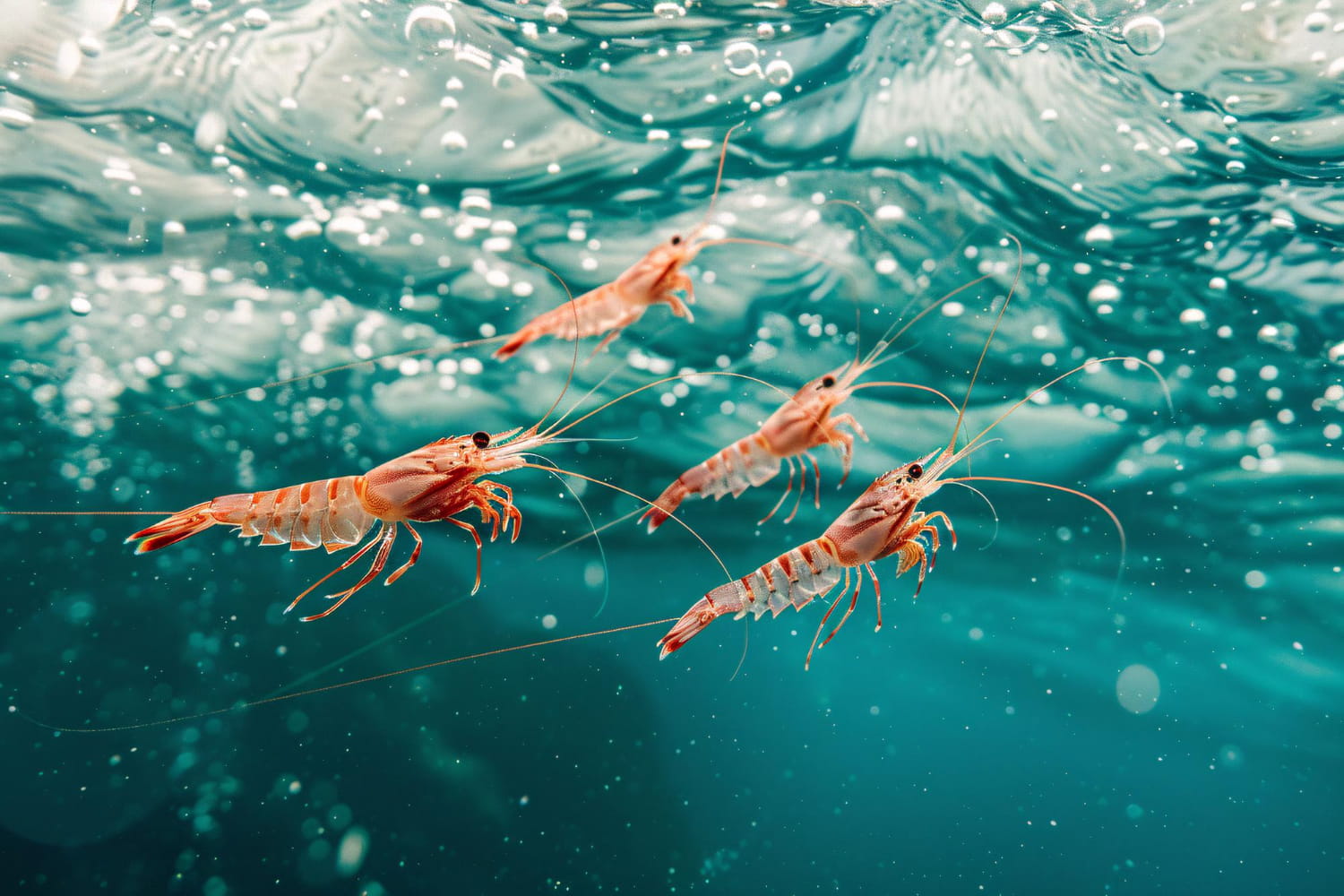
The underwater world harbors countless remarkable creatures, and shrimp hold a special place among them thanks to their uniqueness and extraordinary diversity. These small crustaceans hiding in ocean depths, coral reefs, and even freshwater habitats can astonish even the most experienced marine researchers. Amazing facts about shrimp reveal a world of unusual survival mechanisms, astonishing adaptations, and natural sophistication that often goes unnoticed. You might not know that these seemingly simple creatures possess complex behaviors, remarkable physiological traits, and play a vital role in marine ecosystems. Fascinating facts about shrimp invite us to look anew at these inhabitants of the aquatic realm.
- Shrimp belong to the crustacean class and possess an external skeleton made of chitin that protects their bodies from injury and predation. This exoskeleton undergoes regular renewal through a process called molting, during which the animal sheds its old shell and forms a new, larger one underneath. While molting, shrimp become especially vulnerable and typically hide until their new shell fully hardens, which may take several hours or days depending on the species. Interestingly, many shrimp consume their discarded exoskeleton afterward to reclaim valuable calcium and other minerals essential for building the next shell.
- The heart of a shrimp is located in its head region rather than in the thorax or abdomen, which represents an unusual anatomical arrangement among animals. This positioning allows efficient distribution of blood throughout the body despite the creature’s compact size and segmented structure. Shrimp blood contains hemocyanin instead of hemoglobin, giving it a distinctive bluish color when oxygenated due to copper molecules transporting oxygen. This circulatory system functions effectively in aquatic environments where oxygen levels can fluctuate significantly with depth and temperature.
- Shrimp possess an exceptionally developed sense of smell thanks to their long antennae covered with thousands of microscopic chemoreceptors. These sensory organs enable them to detect minute concentrations of food particles from considerable distances even in complete darkness or murky water. Their antennae also serve as tactile sensors, helping shrimp navigate complex environments, avoid obstacles, and locate shelter on the seafloor. Some species even use specific antennae movements to communicate with one another during social interactions or mating rituals.
- Many shrimp species function as natural cleaners in marine ecosystems, providing valuable services to other sea creatures by removing parasites, dead skin, and debris from their bodies. Fish often visit specific locations known as cleaning stations where shrimp work like underwater healthcare specialists, meticulously grooming their clients. This mutualistic relationship benefits both parties since shrimp receive food while their clients enjoy improved health and hygiene. Cleaner shrimp frequently display bright, distinctive coloration that signals their professional role to potential clients swimming nearby.
- Shrimp have the remarkable ability to regenerate lost limbs during subsequent molting cycles, which serves as an essential survival mechanism in predator-rich environments. When threatened by a predator grasping a leg or claw, a shrimp can voluntarily detach the appendage through a process called autotomy and make a quick escape. The regeneration process begins immediately but becomes visible only after the next molt, with complete restoration sometimes requiring multiple molting cycles. This regenerative capacity significantly increases their chances of survival following encounters with hungry predators.
- Certain shrimp species, particularly pistol shrimp or snapping shrimp, can produce powerful shockwaves resembling gunshots using a specialized mechanism in their asymmetrical claws. By rapidly closing their larger claw, they create a cavitation bubble that collapses with such force it generates temperatures briefly rivaling the sun’s surface and produces a flash of light called sonoluminescence. The resulting sound reaches up to 200 decibels, enough to stun or kill small prey items within a few centimeters of the shrimp. This extraordinary hunting technique makes them among the most formidable miniature predators in the ocean despite their small size.
- Shrimp eyes are compound structures composed of thousands of individual optical units called ommatidia that provide nearly 360-degree vision around their bodies. This panoramic visual field allows them to detect approaching predators from virtually any direction, a crucial advantage for such small creatures near the bottom of the food chain. They can also perceive polarized light patterns invisible to human eyes, which helps them navigate, communicate, and locate objects in turbid water conditions. Despite their sophisticated visual systems, shrimp sleep with their eyes open since they lack eyelids to close during rest periods.
- Numerous shrimp species exhibit bioluminescence, producing their own light through chemical reactions within specialized cells in their bodies. This self-generated illumination serves multiple purposes including startling predators, attracting potential mates during breeding seasons, and counter-illumination camouflage against downwelling light. Some deep-sea shrimp release glowing secretions as defensive smokescreens to confuse attackers while making their escape into darkness. This adaptation proves essential for survival in the lightless depths where sunlight never penetrates below two hundred meters.
- Shrimp can change their coloration for camouflage purposes using specialized pigment-containing cells called chromatophores distributed throughout their exoskeleton. This ability allows them to blend almost perfectly with sandy bottoms, coral branches, or seagrass beds depending on their immediate surroundings and perceived threats. Some tropical species display vibrant colors during courtship displays or when threatened as a warning signal to potential predators about their toxicity or unpalatability. The speed of color transformation varies by species but can occur in mere seconds when the shrimp feels suddenly endangered.
- Shrimp play a fundamental role in nutrient cycling within marine ecosystems by consuming organic debris, plankton, and detritus that would otherwise accumulate on the seafloor. They serve as a critical link in aquatic food webs, converting microscopic nutrients into biomass accessible to larger predators including fish, crabs, cephalopods, and marine mammals. While feeding, many shrimp species filter substantial water volumes, contributing to water clarity and controlling microbial populations in their habitats. Without these small but numerous crustaceans, ocean ecosystems would experience significant disruptions in energy flow and ecological balance.
- Certain shrimp species live in close symbiotic relationships with sea anemones, gaining protection from the anemone’s stinging tentacles while providing cleaning services in return. The shrimp carefully navigate among the anemone’s tentacles without triggering stings, thanks to a protective mucus coating that masks their chemical signature from the anemone’s nematocysts. In exchange for shelter, the shrimp bring food particles to their host and remove parasites that might harm the anemone’s health. This mutually beneficial partnership often lasts throughout the lifetimes of both organisms, demonstrating nature’s capacity for cooperative survival strategies.
- Shrimp inhabit an astonishing variety of aquatic environments ranging from sunlit tropical reef shallows to hydrothermal vents several kilometers deep in complete darkness. Some species thrive in freshwater rivers and lakes far from oceanic influence, while others survive in hypersaline lagoons where salt concentrations would prove lethal to most marine life. Deep-sea shrimp have evolved to withstand crushing pressures, near-freezing or scalding temperatures, and total absence of sunlight around geothermal vents. This extraordinary adaptability makes shrimp one of the most widely distributed invertebrate groups across Earth’s aquatic habitats.
- Female shrimp carry thousands of fertilized eggs attached to specialized appendages called pleopods underneath their abdomens until the larvae hatch. During this incubation period lasting days to weeks depending on species and water temperature, the mother continuously fans the eggs with her swimmerets to provide oxygen and prevent fungal growth. After hatching, the planktonic larvae drift in open water undergoing multiple developmental stages before settling to the bottom as miniature versions of adults. Only a tiny fraction of these larvae survive to adulthood due to intense predation pressure throughout their vulnerable early life stages.
- Shrimp possess taste receptors not only in their mouths but also distributed across their legs, antennae, and other body parts, allowing them to sample potential food before fully committing to consumption. This distributed gustatory system enables efficient foraging in dark or murky environments where visual identification of food proves difficult or impossible. They can distinguish nutritious items from inedible material through chemical cues detected by these peripheral taste sensors even without direct mouth contact. This sensory adaptation proves particularly valuable for bottom-dwelling species that scavenge among sediments and debris.
- Some shrimp species exhibit sequential hermaphroditism, meaning they can change sex during their lifetime—a relatively rare phenomenon in the animal kingdom. Certain tropical cleaner shrimp begin life as males and later transform into females when they reach a particular size or when population dynamics favor additional egg producers. This reproductive flexibility helps maintain optimal sex ratios within populations facing environmental fluctuations or demographic challenges. Such adaptability enhances the species’ long-term survival prospects by maximizing reproductive output under varying ecological conditions.
- Shrimp move forward using four pairs of walking legs but can propel themselves backward with remarkable speed by rapidly flexing their muscular abdomen against the tail fan. This escape response, called the caridoid escape reaction, allows them to dart away from threats at speeds covering several body lengths in a fraction of a second. The tail-flip mechanism provides crucial milliseconds of advantage when evading predators that rely on ambush tactics near the seafloor. This bidirectional mobility makes shrimp surprisingly agile despite their small size and seemingly delicate appearance.
- Shrimp rank among Earth’s oldest animal groups, with ancestors appearing during the Cambrian period more than five hundred million years ago. Fossil evidence of ancient crustacean-like organisms resembling modern shrimp has been discovered on every continent, demonstrating their evolutionary persistence across geological eras. Throughout millions of years of evolution, shrimp have maintained a fundamentally successful body plan with relatively minor modifications to suit changing environments. This evolutionary longevity marks them as living witnesses to the deep history of animal life on our planet.
- Shrimp possess a decentralized nervous system organized as a chain of ganglia running along their ventral nerve cord rather than a single centralized brain. This distributed neural architecture enables rapid reflex responses to environmental stimuli without requiring complex cognitive processing for basic survival functions. Despite this relatively simple organization, research shows some shrimp species can learn to navigate mazes, recognize individual conspecifics, and remember locations of shelter or food sources. This neurological arrangement represents an efficient solution for small invertebrates requiring quick reactions in complex three-dimensional aquatic environments.
Fascinating facts about shrimp reveal nature’s incredible capacity for adaptation and diversity within even the smallest creatures. These diminutive crustaceans, often overlooked in favor of larger marine animals, demonstrate sophisticated biological solutions refined over hundreds of millions of years of evolution. Understanding shrimp enriches our appreciation of ocean ecosystems and underscores the interconnectedness of all marine life forms. Each remarkable trait these animals possess contributes to the delicate balance that sustains life beneath the waves.


