
Shamanism represents one of the most ancient spiritual practices of humanity, with roots reaching deep into antiquity and connecting diverse cultures across the globe. Many people perceive this phenomenon merely as an exotic ritual, but in reality it constitutes a complex system of beliefs and interaction with the world of spirits. You might not know that this tradition possesses a clear structure and its own unique methods for achieving altered states of consciousness for healing and predicting the future. In this article we will examine fascinating facts that will help better understand the essence of this mystical phenomenon and its influence on the history of human civilization.
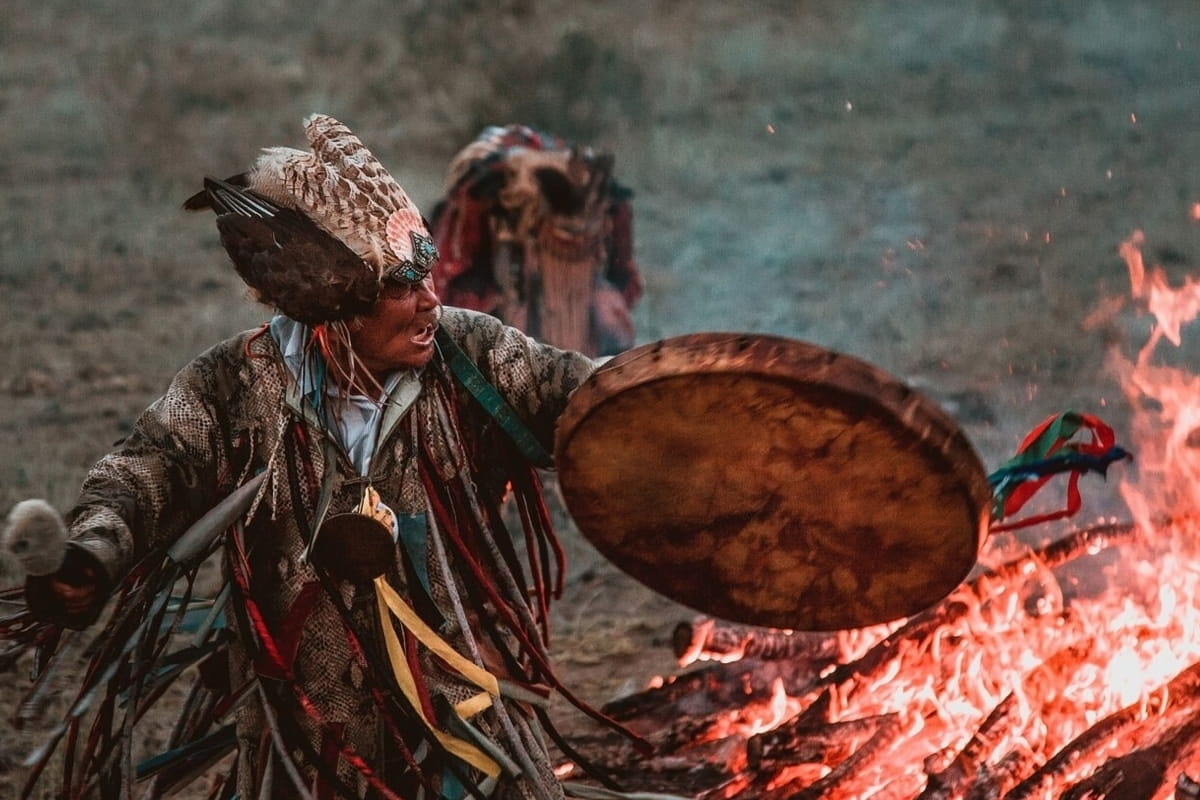
- Shamans frequently use special drums or tambourines as their primary tool for entering a trance state. The rhythmic beating creates a monotonic sound that helps the brain transition into alpha or theta states necessary for journeying to other dimensions. This process is called shamanic journeying because the sound is believed to carry the practitioner’s soul into the spirit world. Such a method is universal across many cultures from Siberia to North America.
- The term shaman originates from Tungusic-Manchurian languages and literally translates as one who knows or one who is elevated. This word entered broad scientific usage thanks to research by Russian ethnographers in the seventeenth century. Initially it was applied exclusively to practitioners among Siberian peoples, but later became a general designation for all similar spiritual leaders. It is important to understand that representatives of other cultures may have completely different names for their healers.
- In many traditions a person does not become a shaman by their own choice but rather through what is called a calling from the spirits. Often this selection is accompanied by a serious illness or psychological crisis known as shamanic sickness. The individual must accept their gift and undergo training with an experienced mentor to learn how to control their abilities. Refusing the calling can lead to serious consequences for the person’s physical and mental health.
- A classic shamanic costume often includes elements symbolizing birds or other animals considered to be spirit helpers. Metal pendants and mirrors on the clothing serve not only as decoration but also as protection against malevolent entities during rituals. Each element of the attire carries sacred meaning and is passed down through generations or created specifically for a particular practitioner. The weight of such a costume can be considerable, which additionally facilitates immersion into a trance state through physical exertion.
- Shamanism is not an organized religion with unified sacred texts or a centralized hierarchy. It represents a collection of local practices that vary significantly depending on geographic region and the cultural context of a tribe. Nevertheless all of them share a common belief that a shaman can travel between the worlds of humans and spirits. This flexibility allows the tradition to adapt to different conditions and persist across millennia.
- Plants containing psychoactive substances are often used as auxiliary means for achieving altered states of consciousness. For example Amazonian shamans prepare a beverage called ayahuasca which enables them to see spiritual visions and receive information from ancestors. In Siberian traditions the fly agaric mushroom may be used, although its application is less widespread than popular culture often portrays. Safety and proper dosing represent critically important aspects of such rituals.
- Shamans fulfill the role of intermediaries not only between people and spirits but also between the community and nature. They are responsible for maintaining harmony with the environment and may conduct rituals to ensure successful hunting or harvests. This ecological aspect of shamanism becomes increasingly relevant in the modern world where people seek ways to restore their connection with the earth. Respect for all living beings constitutes a fundamental value within this worldview system.
- There exists a division among shamans between those who journey to the upper world and those who descend to the lower world. The upper world is often associated with celestial deities and ancestral spirits while the lower world connects with earth forces and animal helpers. The middle world represents our ordinary physical space where certain local spirits also reside. A shaman’s mastery lies in the ability to move safely between these levels of reality.
- In some cultures shamans may be either men or women and sometimes individuals of a third gender. For instance among indigenous peoples of North America there exist two-spirit people who combine masculine and feminine energies and are considered especially gifted. Such an approach demonstrates tolerance and flexibility within shamanic traditions regarding gender roles in society. The primary criterion always remains a person’s abilities rather than their biological sex.
- Contemporary neoshamanism emerged in the West during the twentieth century as an attempt to revive ancient practices outside their original cultural context. Although this made shamanism more accessible to a broader audience such an approach is frequently criticized for commercialization and oversimplification of complex traditions. Many indigenous peoples express concern about cultural appropriation of their sacred knowledge. It is important to approach these practices with respect and a desire for deep study rather than mere exploitation.
Examining these incredible facts we realize that shamanism remains a living language of the soul that continues to speak to us across millennia. It reminds us of invisible threads connecting human consciousness with the mysterious depths of nature and cosmic order. Modern individuals may find in this ancient tradition not merely a historical curiosity but also a profound source of inner harmony and ecological wisdom. True understanding of these practices opens doors to comprehending how our ancestors perceived themselves as an inseparable part of a unified universe.


