
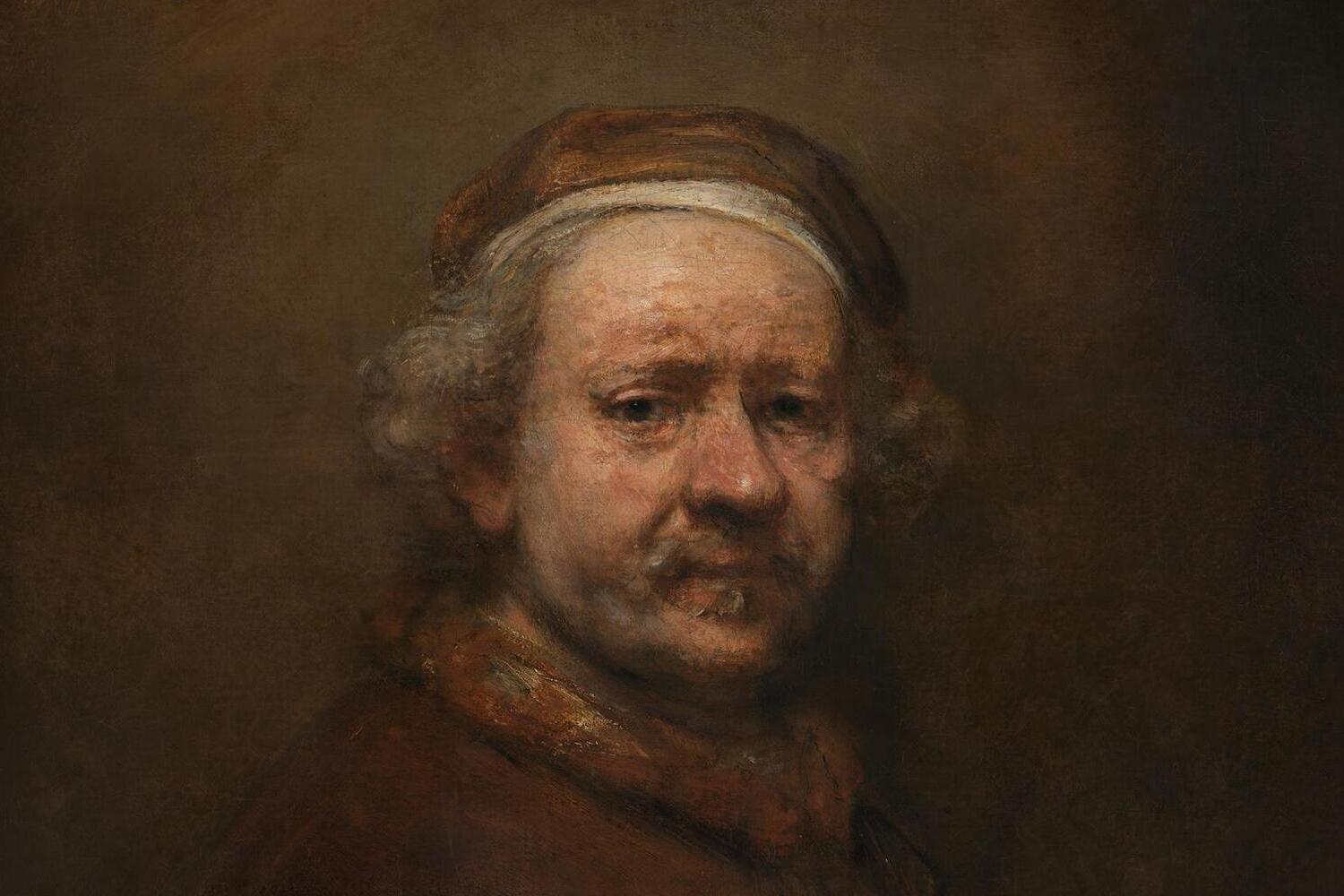
Rembrandt van Rijn is one of the greatest artists in human history, whose work became a symbol of the Dutch Golden Age of painting. His art is known for its deep psychological insight, masterful use of light and shadow, and extraordinary attention to detail. Throughout his life, Rembrandt created hundreds of paintings, engravings, and drawings, many of which are considered priceless masterpieces. His life was filled with mystery, triumph, and tragedy, making him one of the most fascinating figures in the history of art. Below are interesting and educational facts about Rembrandt van Rijn that you might not have known.
- Rembrandt was born on July 15, 1606, in Leiden, in the family of a wealthy miller. His full name was Rembrandt Harmenszoon van Rijn, which means “son of Harmen from the Rhine.” From a young age, he showed a natural talent for drawing and received a solid education.
- He studied at Leiden University but left to devote himself entirely to art. His first teacher was Jacob van Swanenburgh, who taught him the basics of composition and light. Later, Rembrandt trained in Amsterdam under Pieter Lastman, a well-known painter of historical scenes.
- Rembrandt signed his paintings only with his first name, which was unusual for artists of the seventeenth century. This choice reflected his confidence in his talent and individuality. Over time, “Rembrandt” became one of the most recognizable signatures in art history.
- He was among the first artists to focus not only on the outward appearance of his subjects but also on their inner emotions and psychology. His portraits reveal the depth of human feeling, making them strikingly realistic and emotionally powerful.
- Rembrandt created more than ninety self-portraits, which is a record among artists of his time. In them, he depicted himself at different stages of life, in various moods and roles—from a young successful painter to an aged man filled with reflection. These self-portraits are like a visual diary of his life.
- His most famous work, “The Night Watch,” was painted in 1642. Interestingly, the scene actually takes place in daylight, but the varnish darkened over the centuries, giving it its iconic name. Today, the painting stands as one of the most celebrated masterpieces in the world.
- In addition to painting, Rembrandt was an outstanding printmaker. His etchings are admired for their precision, control of light and shadow, and incredible depth. In his lifetime, his prints were as highly valued as his paintings.
- Rembrandt ran his own art school, teaching more than forty students. Among them were future masters such as Gerrit Dou, Ferdinand Bol, and Carel Fabritius. His teaching method encouraged studying nature closely and developing one’s unique artistic style.
- Despite his success, Rembrandt faced financial difficulties later in life. He lived lavishly, buying antiques, fine clothes, weapons, and props for his paintings. In 1656, he declared bankruptcy, and all his possessions were sold at auction.
- His personal life was marked by tragedy. His beloved wife, Saskia, who often modeled for his paintings, died young. Of their four children, only one son, Titus, survived to adulthood, but he too passed away before his father.
- After Saskia’s death, Rembrandt lived with Hendrickje Stoffels, his housekeeper, who became his life partner and muse. She supported him through hard times, and her face appears in many of his later works.
- Rembrandt was obsessed with studying the effects of light and shadow. His use of chiaroscuro—the contrast between light and dark—revolutionized European painting. He experimented with illumination to achieve maximum emotional depth in his compositions.
- Some of his contemporaries criticized his painting style as “careless” or “rough.” However, what they saw as imperfection later became recognized as a mark of genius. Today, his free brushwork is admired for its realism and vitality.
- He often used his own features or those of people he knew to portray biblical figures. By doing so, he gave religious scenes a human dimension, making them more relatable and emotionally authentic.
- Rembrandt was an exceptional observer of the human soul. His characters appear alive, filled with emotion, introspection, and dignity. His art captures not just physical likeness but the essence of human experience.
- He was also an avid collector. His home was filled with antique sculptures, exotic fabrics, masks, weapons, and rare books. These items often appeared as props in his paintings, helping him create a sense of realism and atmosphere.
- In his biblical paintings, Rembrandt focused less on religious dogma and more on human emotion. Works like “The Return of the Prodigal Son” and “The Sacrifice of Isaac” convey deep compassion, empathy, and moral strength.
- In his later years, Rembrandt lived modestly but never stopped working. He died on October 4, 1669, in Amsterdam, in relative poverty. He was buried in an unmarked grave at Westerkerk cemetery.
- After his death, his work fell into temporary obscurity. Only in the nineteenth century did art historians rediscover his genius, recognizing him as one of the greatest painters of all time.
- Today, Rembrandt’s paintings are housed in the world’s leading museums, including the Rijksmuseum in Amsterdam, the Louvre in Paris, the National Gallery in London, and the Hermitage in Saint Petersburg. Their financial value reaches millions, while their cultural significance is beyond measure.
- Rembrandt’s influence on art is immeasurable. His mastery of light, emotion, and human depth inspired countless artists, including Goya, Van Gogh, Renoir, and Picasso.
Rembrandt van Rijn left behind a legacy that unites realism and spirituality. These fascinating facts prove that true genius transcends time, changing the way humanity perceives art. His work reminds us that the strength of the human spirit and the beauty of the inner world can live forever in every stroke of the brush.


