
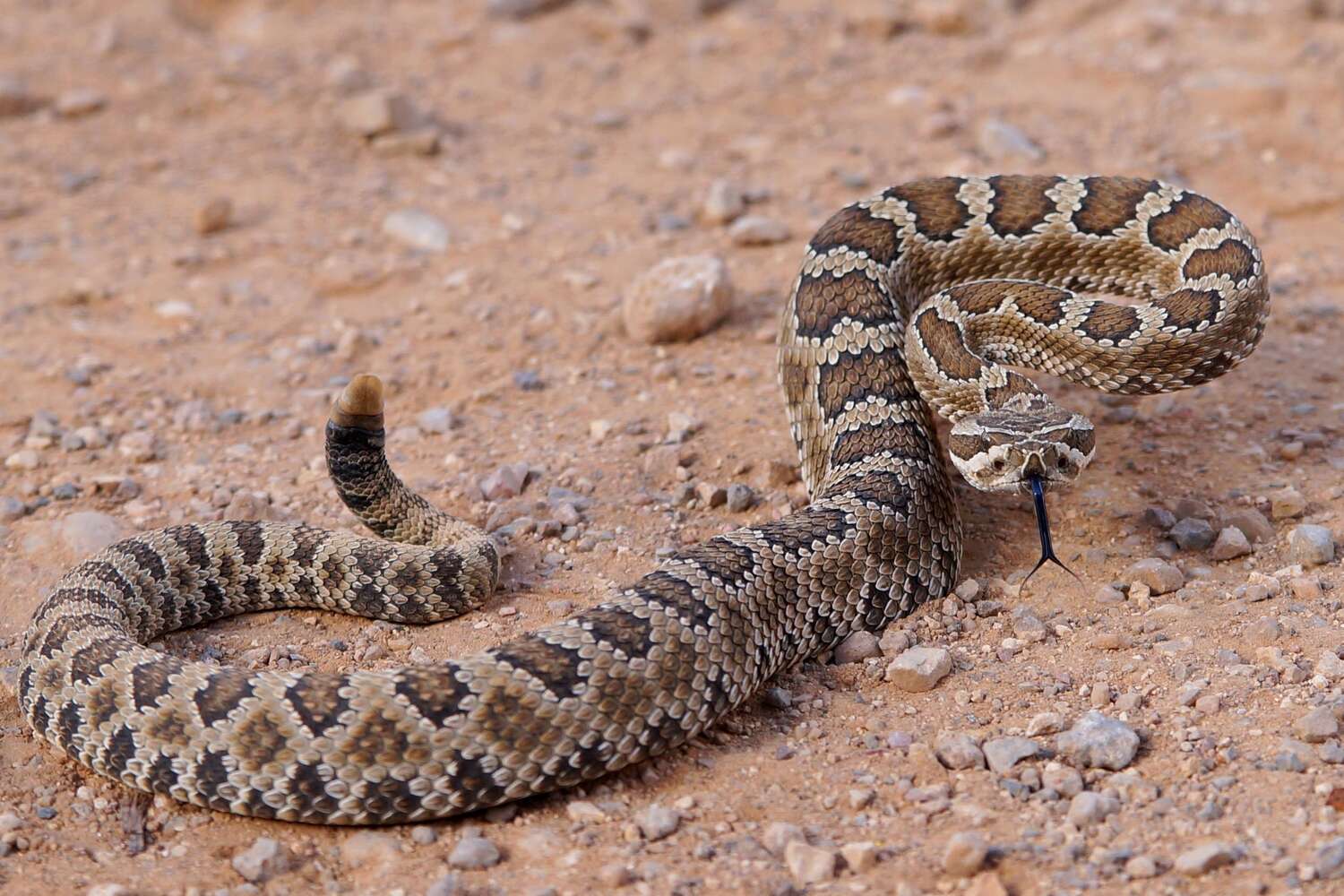
Rattlesnakes are among the most famous and dangerous reptiles of the American continent. These unique creatures have developed incredible adaptations for survival in the most diverse conditions over millions of years of evolution. From scorching deserts to mountain plateaus, from tropical forests to swampy areas – rattlesnakes have conquered vast territories. Their characteristic rattle on the tail, deadly venom, and extraordinary sensory abilities make them true masterpieces of natural engineering. You may not have known many fascinating facts about these reptiles that will change your perception of them.
- The rattlesnake got its name thanks to a unique organ at the end of its tail, which consists of keratin segments. Each time the snake sheds its skin, a new segment is added to the rattle, but this does not mean that you can accurately determine the snake’s age by their number. The fact is that rattlesnakes can shed several times a year, and old segments often break off due to physical wear. The sound of the rattle occurs due to the friction of hollow keratin rings against each other and can reach a frequency of up to 90 times per second.
- In nature, there are about 36 species of rattlesnakes, which are divided into two main genera. All of them are endemic to the Americas and are found exclusively on this continent – from southern Canada to Argentina. The greatest diversity of species is observed in Mexico and the southwestern states of the USA. Some species inhabit altitudes of over 4,500 meters above sea level in the Andes, making them among the highest-altitude snakes in the world.
- Rattlesnakes possess a unique thermolocation organ located in pits between the nostrils and eyes. These heat-sensitive sensors allow the snake to detect infrared radiation from warm-blooded animals in complete darkness. Thanks to this ability, a rattlesnake can create a three-dimensional thermal image of its surroundings and accurately determine the location of prey even at a distance of up to one meter. Thermolocation is so precise that the snake can detect temperature differences of less than 0.003 degrees Celsius.
- Rattlesnake venom is a complex mixture of various toxins that affect the blood, nervous system, and muscles of the victim. The venom contains over 100 different proteins and enzymes that destroy cells, disrupt blood clotting, and cause tissue necrosis. Interestingly, the composition of venom can vary significantly not only between species but even between individuals of the same species depending on geographical location. One medium-sized rattlesnake can produce enough venom to kill up to 10 adult humans, although it rarely injects the entire dose in one bite.
- These reptiles are ovoviviparous, which means that the female does not lay eggs but gives birth to live young. Pregnancy in rattlesnakes lasts from 90 to 180 days depending on the species and climatic conditions. At one time, a female can give birth to 4 to 25 babies, which are born already fully formed and capable of hunting independently. Newborn snakes have functioning venom glands and even more toxic venom compared to adults, which compensates for their small size.
- Rattlesnakes can go without food for several months, especially during the winter period. Their metabolism is so slow that one full meal is enough for weeks or even months. After consuming large prey, the snake can increase in diameter twofold, and the digestion process can last from a week to a month. During digestion, the rattlesnake’s heart increases by 40 percent to provide additional blood flow for processing food.
- The largest rattlesnake in the world is the eastern diamondback rattlesnake, which can reach a length of over 2.4 meters and a weight of up to 15 kilograms. This species inhabits the southeastern United States and is considered the heaviest venomous snake in North America. In contrast, the smallest species is the pygmy rattlesnake, which rarely exceeds 40 centimeters in length. Despite the difference in size, all rattlesnakes have similar body structure and lifestyle.
- These snakes play an important role in controlling rodent populations in their ecosystems. One rattlesnake can eat up to 50 rodents per year, making them natural regulators of mice and rat populations. Studies show that in regions where rattlesnake populations have declined due to human activity, the number of rodents has increased sharply, leading to an increase in cases of Lyme disease and other illnesses. Thus, rattlesnakes are an important element of ecological balance.
- Rattlesnakes have an extremely slow strike speed compared to other venomous snakes, but this is compensated by accuracy. The average attack speed is about 3 meters per second, which is one of the slowest among venomous snakes. However, thanks to thermolocation and the ability to accurately calculate the trajectory of the victim’s movement, rattlesnakes have an incredibly high percentage of successful attacks. They can strike a target even in the air if the prey jumps.
- Winter hibernation of rattlesnakes can last up to eight months in the northern parts of their range. They gather in large groups in underground caves or rock crevices where the temperature remains stable. Up to a thousand individuals of different snake species, including non-venomous ones, can gather in one hibernaculum. This phenomenon is called hibernation, and it allows snakes to survive in harsh winter conditions when the temperature drops below zero.
- The average lifespan of rattlesnakes in the wild is from 10 to 25 years depending on the species. In captivity with proper care, they can live over 30 years. The oldest recorded rattlesnake was an eastern diamondback rattlesnake individual that lived 37 years in a zoo. The high mortality rate in the wild is associated with predation, traffic accidents, and persecution by humans.
- Rattlesnakes have a unique tooth replacement system throughout their lives. Their venomous fangs can reach lengths of up to 15 millimeters in large species and are hollow inside, like medical needles. When the snake closes its mouth, the fangs fold back and lie parallel to the upper jaw. During its lifetime, one rattlesnake can replace over 100 sets of fangs, as they regularly break or fall out.
- Some species of rattlesnakes demonstrate extraordinary resistance to their own venom and the venom of other snakes. This is explained by the presence of special proteins in the blood that neutralize toxins. Researchers have found that the king rattlesnake can eat other venomous snakes without any consequences for itself. This immune adaptation developed over millions of years and is an example of coevolution between predator and prey.
- The coloration of rattlesnakes is perfectly adapted to their habitat and serves as camouflage. Desert species have a sandy color with brown spots, forest species have green-brown coloration, and mountain species can be almost black. This camouflage coloration helps them hide not only from predators but also from potential prey. Some species can slightly change the intensity of their coloration depending on the ambient temperature.
- Rattlesnakes have an incredibly developed sense of smell thanks to their forked tongue and the special Jacobson’s organ. They constantly stick out their tongue, collecting chemical particles from the air and surfaces, and then analyze them in the oral cavity. This organ is so sensitive that it allows the snake to determine the direction in which prey passed, even several hours after its passage. With the help of smell, rattlesnakes also find mates during the breeding season and recognize the territorial boundaries of other individuals.
- During hunting, rattlesnakes use ambush tactics and can remain absolutely motionless for many hours. Their endurance in this state is amazing – a snake can lie in one position for over 24 hours, waiting for prey to appear. This hunting method is energy efficient as it does not require active pursuit of the victim. After a successful attack, the snake releases the bitten prey and tracks it using smell, waiting for the venom to take effect.
Incredible facts about rattlesnakes demonstrate the complexity of evolutionary adaptations of these reptiles. From their unique sensory systems to their important ecological role in nature, it becomes clear why these creatures deserve not fear but respect and protection. Many species of rattlesnakes today are under threat due to habitat destruction and deliberate extermination by humans. Fascinating facts about their lives remind us of the need to preserve the biological diversity of our planet.


