
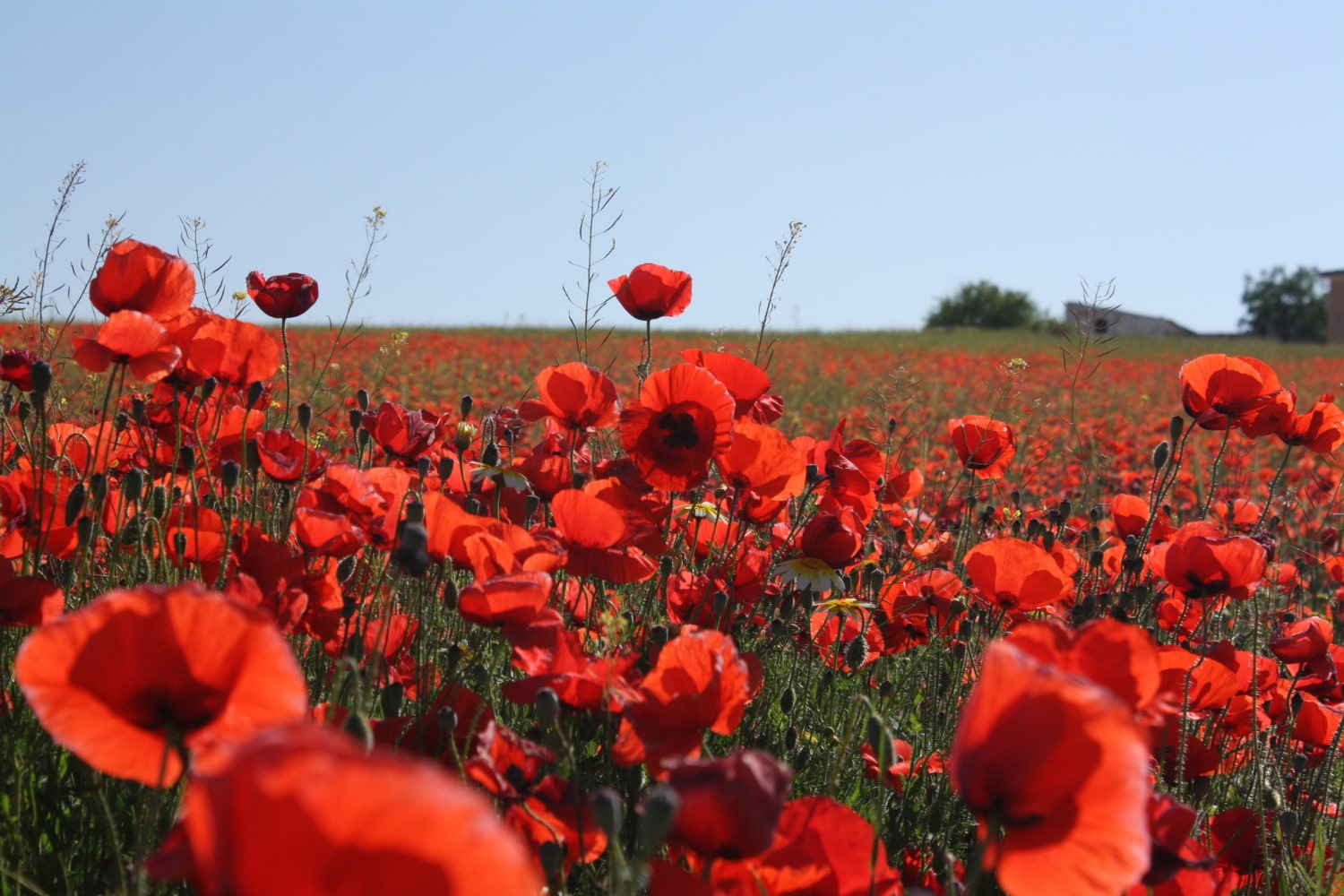
Poppies have fascinated people for centuries thanks to their vivid petals, delicate structure and deep symbolism present across many cultures. They appear in legends, poetry, painting and even culinary traditions, highlighting the remarkable versatility of this plant. Many intriguing and enlightening facts about poppies are linked to their historical importance, medicinal applications, artistic value and ecological role. You might not know how significantly this seemingly simple flower has influenced culture, nature and scientific knowledge. That is why these interesting facts about poppies help reveal the true uniqueness of this plant.
- Poppies belong to the poppy family and include more than seventy species found in various climate zones. Most of them prefer temperate regions, although some species thrive even in mountainous areas. They naturally grow throughout Eurasia and North Africa, and many have adapted successfully in the Americas. Such wide distribution proves their strong adaptability.
- The intense red colour of poppy petals comes from high levels of anthocyanins, natural pigments with antioxidant properties. The colour palette varies depending on species and environmental factors. Some poppies bloom in pink, yellow or white shades. This diversity makes poppies highly valued as ornamental plants.
- A poppy capsule has a distinctive structure and opens through tiny holes located at the top once it ripens. When the wind blows, the seeds are gradually released, resembling the action of an hourglass. This mechanism allows the plant to spread its seeds steadily over large areas. It increases the chances of successful germination in different environments.
- Poppy seeds are rich in healthy fats and minerals, which is why they are widely used in cooking. Their light nutty flavour adds a pleasant texture to dishes. They are common ingredients in pastries, desserts and traditional recipes across many cultures. As a result, poppy seeds have become an essential part of culinary heritage.
- The poppy is considered a symbol of remembrance in many countries, especially after the First World War. Bright red flowers appearing on devastated battlefields inspired poets and became a tribute to fallen soldiers. On commemorative days people in some countries attach paper poppies to their clothing. This tradition has become deeply emotional and remains significant today.
- Wild poppies often grow on freshly disturbed fertile soil, such as areas affected by fire or ploughing. Their seeds can remain dormant underground for decades, waiting for favourable conditions to sprout. This ability helps poppies survive in unstable ecosystems. When the conditions become optimal, they can bloom across vast landscapes.
- Poppies show noticeable sensitivity to moisture, and their petals and stems react quickly to weather changes. During rain the flower closes to protect its pollen from being damaged by water. This behaviour helps safeguard the plant’s reproductive organs. It significantly improves the chances of successful pollination.
- The milky latex found in the stems of certain species, including the opium poppy, contains alkaloids with pharmacological effects. Under strict regulation these compounds are used in the production of strong pain-relief medicines. However, the plants themselves can be toxic if used improperly. For this reason the cultivation of opium poppies is legally controlled in many countries.
- The Oriental poppy is one of the most admired decorative species, known for its large flowers and long blooming period. It is often grown in gardens, parks and flowerbeds due to its striking colours. This plant tolerates cold winters well and can grow in the same spot for many years. It creates vivid accents in green landscapes.
- Poppies play an essential role in natural ecosystems by providing nectar and pollen for many pollinating insects. Bees, bumblebees and other pollinators frequently visit the flowers during blooming season. This ensures plant reproduction and supports the stability of plant communities. In this way poppies contribute to preserving biodiversity.
- Poppy seed oil, extracted from the seeds, is used in both cooking and cosmetics. It has a mild aroma and contains beneficial fatty acids. The oil works well in salads and is suitable for skin and hair care. Its light texture and nourishing qualities make it highly valued.
- Poppies can adapt to different types of soil, although they grow best in sunny, well-drained areas. Excessive moisture may damage the roots, which is why moderate watering is important. Young plants are sensitive to weed competition during early development. Proper care ensures abundant flowering.
- Some poppy species have been used in traditional medicine throughout many cultures. Infusions and decoctions made from the plant were believed to have calming or anti-inflammatory properties. Although modern science treats such methods with caution, historical evidence shows the significant role of poppies in past healing practices. Using such remedies requires careful consideration.
- Poppies are widely represented in art as symbols of beauty, fragility and deep emotion. They appear in paintings, textiles and decorative crafts. Artists appreciate their vivid colours and strong contrast. This has made poppies one of the most popular floral motifs in artistic expression.
These interesting and captivating facts about poppies show how multifaceted and extraordinary this plant is. It combines visual beauty, historical symbolism and practical usefulness, forming a meaningful cultural element across many societies. You might not have known about many hidden qualities of poppies that have shaped both nature and human culture. All this proves that poppies hold an important place in ecological and cultural life.


