
Podolia is far more than just a geographical region in southwestern Ukraine—it is the very heart of Ukrainian history, culture, and natural beauty. Here, every hill whispers a legend, every river carries memories of centuries past, and ancient towns preserve the spirit of the Cossack era, noble grandeur, and folk wisdom. The landscapes of Podolia captivate with their picturesque charm: Dniester River canyons, vineyards, oak groves, and whitestone villages create a unique scenery unlike any other. If you thought you already knew everything about this region, prepare to discover a wealth of fascinating facts you may never have heard before. Below is a collection of the most intriguing and lesser-known details about Podolia.
- Podolia spans several Ukrainian oblasts, primarily Vinnytsia and Khmelnytskyi, as well as parts of Ternopil, Chernivtsi, and small sections of Zhytomyr and Kyiv regions. Historically, this area belonged to Galicia, Volhynia, and Bessarabia, giving it a distinctive cultural blend. It was here that Polish, Jewish, Armenian, Romanian, and Ukrainian influences intersected and intertwined. This rich fusion is reflected in local architecture, language, cuisine, and traditions.
- The name “Podolia” derives from the Slavic word for “to divide,” reflecting its historical role as a borderland that separated different states and peoples. During the Middle Ages, Podolia frequently became a battleground among the Grand Duchy of Lithuania, the Kingdom of Poland, the Ottoman Empire, and the Crimean Khanate. It was precisely because of this strategic position that the region acquired its name. Today, Podolia symbolizes not division but the harmonious coexistence of diverse cultures and heritages.
- The Podolian Upland is one of the highest elevations in western Ukraine, with an average height of 300–400 meters above sea level. Composed mainly of limestone and chalk, it has fostered extensive karst phenomena. Hundreds of caves, sinkholes, and underground rivers dot the landscape. The most famous is Optimistychne Cave—the world’s longest gypsum cave.
- Optimistychne Cave, located near the village of Korolivka in Ternopil Oblast, stretches over 260 kilometers and holds the title of the longest gypsum cave not only in Ukraine but in the entire world. It formed over millions of years as groundwater slowly dissolved gypsum deposits. Archaeologists have found traces of ancient human presence inside, along with unique mineral formations. Exploration continues to this day, and the cave’s full extent remains unknown.
- Podolia is considered the cradle of Ukrainian winemaking, especially around the towns of Odradiv and Nemirov. Vine cultivation and wine production here date back to the times of the Polish–Lithuanian Commonwealth. In the 19th century, Podolian wines gained fame across Europe and were even served at imperial courts. Today, the region is experiencing a renaissance in viticulture, with local wineries regularly winning international awards.
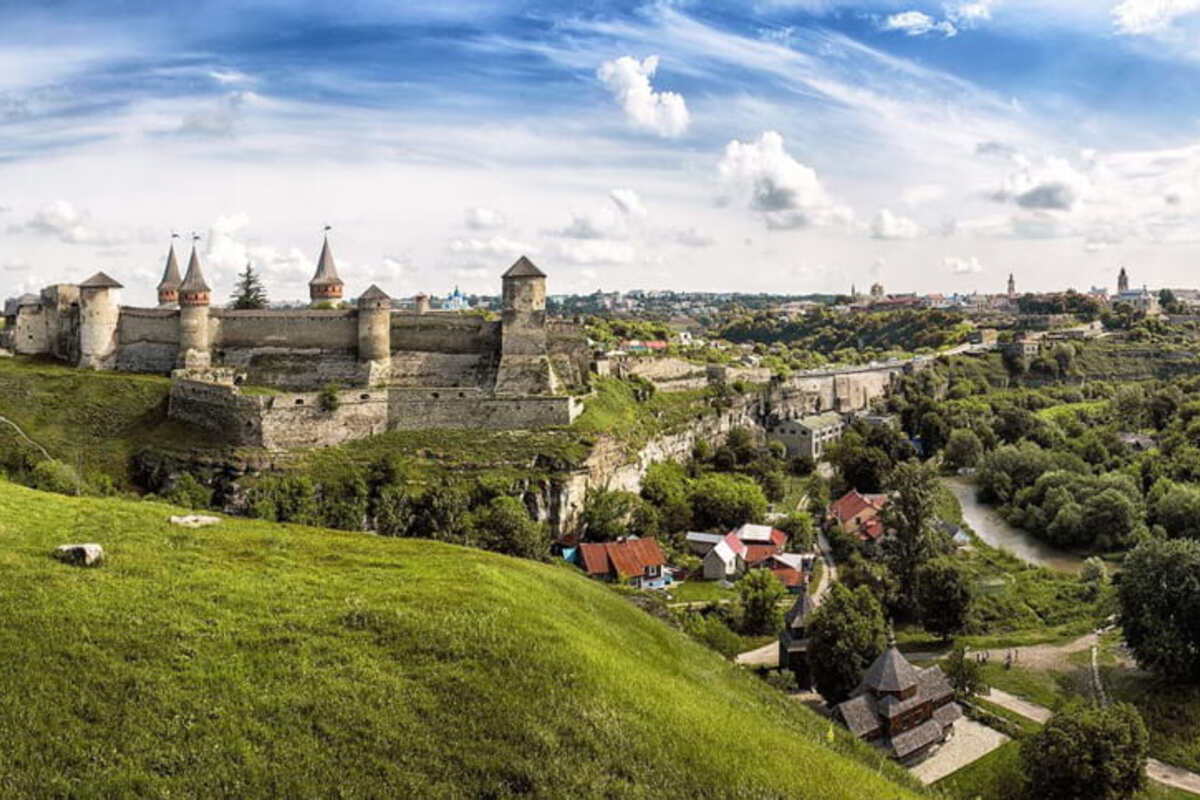
- Podolia boasts Ukraine’s densest network of fortresses and castles, including Khotyn, Kamianets-Podilskyi, Medzhybizh, and Letychiv strongholds. These fortifications were built over several centuries to defend against Tatar raids. Kamianets-Podilskyi Castle, perched on a rocky island surrounded by the Smotrych River, is regarded as one of the most beautiful in Eastern Europe. Many of these fortresses now serve as museums and major tourist attractions.
- Podolia is the land of legendary Cossacks, particularly Hetman Ivan Sirko, who was born in Soroka (Cherkasy region) but lived and fought extensively in Podolia. Cossacks often hid in forests and caves here, launching surprise attacks on enemy forces. Many Podolian towns proudly carry Cossack heritage, and their coats of arms frequently feature Cossack symbols. In local folk songs, Cossacks are portrayed as defenders of truth and freedom.
- Podolian cuisine is known for its simplicity yet rich flavor. Dishes based on potatoes, beans, mushrooms, and dairy products—especially cheese and sour cream—are staples. One beloved traditional meal is banush, a cornmeal porridge mixed with cheese and fried pork cracklings. The region is also famous for its uniquely decorated breads, adorned with symbolic patterns passed down through generations.
- Podolia is home to Europe’s largest canyon—the Dniester Canyon—which extends over 250 kilometers. Its depth reaches up to 200 meters, and its vistas rival those of the Alps. Along its cliffs lie dozens of villages, monasteries, and rock-hewn churches. This area has become a favorite destination for hikers, climbers, and rafting enthusiasts.
- Podolia is a major center of Ukrainian folk art, especially embroidery, wood carving, and pottery. Each district has its own embroidery style—for instance, Bar embroidery is renowned for its red-and-black geometric motifs. Although pottery centers like Opishnya and Kosiv lie just outside Podolia, their influence on local crafts is profound. Stone carving is also widespread due to the abundance of limestone.
- In the 18th century, Podolia was one of the epicenters of Jewish life in Europe. Hundreds of shtetls—small Jewish towns—flourished here, thriving in trade, crafts, and religious scholarship. Many prominent rabbis and thinkers, including Baal Shem Tov, the founder of Hasidic Judaism, lived and taught in Podolia. Traces of this rich Jewish heritage remain in old synagogues, cemeteries, and local folklore.
- Podolia is famed for its mineral springs, particularly around the town of Khmilnyk. As early as the Soviet era, sanatoriums were built here to treat patients with mineral water therapies. The water composition closely resembles that of the famous “Naftusya” from Truskavets. Today, these resorts are being transformed into modern wellness centers attracting visitors from across Ukraine.
- Near Vinnytsia lies one of Ukraine’s oldest botanical reserves—Hora Bondarivka. It protects rare plant species such as steppe tulips, saffron crocus, and shield fern. Established in 1928, the reserve safeguards the unique flora of the Podolian Upland. Each spring, the area bursts into a vibrant carpet of wildflowers, drawing photographers and nature lovers alike.
- Podolia is a land of poets and writers. Literary giants such as Marko Vovchok, Lesya Ukrainka, Mykhailo Kotsiubynsky, and Pavlo Tychyna were either born here or spent significant time in the region. Their works often celebrate Podolian landscapes, folk customs, and historic events. Numerous literary museums and monuments dedicated to these figures form an essential part of the region’s cultural tourism routes.
These interesting facts about Podolia only begin to reveal the depth of its historical legacy, natural splendor, and spiritual richness. The astonishing details you may not have known illustrate just how layered and multifaceted this region truly is. The captivating insights into Podolia inspire exploration, reflection, and discovery—because every corner of this land holds a story worth hearing.


