
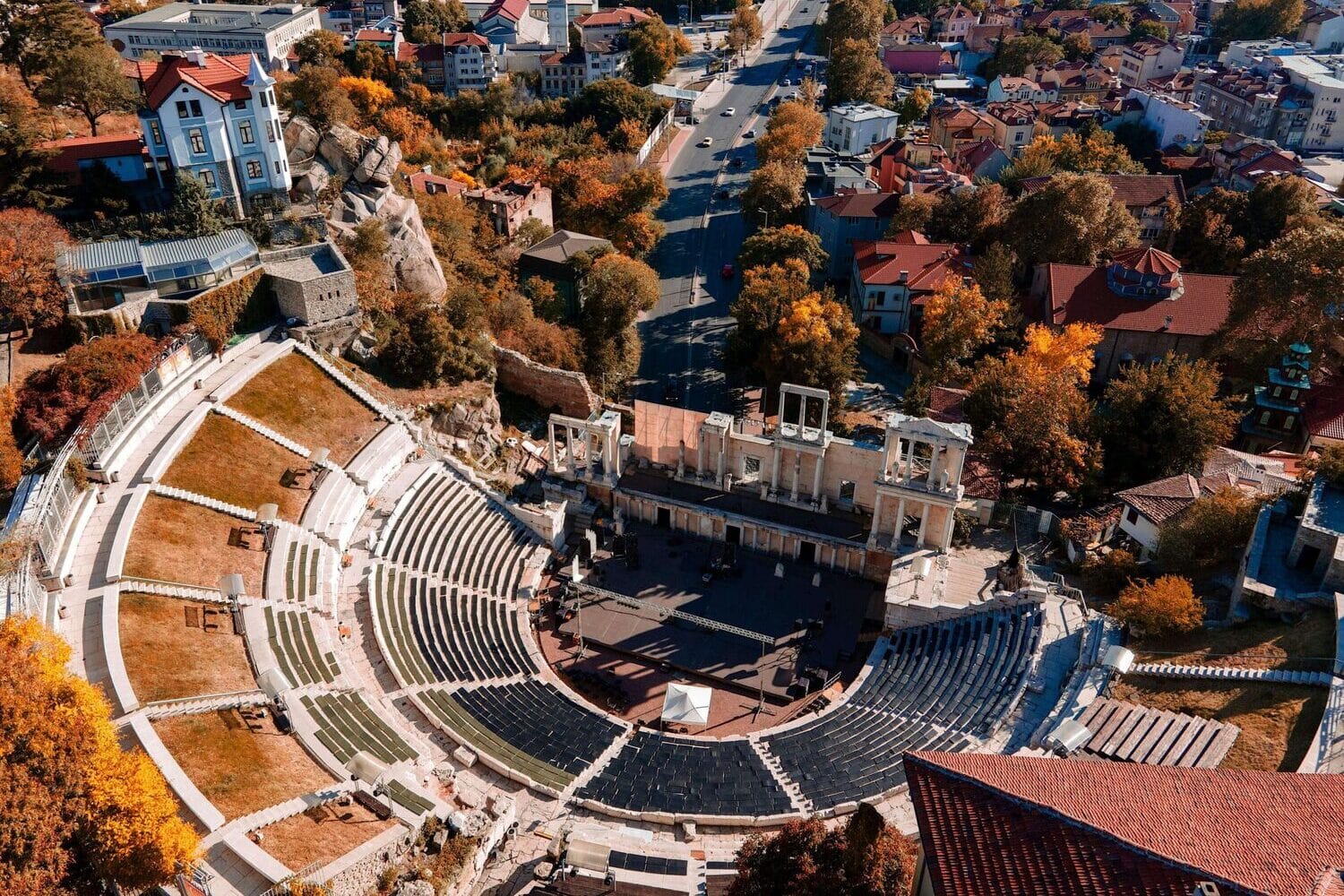
Plovdiv is a city that can surprise even the most experienced travelers. Here, history is not confined to museums but lives openly in the streets, stones, architecture, and the outlines of its hills. Interesting facts about Plovdiv reveal it as one of the oldest cultural centers in Europe. Many fascinating facts remain unknown even to those who have heard about its ancient past. That is why incredible facts about this city help you see it in a deeper and more meaningful way.
- Plovdiv is considered one of the oldest continuously inhabited cities in Europe. Archaeological evidence shows that people lived in this area more than eight thousand years ago. Over the centuries, the city passed through Thracian, Roman, Byzantine, and Ottoman periods. Despite wars and political changes, life here was never interrupted.
- One of the earliest known names of the city was Eumolpias, dating back to the Thracian era. Later, it became known as Philippopolis in honor of Philip II of Macedon. Each name reflected the political and cultural realities of its time. However, the city’s importance as a regional center remained constant.
- Plovdiv is traditionally known as the city of seven hills, often compared to Rome. Over time, some of these hills were destroyed due to construction and stone quarrying. Nevertheless, the remaining hills still shape the city’s unique landscape. They give Plovdiv its distinctive and recognizable skyline.
- The Roman Theatre of Plovdiv is one of the best-preserved ancient theatres in the world. It was built in the first and second centuries AD and could accommodate several thousand spectators. Today, the theatre is still used for concerts and cultural events. It is a rare example of an ancient structure that continues to serve its original purpose.
- The ancient stadium of Plovdiv lies hidden beneath a modern pedestrian street. Most people walk over it without realizing its true scale. In antiquity, it could hold up to thirty thousand spectators. It was used for sporting competitions and public events during the Roman period.
- The Old Town of Plovdiv has preserved architecture from the Bulgarian National Revival period. The houses are known for their colorful facades, bay windows, and rich decorative elements. They once belonged to wealthy merchants and craftsmen of the nineteenth century. Walking through these streets feels like a journey back in time.
- In 2019, Plovdiv was named the European Capital of Culture. This title marked an important stage in the city’s modern development. Dozens of cultural, social, and artistic projects were implemented. The city gained renewed energy and international recognition.
- The Kapana district is known as the creative heart of Plovdiv. Historically, it was a craftsmen’s quarter with narrow streets. Today, it is filled with galleries, studios, art spaces, and small cafés. Its atmosphere reflects the modern cultural rhythm of the city.
- For centuries, different religions have peacefully coexisted in Plovdiv. Orthodox churches, mosques, and a synagogue can all be found within the city. This close proximity shaped a strong tradition of religious tolerance. It remains an important part of Plovdiv’s identity today.
- The Dzhumaya Mosque is one of the oldest functioning mosques in the Balkans. It was built in the fourteenth century after the establishment of Ottoman rule. The interior is decorated with distinctive ornaments and patterns. The building still serves its religious purpose.
- Plovdiv played a significant role in the development of Bulgarian education and printing. Some of the first modern secular schools were established here. In the nineteenth century, the city became an important intellectual center. This legacy is still felt in its cultural and educational environment.
- The Maritsa River flows through Plovdiv and is one of the largest rivers in Bulgaria. For centuries, it played a key role in trade and agriculture. Today, parks and walking areas line its banks. The river adds a sense of natural balance to the urban landscape.
- The archaeological layers of Plovdiv span several millennia. Beneath modern buildings lie remains from different historical periods. Excavations continue to this day and regularly bring new discoveries. Each find adds another piece to the city’s complex past.
- Plovdiv has one of the warmest climates in Bulgaria. Summers are long and sunny, while winters are generally mild. These conditions supported agriculture and winemaking since ancient times. Wine traditions in the region have survived into the present.
- Plovdiv is often referred to as the cultural capital of Bulgaria. The city hosts numerous music, theater, and art festivals throughout the year. It attracts creative people from across the country and abroad. Cultural life here remains active in every season.
- Remains of ancient defensive walls can be found in various parts of the city. They remind visitors of Plovdiv’s strategic importance in different historical eras. The fortifications were rebuilt and expanded many times. Today, their remnants form part of the city’s historical appearance.
- The culinary culture of Plovdiv reflects centuries of blended traditions. Local cuisine combines Balkan, Ottoman, and Mediterranean influences. Dishes are known for their simplicity and rich flavors. Through food, it is easy to sense the everyday history of the city.
- Plovdiv is an important transportation hub in southern Bulgaria. Its geographic location encouraged trade between different regions. Ancient trade routes once passed through the city. This role continues to shape its modern infrastructure.
- For generations, Plovdiv has inspired artists, writers, and musicians. The city often appears in Bulgarian literature and art. Its atmosphere encourages reflection and creativity. That is why Plovdiv is sometimes called a city to be discovered slowly.
Plovdiv is a place where interesting facts blend naturally with modern life. Incredible facts help reveal how deeply the past is woven into the city’s present. Fascinating facts turn it into more than just a tourist destination, creating a space for cultural and emotional discovery. You may not have known many of these details, but they are exactly what shape the unique character of Plovdiv.


