
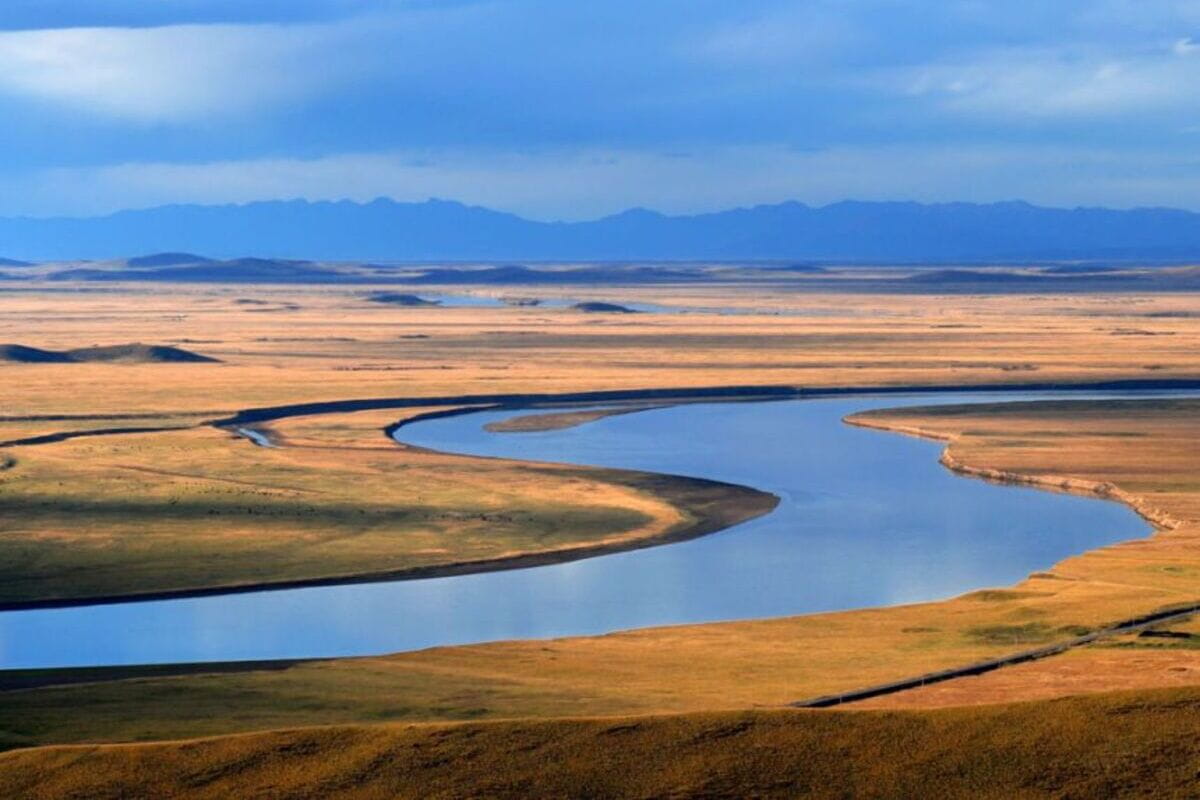
Plains cover more than sixty percent of Earth’s land surface creating vast expanses where the sky seamlessly merges with the earth on the horizon. These seemingly uniform landscapes are in fact the cradles of civilizations sources of fertile soils and unique ecosystems preserving their mysterious allure. You might not know that beneath this geometric simplicity lie complex geological processes that have shaped the terrain over millions of years. Amazing facts about plains will reveal a world where every square meter of land tells a story of continental shifts climate transformations and human activity. Fascinating facts about these immense spaces will help you appreciate their fundamental role as the foundation of modern civilization and our planet’s natural balance.
- Plains are divided into several fundamental types depending on their origin namely accumulative plains formed by river deposits glacial moraines or wind action and denudational plains created through the erosion and smoothing of mountain rocks. The planet’s largest plains such as the Great Plains of North America and the East European Plain belong to platform formations that developed on ancient tectonic plates. Each type of plain possesses its own unique geological history which is reflected in soil composition and distinctive terrain features.
- The Amazon Basin stands as the world’s largest river plain covering an area exceeding five million square kilometers within the Amazon River watershed. This plain formed through millions of years of sediment deposits carried from the Andes Mountains creating exceptionally fertile soils. Despite its low elevation above sea level this territory represents one of the planet’s most biologically diverse regions hosting more than ten percent of all known animal and plant species.
- The East European Plain stretches from the Ural Mountains in the east to the Carpathians in the west encompassing territories of several countries including Russia Ukraine and Belarus. Its area measures approximately four million square kilometers with an average elevation not exceeding one hundred fifty meters above sea level. Precisely on this plain lie the world’s most fertile chernozem soils which formed during the last glacial period through the accumulation of organic matter in the soil.
- Plains play a decisive role in the development of human civilizations since the first agricultural societies emerged on them approximately ten thousand years ago. The Nile Valley Mesopotamia between the Tigris and Euphrates rivers and the Indus Valley became cradles of great civilizations thanks to fertile soils and the possibility of irrigated agriculture. Modern plains continue to serve as the world’s primary agricultural regions providing nourishment for the majority of the planet’s population.
- The highest plain on Earth is the Tibetan Plateau situated at an elevation exceeding four thousand meters above sea level and covering an area of approximately two million square kilometers. This plain formed as a result of the collision between the Indian and Eurasian tectonic plates which caused the ancient plain to rise to an extraordinary height. Despite its harsh climate the Tibetan Plateau serves as the source of ten major Asian rivers including the Yangtze Ganges and Brahmaputra.
- The Great Plains of North America extend from Canada to Mexico covering an area of more than two million square kilometers and renowned for their perpetual winds and boundless spaces. This territory was home to enormous bison herds that once numbered in the millions before European colonization nearly completely eradicated these populations. Today the Great Plains represent one of the most important grain production regions particularly wheat cultivated across millions of hectares.
- Plains can form as a result of glacial melting when massive ice sheets retreat leaving behind leveled surfaces covered with moraines and lakes. Northern Europe and parts of North America feature numerous glacial plains that formed after the last glacial period concluded approximately twelve thousand years ago. These territories often possess unique lake systems and fertile soils created through glacial deposits.
- The Pampas in Argentina rank among the world’s most fertile plains famous for their endless steppes and ideal conditions for cultivating soybeans corn and wheat. This plain covers more than seven hundred thousand square kilometers and traditionally served as territory for nomadic peoples such as the gauchos who engaged in cattle ranching. Modern Pampas constitute the economic heart of Argentina providing the nation with primary agricultural export revenues.
- Plains often exhibit more stable climates than mountainous regions making them attractive for settlements and agriculture. The absence of significant elevation changes allows air to circulate evenly creating predictable seasonal variations in temperature and precipitation. However certain plains particularly interior continental ones may experience sharply continental climates with extreme temperature fluctuations between summer and winter.
- Lava plains form through the outpouring of basaltic magma which spreads in thin layers covering vast territories with flat surfaces. The most renowned examples include the Deccan Plateau in India and the Columbia Plateau in the United States where lava flows covered millions of square kilometers. These plains frequently possess unique mineral rich soils making them exceptionally fertile for agriculture.
- Plains play a crucial role in the global carbon cycle since their soils store enormous quantities of organic carbon. Chernozem plains in particular may contain up to ten percent of all carbon preserved in the planet’s soils. Preserving these territories from erosion and excessive cultivation represents an important element in combating climate change since the loss of this carbon could accelerate global warming.
- Interior continental plains often feature drier climates than coastal areas due to the absence of oceanic air mass influence. The Great Plains of the United States and the steppes of Kazakhstan exemplify such territories where precipitation proves insufficient for forest cover yet adequate for steppe vegetation. These regions frequently suffer from periodic droughts that can trigger dust storms during strong winds especially with improper soil cultivation practices.
- Plains can be classified by elevation above sea level into lowlands situated below two hundred meters uplands ranging from two hundred to five hundred meters and plateaus exceeding five hundred meters. This classification helps understand climatic conditions and ecosystem types that may exist across different plains. For instance lowlands often feature more humid climates whereas plateaus may prove significantly drier due to elevation.
- Aeolian plains form under the influence of wind erosion and the accumulation of sand and other fine particles creating unique landscapes. The Sahara in Africa contains extensive areas of aeolian plains where wind has transported sand over millennia forming dunes and other formations. These plains typically possess very poor soils since wind continuously removes fine particles leaving only rocky remnants behind.
- Plains serve as primary regions for mineral extraction especially oil natural gas and coal which often concentrate in the sedimentary rocks of these territories. The West Siberian Plain ranks among the world’s largest oil and gas regions providing a significant portion of Russia’s energy resources. Beyond fuel resources plains frequently contain deposits of potash salts phosphorites and other minerals essential for agriculture.
- Alluvial plains form through river deposits of silt and sand during floods creating exceptionally fertile soils. The Nile Delta in Egypt represents a classic example of an alluvial plain where fertile deposits accumulated over millennia enabling intensive agriculture within desert surroundings. Modern alluvial plains often require irrigation systems since natural flooding is regulated by dams and reservoirs.
- Plains frequently exhibit the highest levels of urbanization owing to the convenience of constructing transportation networks and developing infrastructure on flat surfaces. Most of the world’s megacities are located precisely on plains where the absence of terrain obstacles facilitates urban expansion. However this urbanization often leads to the loss of fertile agricultural lands creating conflict between urban development and food security.
- Marine plains or abyssal plains occupy approximately forty percent of the World Ocean floor situated at depths ranging from three to six kilometers. These plains formed through the accumulation of sedimentary rocks that slowly settled on the ocean floor over millions of years. Despite extreme light deficiency and pressure at such depths abyssal plains support unique ecosystems with organisms adapted to extreme conditions.
- Plains often serve as zones for the formation of large lakes particularly of tectonic origin which develop through the subsidence of the Earth’s crust. The Great Lakes of East Africa such as Victoria and Tanganyika are located within the Great Rift Valley which constitutes part of a major tectonic plain. These lakes frequently exhibit high biological diversity including numerous endemic fish species that evolved in isolation.
- Plains play an important role in the global water system since most river systems that supply continents with freshwater form precisely on them. Major plains rivers such as the Amazon Mississippi and Yangtze carry water from mountainous regions to oceans sustaining millions of people animals and plants along their entire courses. Pollution of plains territories often leads to the degradation of entire river systems with global consequences.
- Plains can prove highly vulnerable to erosion especially under intensive agricultural cultivation that destroys natural vegetation cover. The Dust Bowl in the United States during the 1930s resulted from excessive plowing of prairies combined with drought leading to massive soil erosion. Modern soil conservation methods such as minimal tillage and cover cropping help prevent similar catastrophes across the world’s plains.
- Plains often possess unique flora and fauna adapted to open spaces with minimal shelter from predators and weather conditions. Steppe ecosystems of plains feature tall grasses and numerous herbivorous animals such as antelopes bison and kangaroos that evolved for life in open landscapes. Many plains animal species developed speed as their primary defense mechanism against predators since natural shelters remain scarce.
These fascinating facts merely begin to unveil the richness and diversity of plains which serve as the foundation of human civilization and our planet’s natural ecosystems. Each plain regardless of its location or size stands as a living testament to millions of years of geological history and the interaction between nature and human activity. We hope these remarkable revelations will inspire you to view these vast spaces with fresh appreciation recognizing that their apparent simplicity conceals the fundamental basis of our existence on Earth.


